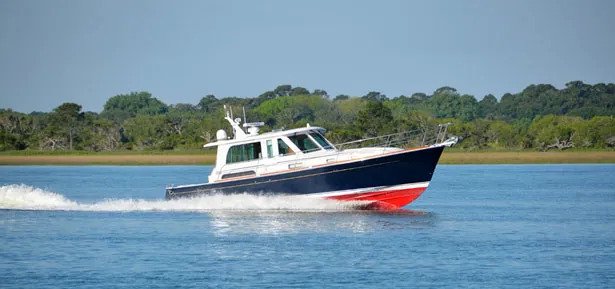
Your boat's marine engine serves as its beating heart and driving force, powering every aquatic adventure you undertake. Just as a person must tend to their own health and wellbeing, boat owners carry the responsibility of properly caring for and maintaining their marine engine. Only through diligent attention will you truly get the most out of every moment spent on the water.
Central to that maintenance is selecting the appropriate oil for your marine engine. Engines deprived of the correct marine oil — whether in terms of quality or type — are prone to substandard performance, diminished service life, and potentially catastrophic failure.
Seasoned boat owners understand all too well how punishing the open water can be on marine equipment across the board. Marine engines bear the brunt of this punishment, which is precisely why every product introduced into your engine — from fuels and oils to greases and coolants — must meet the highest quality standards. Any product you choose must guard against corrosion and deposits without compromising the speed, acceleration, or general performance of the marine engine.
This holds true for both inboard and outboard marine engines alike.
An inboard marine engine is a propulsion system housed within the boat's hull, typically linked to a propulsion screw via a driveshaft. This stands in contrast to an outboard motor, where the engine is mounted on the exterior of the craft's hull.
Marine outboard engines fall into two primary categories: two-stroke and four-stroke. The vast majority of marine engines available on today's market employ four-stroke propulsion systems, though two-stroke marine engines remain fairly common as well. The lubrication demands of these two marine engine types differ considerably, given that two-stroke and four-stroke systems operate on fundamentally different principles. In a two-stroke engine, oil is blended directly with the fuel, serving as a lubricant as it travels through the engine. This oil is subsequently burned together with the fuel and expelled via the exhaust system.
Four-stroke engines, by contrast, are lubricated through oil that is continuously circulated from and returned to an oil reservoir, or sump — a process analogous to how a car's engine operates. Contemporary marine engines are engineered with both user convenience and environmental responsibility in mind. They have achieved significant reductions in emissions while delivering considerably longer operational lifespans. It is precisely these sophisticated modern technologies that make today's marine engines so demanding of proper lubrication, underscoring the importance of selecting the right marine oil for your boat engine.
Important note: Before exploring the various types of marine engine oil in greater depth, we strongly advise consulting your owner's manual or reaching out directly to the engine manufacturer for guidance on the optimal oil for your specific engine — particularly if you are uncertain about the type of propulsion system your boat uses.
The first place to look in your owner's manual is the API (American Petroleum Institute) and SAE (Society of Automotive Engineers) ratings. These designations will direct you toward the appropriate marine engine oil for your application. You can locate these markings printed on the oil container at the point of purchase.
API ratings begin with either the letter C or the letter S.
C designates Commercial, while S designates Service.
The second letter within the API rating indicates the sophistication of the additive package, progressing in ascending alphabetical order. As a general rule, oils carrying more advanced additive packages can typically be substituted for earlier formulations.
As an example — if you own a gasoline engine and your owner's manual specifies CD oil, an oil rated CE should be acceptable as a substitute.
It is worth noting that a wide range of oils currently on the market are formulated to serve both gasoline and diesel engines interchangeably.
You should also refer to the SAE rating code to determine the oil's viscosity, which is likewise printed on the container. Viscosity describes how thick an oil is and how readily it flows at given temperatures. A higher viscosity means a thicker oil — one that provides better engine protection under elevated temperatures.
Conversely, single viscosity oils are suited to engines operating within a limited temperature range, whereas multi-viscosity oils are engineered for marine engines that function across broader temperature ranges.
The NMMA (National Marine Manufacturers Association) has established standards and testing protocols for marine engine oil certifications. The primary objectives behind these certifications center on reducing emissions and improving fuel efficiency.
The NMMA certifications are as follows:
These oil classifications are intended for use in four-stroke marine engines.
FC-W (CAT) oils are catalyst compatible and designed for engines incorporating the latest marine engine technology, including exhaust after-treatments that provide additional emission reductions. Because oils bearing FC-W (CAT) certification safeguard the marine engine catalyst, they carry the "CAT" designation on their label.
TC oils are formulated specifically for two-stroke engines.
These oils lubricate internal engine components as they pass through the engine and are subsequently burned off alongside the fuel. TC oils can be blended with fuel or injected directly with the fuel into the combustion chamber. Two-stroke engines were conceived with the intention of minimizing oil concentrations in fuel mixtures and reducing unburnt oil emissions, all without shortening the engine's service life.
As two-stroke engines continue to advance toward higher compression ratios and elevated cylinder temperatures in pursuit of greater performance, operators should consistently use oils formulated to TC-W3 specifications.
Regrettably, a large number of marine engine owners overlook the fact that engine oil serves more purposes than simply lubricating internal engine components. While lubrication is undeniably its primary function, marine engine oil carries several additional responsibilities. Among these, oil plays a role in cooling the engine's interior by drawing heat away from internal surfaces that cooling water cannot access. It also neutralizes and removes the acidic by-products generated through combustion.
For these reasons, adhering to best practices for marine oil change schedules is strongly advisable. Because oil operates in highly stressful, moisture-laden environments, regularly replacing both the oil and filter is critical to sustaining your engine's performance and longevity. Always verify the manufacturer's recommended change interval; the standard guideline is every 100 hours or once per year.
It is strongly recommended that the oil filter be replaced each and every time the oil is changed.
Before fitting a new filter, apply a light film of oil to the gasket and tighten it by hand. Complete the tightening with a three-quarter turn past the point at which the seal makes contact with the flange.
When performing an oil and filter change, examine the color of the drained engine oil, as it can reveal important information about the condition of your marine engine. Oil that appears milky upon removal indicates the presence of metal particles and generally suggests that water has infiltrated the crankcase.
Should this be the situation, your engine is likely experiencing excessive wear. If you are unable to determine this with certainty, submitting an oil sample for laboratory analysis is a prudent course of action. In fact, conducting oil sample analyses on a routine basis will give you a reliable and ongoing picture of your marine engine's health.
Many experts agree that fall is the ideal time for an oil and filter change, given the demands of the winterization process. Eliminating corrosion-causing acids is most effectively accomplished during this season, and it simultaneously aids in purging any water that may have entered the engine before it has an opportunity to freeze or initiate corrosion.
Naturally, if fall does not align with your schedule for this task, the oil change should at minimum be completed before any prolonged storage period. Doing so prevents acidic combustion by-products from sitting in your crankcase throughout an extended stretch of downtime.
Marine oil and automotive oil are not substitutes for one another.
Every boat owner should recognize that marine engines and automotive engines are not built to operate in the same manner. Automotive engines, engineered to meet specific fuel economy and emissions targets, are calibrated to run within a defined RPM range — typically at lower RPM — and seldom carry heavy loads. To maintain operational consistency and efficient fuel consumption, automotive engines are designed to run at regulated temperatures.
Marine engines, on the other hand, demand oils specifically engineered to withstand high RPM and continuous loads. They typically run either at idle or at wide-open throttle and rely on water for cooling. Although they are regulated thermostatically, their temperature cycling patterns differ meaningfully from those of automotive engines, along with a heightened risk of fuel dilution.
Marine engine oils are engineered to endure strain, corrosion, and moisture at levels significantly beyond what automotive engine oils are designed to handle. They possess exceptionally strong film strength to shield engine components during sustained shear and load conditions, and they incorporate anti-oxidants essential for extending engine service life.
Outboard marine engines are mounted vertically, which results in a substantially different system configuration compared to automotive engines. In a vertically oriented engine, oil must work considerably harder to flow both upward and downward in order to deliver consistent protection throughout the entire marine engine. This makes lubricating the bearings and cylinders positioned at the top of the engine a more demanding task — including the crankshaft, bearing journals, and individual cylinders.
The role of additives in marine engine oil formulations is more significant than in automotive counterparts, as marine oils must defend against a range of marine-specific challenges including:
Marine engine oil blends typically contain between 20% and 35% additives, compared to the 10% to 20% range found in automotive oils. Anti-wear additives specifically reduce wear and tear resulting from heavy loads and address the challenges posed by the engine's vertical orientation.
In summary, marine engine oils face a considerably greater challenge than automotive engine oils and should never be used in place of one another. They are formulated differently and engineered to perform in more demanding conditions while fulfilling a broader set of protective functions, including defense against rust, corrosion, and more.
Valvoline's foremost commitment is to equip boat owners with only the finest products available.
Our lineup features industry-leading marine engine oils alongside a range of complementary products designed to help your equipment achieve peak performance and maximize its operational lifespan. Backed by over 150 years of expertise, our customers can trust that every Valvoline product is rigorously developed and thoroughly tested.
Our premium-quality lubricants are the product of deep commitment, hands-on experience, continuous innovation, and the application of cutting-edge technology. Every Valvoline lubrication fluid is carefully selected and field-validated by our specialized research teams, with testing carried out in our state-of-the-art facilities to ensure they consistently deliver maximum performance, minimal downtime, and optimized operating costs.
At Valvoline, your priorities are our priorities. We share your commitment to keeping machinery and equipment performing reliably in the most demanding conditions and on the toughest terrain.