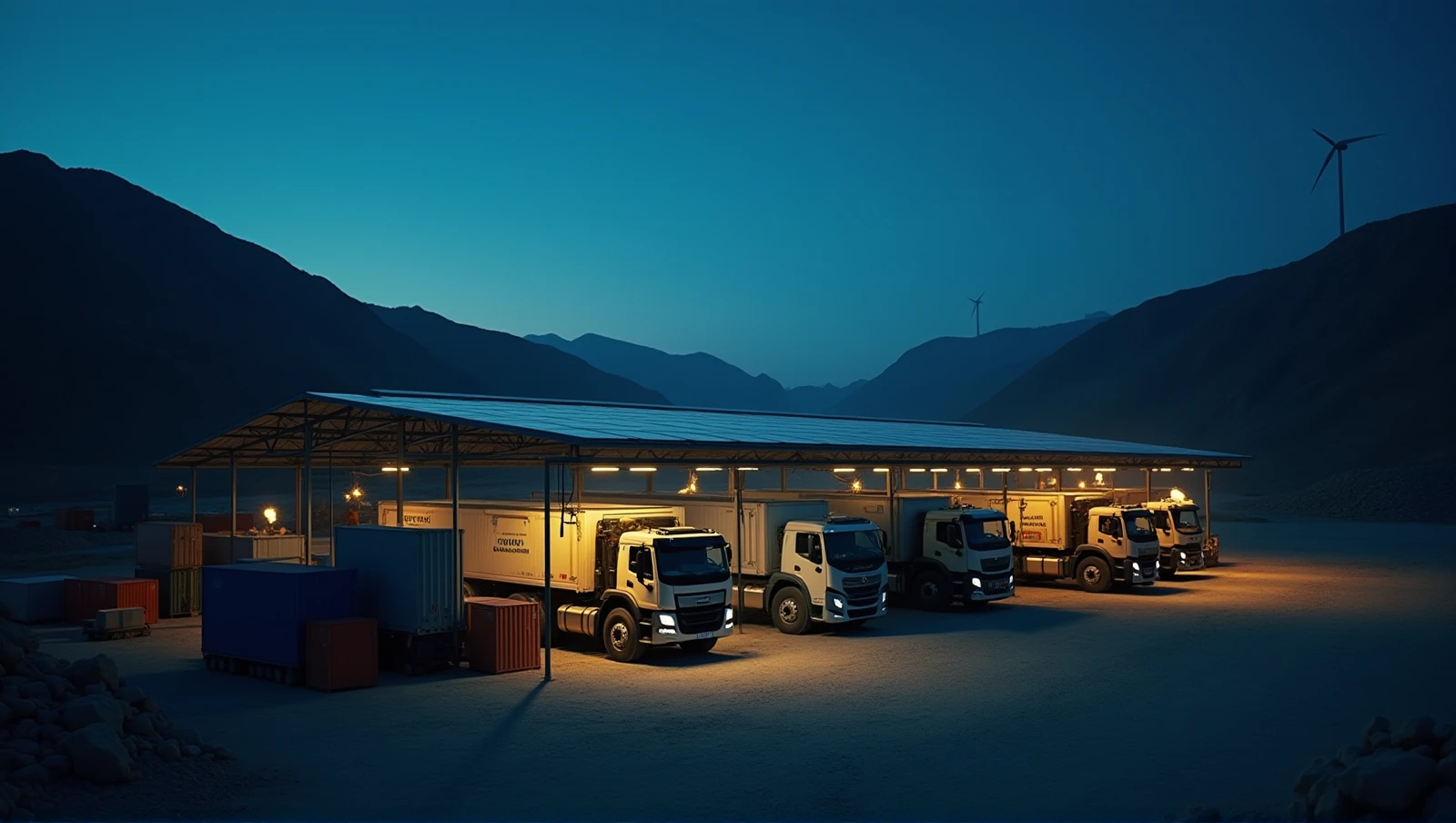
Evaluating Stand-Alone Renewable Systems for Remote Industrial Operations and Fleet Depots
The Big Picture
In industrial operations, power delivery is often treated as a utility given, but for remote fleet depots, mining camps, or construction staging areas, infrastructure costs dominate the budget. Extending a power line to the electricity grid is not merely a technical challenge; it is a capital expenditure that can range from $15,000 to $50,000 per mile. For many operations, powering facilities using a small renewable energy system that is not connected to the electricity grid—called a stand-alone system—makes economic sense.
In the lab we call this boundary condition analysis — on your shop floor, it means calculating the break-even point between infrastructure build-out and self-generation. Beyond remote locations, these systems are utilized by entities near the grid wishing to obtain independence from the power provider or demonstrate a commitment to non-polluting energy sources. For fleet managers and procurement specialists, the decision matrix involves weighing initial capital against long-term operational independence and regulatory compliance.
Key Details
A successful stand-alone system generally takes advantage of a combination of techniques and technologies to generate reliable power, reduce costs, and minimize inconvenience. The core generation assets typically include purchasing photovoltaic panels, a wind turbine, or a small hydropower system. However, generation is only half the equation. You must also invest in additional equipment called "balance-of-system" to condition and safely transmit the electricity to the load that will use it.
In the lab we call this power conditioning — on your shop floor, it means ensuring the energy doesn't destroy your equipment. This equipment can include:
- Batteries: For energy storage during low-generation periods.
- Charge controller: To regulate voltage and current coming from the renewable sources.
- Power conditioning equipment: To convert current to usable forms for standard machinery.
- Safety equipment: To protect against surges and faults.
- Meters and instrumentation: To monitor system performance and load requirements.
Some strategies include using fossil fuel or renewable hybrid systems and reducing the amount of electricity required to meet your needs. This hybrid approach ensures continuity when renewable inputs fluctuate, a critical factor for maintenance shops requiring consistent power for diagnostic tools and lighting.
Operational Impact
The primary operational impact of deploying stand-alone systems is the reduction of dependency on external grid infrastructure, which directly influences total cost of ownership for remote sites. When the cost of grid extension reaches $50,000 per mile, the ROI for stand-alone systems becomes compelling without needing complex financial modeling.
For maintenance supervisors, the implication is a shift in preventive maintenance schedules. Just as you monitor lubrication levels in a gearbox, you must monitor the balance-of-system equipment. Batteries degrade, charge controllers fail, and meters drift. Successful stand-alone systems require rigorous monitoring to minimize inconvenience. Reducing the amount of electricity required to meet your needs is as vital as generation capacity. This mirrors energy efficiency protocols in heavy equipment operations where idle reduction lowers fuel consumption.
Furthermore, obtaining independence from the power provider mitigates risk associated with grid outages. For critical fleet operations, downtime is unacceptable. A hybrid system incorporating fossil fuel backup provides a safety net, ensuring that maintenance bays and operational command centers remain functional regardless of weather conditions affecting renewable generation.
What to Watch
Regulatory and market trends are increasingly favoring non-polluting energy sources. While the immediate driver may be economic—avoiding the $15,000 to $50,000 per mile grid extension cost—demonstrating a commitment to non-polluting energy sources aligns with broader environmental, social, and governance (ESG) goals.
Fleet managers should monitor developments in balance-of-system equipment requirements for small renewable energy systems. As technology matures, the efficiency of power conditioning equipment and battery storage capacity will improve, potentially lowering the threshold for economic viability even in locations closer to the grid. Additionally, reducing electricity use remains a constant priority; energy audits should be conducted parallel to power generation planning to ensure the load profile matches the system capacity.
Bottom Line
For fleet and operations managers evaluating remote site power, the decision begins with the cost of grid extension. If your site requires new power lines, the cost of which can range from $15,000 to $50,000 per mile, a stand-alone system is likely the superior financial choice. Do not focus solely on generation; budget for the balance-of-system equipment including batteries, charge controllers, and safety instrumentation.
Consider hybrid configurations to ensure reliability. Just as you would not run a heavy hauler on a single lubricant path without backup filtration, do not rely on a single energy source for critical infrastructure. Verify that your team is trained to maintain the balance-of-system components, as system failure here results in total operational stoppage. Evaluate your load requirements honestly; reducing the amount of electricity required to meet your needs is the most cost-effective generation method available.