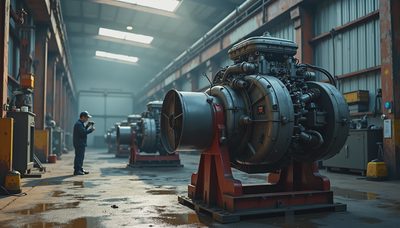
Just as with land-based vehicles powered by internal combustion engines, marine engines require effective thermal management. The use of marine coolant represents one of the foundational elements of sound engine maintenance and must be handled with appropriate diligence, knowledge, and skill. Boat engines that receive consistent, proper marine coolant maintenance benefit from reduced overheating incidents and consequently enjoy extended operational lifespans.
Beyond keeping the entire engine operating within its ideal temperature range, routine application of the correct boat coolant also enhances the performance of the cooling system itself, allowing those components to run more efficiently and endure longer.
We recommend adhering to the engine manufacturer's guidelines, though the standard replacement interval is typically 5 years (or between 1,000 and 10,000 operating hours). It is also worth noting that marine coolant is not replaced during winter months.
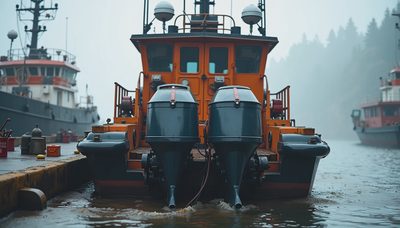
Unlike car or truck motors, boat engines enjoy the distinct advantage of operating in close proximity to water, enabling them to draw from the water beneath the hull to maintain optimal running temperatures. Depending on where a boat owner is located geographically, that surrounding water may be either saltwater or freshwater. The cooling system draws this water in and circulates it through the engine to function as boat coolant while the motor is running.
Based on the specific type of boat engine cooling system installed, the water drawn up from beneath the vessel works in conjunction with marine coolant to enhance the overall effectiveness of the cooling system.
Boat engine manufacturers generally engineer cooling systems using one of two fundamental approaches. These 2 systems include:
This design draws water directly from the lake, river, or ocean and passes it into the engine via a strainer or filter. The water then travels through the engine block performing its cooling function. Once that cycle is complete, the water is expelled through the exhaust — out the rear in the case of an outboard motor, or beneath the hull if the engine is inboard.
While there are several variations in how this cooling system can be configured, the two primary models of closed-loop cooling systems include:
In most closed-loop cooling system setups, water is drawn into the engine and directed through a series of heat exchangers. One side of the heat exchanger handles the incoming raw water, while the opposing side circulates marine coolant that also passes through the engine block.
Enclosed marine engine cooling systems are widely regarded as superior to raw water systems. Their advantages are most pronounced in saltwater applications. When saltwater is used in raw water systems, a corrosive scale accumulates whenever the boat motor runs above 140°.
In raw water systems, this corrosion tends to develop inside the engine's water jacket and ports. Over time, the buildup of corrosion scale becomes severe enough to restrict water flow through the engine, ultimately leading to overheating. If your engine is experiencing this condition, professional servicing is strongly advised — and depending on the extent of the corrosion damage, replacement of the engine entirely may be necessary.
Enclosed cooling systems also circulate raw water through the engine's water jacket and ports while incorporating marine coolant products. However, in these systems the raw water is confined to the heat exchanger circuit. While the same type of corrosion scaling can occur here, the key difference is that once water flow becomes obstructed and the motor begins to overheat, acid boiling can be used to dissolve the corrosion scale and clear the heat exchanger — allowing the engine to remain in service.
Even in the worst-case scenario for closed-loop cooling systems in this situation, the likely outcome is replacing the heat exchanger, which remains a substantially more economical solution compared to replacing the entire engine.
Other critical components shared by both types of marine engine cooling systems include:
As previously noted, having constant access to cool water comes with the drawback of corrosion. Because heat exchangers in these systems operate under high thermal loads, certain metal engine components are in a continuous cycle of expansion and contraction. This repeated dimensional fluctuation causes surface degradation, meaning that seals and o-rings will need to be replaced on a regular basis.
Protecting a marine engine from corrosion damage requires a shift in attitude among boat owners. A commonly heard sentiment in the boating community goes something like this — since I don't use my boat as frequently as my car, I don't need to follow a strict maintenance schedule. This mindset can be genuinely hazardous, particularly for those operating in saltwater environments.
As one example, a leaking engine o-ring almost invariably means saltwater has reached the exterior surfaces of your motor. Left unaddressed, this will cause progressive corrosion that can destroy multiple engine components while also inflicting serious damage to the sealing surfaces of the cooling system.
Anodes also deserve mention here. Engines that go without regular servicing tend to retain the same anodes far beyond their useful life. Since an anode's primary function is to absorb corrosion sacrificially — thereby protecting costlier engine components — replacing anodes at regular intervals is essential.
A straightforward principle applies to engine horsepower: the more power an engine produces, the higher the temperatures at which it operates. Consequently, more powerful marine engines demand larger and more capable cooling systems, which in turn require greater maintenance attention from the owner. Consulting your engine owner's manual for guidance on marine coolant use, anode replacement, and related upkeep tasks is strongly recommended.
Exhaust manifolds and risers make up the exhaust components that are cooled by water circulation. Manifolds bolt directly onto the engine, while risers are mounted above them to increase the distance between the exhaust outlet and the waterline. It is critical that the water level does not rise above the exhaust level, as this could allow water to enter the engine.
Risers and exhaust manifolds typically last between 3 and 7 years, depending on whether marine coolant or saltwater flows through them. When these components become blocked, it indicates that rust and internal corrosion have caused irreversible deterioration — cleaning alone will not restore their function, and replacement becomes necessary.
There are also 2 distinct manifold types: wet-joint and dry-joint. Wet-joint manifolds and risers should be inspected every 3 years, though they can last as long as 5 years in saltwater environments. Dry-joint manifolds and risers can remain serviceable for up to 8 years and carry a lower risk of water ingestion into the engine. Any external leakage from these components should prompt immediate removal and inspection.
Diesel engines frequently incorporate exhaust elbows. Cooling water is introduced into these elbows before it exits overboard in order to cool the exhaust gases, which also makes them susceptible to blockage. Regular inspection of exhaust elbow condition is strongly recommended.
After-coolers with alloy housings are commonly found in newer marine engines engineered to extract higher horsepower from a compact engine block. These after-coolers reduce the temperature of incoming air and increase its density before it reaches the intake, enabling the engine to burn greater quantities of air and fuel within fewer combustion cycles.
Always follow the engine manufacturer's recommendations when removing, inspecting, and replacing cooling system components. The following are general guidelines to bear in mind:
Always follow the engine manufacturer's recommendations when removing, inspecting, and replacing cooling system components. The following are general guidelines worth considering:
Prospective buyers of used engines should watch for several warning signs indicating the engine is not in peak condition. An engine that is over 5 years old with no maintenance log from its previous owner is a red flag. In the absence of any documented service history for the cooling system, the safest assumption is that servicing has not been performed recently — and despite the expense involved, completing routine maintenance and replacing all necessary components is the prudent course of action.
During a test run of a marine engine, operate it at full throttle for an extended period. This will reveal whether running temperatures are elevated beyond 92 degrees Celsius. If they are, a blockage somewhere in the cooling system is the likely cause.
Open water and similar operating environments can be extremely demanding on marine equipment, particularly the engine over time. Ensuring your vessel's powerplant is supplied with only the highest quality oil, marine coolant, antifreeze, and related fluids is essential — only then can you head out with genuine confidence that your engine is performing at its best and is adequately protected against deposits and corrosion.
This is where we come in.
Valvoline's core mission is to deliver the finest products available to vehicle owners worldwide. Our marine solutions are developed in collaboration with Cummins and other manufacturers to meet the demands of a broad range of marine conditions and technical specifications. Supported by a dedicated technical team, our marine products are engineered to match your vessel's design and operating environment, providing reliable value and helping you maximize every engine hour.
Our lineup includes premium marine coolants and oil-based products designed to help your engine reach peak performance and achieve a longer service life. With over 150 years of industry experience, our customers trust that every Valvoline product is developed and tested with exceptional care.
Our high-quality oils, coolants, and lubricants are the product of deep commitment, proven experience, continuous innovation, and advanced technology. All Valvoline fluids are rigorously selected and field-validated by our expert research teams through testing conducted at our state-of-the-art facilities — ensuring consistent maximum performance, minimal downtime, and optimized operational costs.
Here at Valvoline™, your priorities are our priorities. We are committed to keeping your machinery, vehicles, and equipment performing reliably in demanding environments and the harshest of conditions.