Lubrication Management for Automated Equipment: Protect Uptime, OEE, and Repair Budgets
The Big Picture (why automated lines fail fast when lubrication slips)
Automated equipment doesn’t fail politely. What usually breaks first is not the PLC or servo drive—it’s the mechanical elements that quietly depend on a stable lubricant film: linear guides, ball screws, bearings, gearboxes, chains, and cams. When lubrication is late, wrong, or inconsistent, friction rises, temperatures climb, and wear accelerates until you get seizure, scoring, or gearbox damage.
In the lab we call this a “lubrication regime shift” (from full-film toward mixed/boundary lubrication). On your shop floor, it means a machine that used to run smoothly now runs hot, noisy, and increasingly out of tolerance—often with no operator nearby to notice. The source stakes are clear: unattended, high-speed, high-duty-cycle machines can rack up “tens of thousands of dollars” in damage and “days of downtime” when a lubrication failure goes unnoticed for even a few hours. For fleet and plant decision-makers measured on uptime, OEE, and mean time between failures (MTBF), systematic lubrication management is not a housekeeping task—it’s a production risk control.
Key Details (what to lubricate, with intervals that match real duty)
A common failure mode in automated systems is treating all lube points the same. The source distinguishes component-specific needs—exactly the approach that prevents over-greasing in one area and starvation in another.
Linear motion systems (guides, actuators, ball screws)
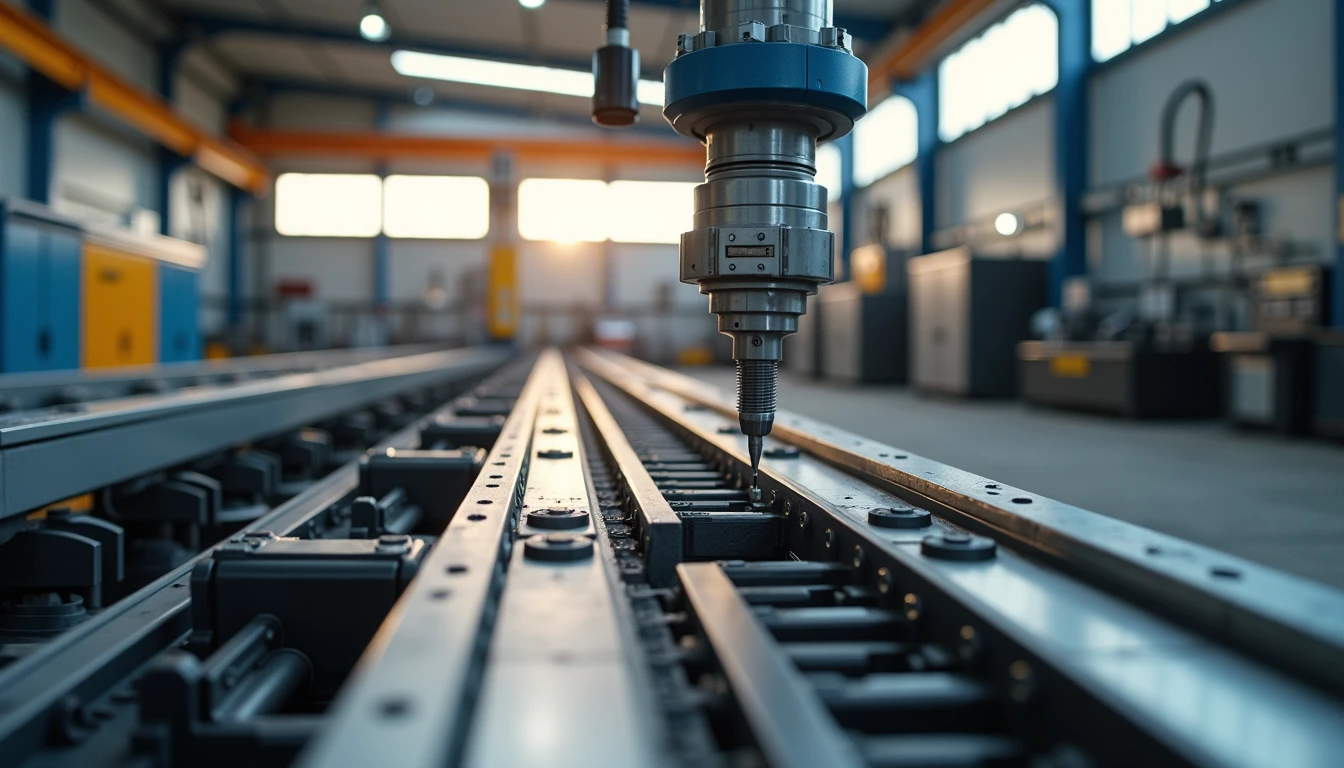
Ball-bearing linear guides, linear actuators, and ball screws typically require NLGI Grade 2 lithium-complex grease. The operationally important detail is how intervals are set: by travel distance, not calendar time. A ball screw running 10,000 mm/min on a pick-and-place unit will require re-lubrication far more frequently than the same screw on a low-duty inspection station. Most linear guide manufacturers publish interval charts based on travel distance and load; those charts should be the baseline for your preventive maintenance schedules.
Application Note: Pick-and-place axis ball screw
- In the lab: higher sliding/rolling contact frequency increases grease worked-out rate.
- On your shop floor: a 10,000 mm/min axis will consume its “safe lubrication window” quickly; calendar-based PM can miss it. Build travel-distance triggers into your PM plan.
Bearings (sealed vs. open/shielded)
Sealed bearings are common in automation and are generally lubricated for life. By contrast, open or shielded bearings on conveyor rollers, cam followers, and pivot joints require periodic greasing. The source emphasizes a point many maintenance teams learn the hard way: over-greasing can be as damaging as under-greasing, because excess grease generates heat and can blow out seals.
A practical guideline provided is to apply grease until slight resistance is felt at the grease fitting, then stop. That “slight resistance” is a shop-floor cue that you’re filling the cavity without hydraulically over-pressurizing the seal system.
Application Note: Conveyor roller bearings
- In the lab: overfill increases churning losses and operating temperature.
- On your shop floor: a few extra pumps can translate into hotter bearings and seal failures—then contamination enters and MTBF collapses.
Gearboxes and reducers (servo-driven units)
Servo-driven gearboxes on robotic positioners and indexing tables typically use synthetic gear oil. The source calls out two actionable intervals:
- Oil level checks as part of weekly inspections
- Full oil changes per manufacturer recommendations, typically every 10,000 to 20,000 operating hours
Another key diagnostic detail: contaminated or degraded gear oil can show up first as increased operating temperature before any audible symptoms. This is where predictive tools earn their keep.
Application Note: Indexing table gearbox
- In the lab: viscosity loss and additive depletion raise frictional heat.
- On your shop floor: temperature trending can flag oil health problems before operators hear anything unusual.
Chains and cam systems
Chain-driven conveyors and mechanical cam systems need regular lubrication with an appropriate chain oil. The source recommends drip-style or brush-type automatic lubricators to eliminate the variability of manual application—critical in automated assembly environments where consistency matters more than heroic maintenance efforts.
Operational Impact (PM execution, TCO, and avoiding “single-point” shutdowns)
The source highlights a reality every production manager recognizes: automated equipment is tightly interdependent. A single failed linear bearing on a transfer system can halt an entire production cell. That translates directly into total cost of ownership (TCO): the repair cost is often secondary to the cost of lost throughput and the time required to recover stable operation.
From a maintenance strategy perspective, the strongest operational lever in the source is moving from manual lubrication toward engineered delivery—especially when there are dozens of points.
Centralized lubrication systems: reliability by design
For complex automated equipment, manual greasing is described as “impractical and unreliable.” Centralized automatic lubrication systems address this by delivering precise lubricant quantities on a timed or cycle-counted basis.
Two architectures are outlined:
- Progressive systems
- Use a series of metering valves delivering lubricant sequentially
- Described as self-monitoring: if any point blocks, the entire system stops and triggers an alarm
- Best fit: critical applications where a missed lube point could cause significant damage
- Single-line parallel systems
- Deliver lubricant simultaneously to all points through individual metering injectors
- Advantage: simpler to expand and modify, suitable for equipment reconfigured over its lifetime
The procurement takeaway is explicit: when specifying new automated equipment, requiring a centralized lubrication system as part of the mechanical design is “far more cost-effective than retrofitting one.” In practical terms, this is a design-for-maintainability decision that improves compliance with preventive maintenance schedules and reduces variation between shifts and technicians.
Application Note: Transfer line with multiple linear guides
- In the lab: starved lubrication on one carriage spikes local wear rate.
- On your shop floor: one missed point can stop the whole cell. Progressive systems add a “fail-loud” behavior (alarm on blockage) instead of silent damage.
What to Watch (early indicators and governance that prevent repeat failures)
The source points to temperature rise as an early indicator for gearbox oil degradation, and that aligns with a broader reliability principle: you want condition signals that appear before audible or catastrophic symptoms. Thermal monitoring is specifically named as a predictive maintenance technology that can catch problems early.
Also watch for governance gaps:
- Intervals not tied to duty (calendar-based PM on travel-dependent components)
- Inconsistent manual practices (especially on chains and multi-point machines)
- Over-greasing culture (heat generation and seal damage in bearings)
- Design omissions (buying automated equipment without centralized lubrication provisions)
On standards: the source specifies NLGI Grade 2 for linear motion grease selection; that’s the minimum “common language” procurement should require on lubricant calls-outs to avoid misapplication.
Bottom Line (what to do next)
If automated uptime, OEE, and MTBF matter—which they do—treat lubrication management as an engineered system, not an informal task. Use manufacturer interval charts for linear guides and ball screws, but anchor execution to real duty (travel distance and cycle count). Control bearing greasing to avoid thermal damage from overfill. Put weekly oil level checks on the gearbox inspection route and plan oil changes in the 10,000 to 20,000 operating hour window per OEM guidance. For multi-point machinery, specify centralized lubrication up front and select progressive vs. single-line parallel architecture based on criticality and future reconfiguration needs.