Automatic Lubrication Systems: Reducing Wear, Downtime, and Labor Risk in Rotating Equipment
The Big Picture
Rotating components fail the same way in every industry I touch—manufacturing, marine, power generation, and heavy equipment: friction climbs, heat follows, surfaces lose their protective film, and wear accelerates. What’s at stake is not academic: unplanned downtime, higher maintenance costs, and avoidable safety exposure when technicians must access moving or hard-to-reach points just to grease a bearing or oil a chain.
In the lab we call this boundary lubrication breakdown—on your shop floor, it means metal-to-metal contact at the exact moment your asset needs protection most.
The source makes a key operational point: many sites still rely on manual lubrication methods (for example, a grease gun) performed on a schedule by an individual worker. In parallel, most industrial lubrication systems today are increasingly automatic, using preprogrammed settings to deliver lubricant precisely and consistently to critical components, without constant human oversight. These are commonly referred to as automatic lubrication systems (ALS) or centralized lubrication systems.
The business case is straightforward: when lubricant delivery becomes consistent and repeatable, you reduce the variability that drives wear, overheating, and maintenance churn.
Key Details
The source defines lubricating systems as solutions that support smooth, healthy operation of rotating machinery parts including:
- Gears
- Bearings
- Dies
- Chains
- Spindles
- Cables
- Pumps
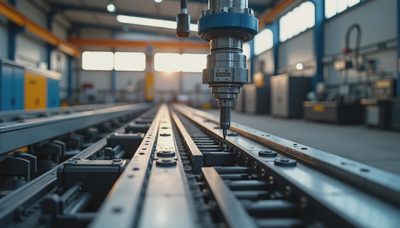
- Rails
It also draws a clear contrast between two delivery approaches:
- Manual lubrication: performed on a schedule by a worker (example: grease gun).
- Automatic/centralized lubrication: uses preprogrammed settings to supply lubricant precisely and consistently to multiple machine components, in real time, as needed, without constant oversight.
From a reliability standpoint, the move from manual to automatic is really a move from “best effort” to “controlled delivery.” Manual routes can be done well—but they are inherently exposed to human factors (missed points, inconsistent volumes, variable intervals). Automatic systems, as described in the source, are designed to standardize those variables.
The source also points to several lubrication system manufacturers and what they emphasize:
- Graco, Inc. (Minneapolis, MN): lubrication equipment division manufacturing products used to dispense, meter, and transfer motor and gear oils, grease, hydraulic and transmission fluids, antifreeze, and other specialty lubricants.
- LSP Industries, Inc. (Rockford, IL): designs, manufactures, and supports lubrication system solutions tailored to demanding industrial needs.
- American Design & Manufacturing, Inc. (South Windsor, CT): customized lubrication systems and related equipment; notes “over 100 years of combined knowledge” on its team.
- Oil-Rite Corporation (Manitowoc, WI): designs and manufactures lubrication systems focused on precise, reliable lubrication to reduce wear and maintenance costs.
- Impact Fluids (Grandville, MI): high-performance lubricating systems aimed at improving reliability, extending service life, and minimizing downtime.
No performance numbers, service intervals, or cost/ROI figures are provided in the source, so procurement teams should treat vendor claims as qualitative until validated against your application requirements and documented test data.
Application Note (shop-floor translation): Manual vs. ALS on a chain drive
In the lab we call it “lubricant starvation at the pin-bushing interface.” On your shop floor, it looks like a chain that runs hot, elongates early, and starts shedding debris. A centralized system’s value is consistent, repeatable delivery to that interface without relying on perfect lube-route execution.
Operational Impact
The source is explicit on the mechanism of value: proper lubrication is arguably the most critical factor in reliable industrial equipment operation and in minimizing unplanned downtime. It also states the failure pathway when lubrication is ineffective: increased friction, excessive heat, and accelerated component wear—leading to more frequent maintenance needs and higher costs.
For fleet and plant maintenance supervisors, the practical implications are:
1. Preventive maintenance schedule stability
- Manual lubrication is “performed on schedule by an individual worker.” That puts schedule adherence at the mercy of staffing, access, and route discipline.
- Automatic/centralized lubrication—described as preprogrammed and consistent—can reduce missed events and help normalize lubrication intervals across shifts and sites.
2. Mean time between failures (MTBF) and downtime risk
- When friction and heat rise due to lubricant delivery issues, wear accelerates. The source ties this directly to unplanned downtime.
- ALS systems are positioned as a way to feed lubricant “in real time, as needed,” which—if properly engineered—targets the root cause: inconsistent film formation at the contact.
3. Labor exposure and task standardization
- Manual grease gun work can require technicians to be close to rotating equipment or awkward access points. While the source does not discuss safety explicitly, reducing constant human oversight is a direct operational lever: fewer manual touches and fewer chances for inconsistency.
4. Procurement alignment: fluids vs. systems
- The Graco description is a reminder that many reliability problems are not only “which grease,” but also how you dispense, meter, and transfer oils and greases. Metering and transfer control can be just as decisive as lubricant selection.
Application Note (equipment scenario): Bearings in a multi-point machine
In the lab we call it “scatter in relubrication volume.” On your shop floor, it means Bearing A gets overgreased (heat, seal stress), while Bearing B is undergreased (wear, noise). A centralized system’s advantage is synchronized, consistent delivery across points—when the system is correctly designed and maintained.
What to Watch
The source positions automatic lubrication as “indispensable” in modern manufacturing, heavy equipment operations, and other demanding environments. For decision-makers, the watch-outs are less about hype and more about governance:
- Standards discipline (non-negotiable in selection and audits)
The source does not cite standards directly, but lubrication programs should be anchored to recognized guidance. For lubricant consistency and grease classification, align procurement and labeling to ISO viscosity grading and NLGI grease grades, and use ASTM test methods when comparing supplier data. Do not accept “equivalent” claims without traceable documentation.
- Vendor support and serviceability
Several listed manufacturers emphasize design, manufacture, and support. That matters because automatic systems add hardware that must be maintained. Your purchasing decision should include how the supplier supports commissioning, troubleshooting, and parts availability.
- Application fit
The source lists a broad range of lubricated components (gears, bearings, chains, rails, etc.). Centralized lubrication can be highly effective, but only when engineered for the right lubricant type, distribution method, and duty cycle.
Application Note (field reality): Rails and exposed lubrication points
In the lab we call it “contamination ingress and wash-off.” On your shop floor, it means the lubricant you applied yesterday is gone after exposure, and wear starts immediately. Automatic delivery can help maintain film presence more consistently than periodic manual application—provided the lubricant and delivery strategy suit the environment.
Bottom Line
If your maintenance outcomes depend on manual grease-gun routes performed on schedule by individual workers, the source points to a clear modernization path: evaluate automatic lubrication systems (ALS) or centralized lubrication systems that deliver lubricant precisely and consistently, with preprogrammed settings, to critical machine components in real time, as needed.
Action for fleet and operations managers: treat lubrication delivery as a reliability system, not a consumable. Use standards-based specifications (ISO, ASTM, NLGI) to control what goes into the machine, and apply the same rigor to how it gets there—manual or automatic—because friction, heat, and wear will invoice you either way.