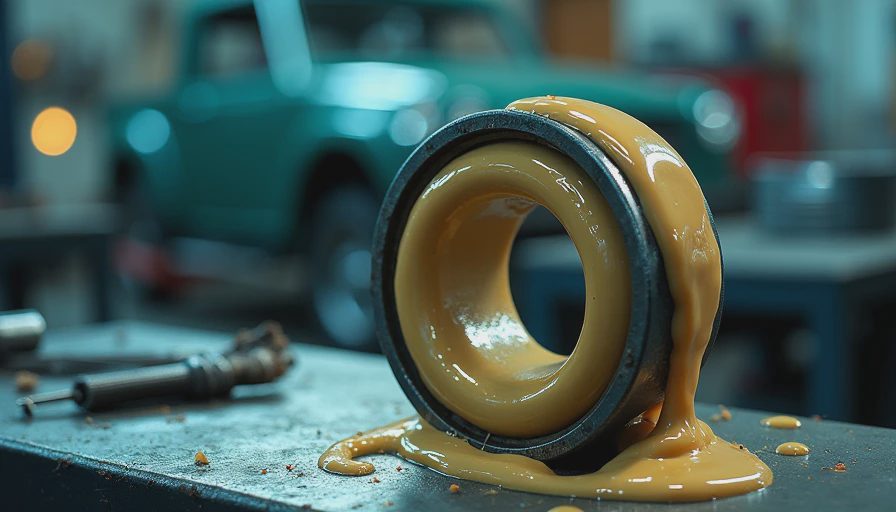
High temp grease for bearings is usually discussed only after a bearing turns blue, purges oil, or starts howling on startup. That is backward. The engineering problem is simple: once temperature rises, grease structure changes, base oil viscosity drops, oxidation accelerates, and the bearing loses film thickness right when load and speed are still demanding protection. In the lab we call this thermal and oxidative stability — on your shop floor, it means whether the bearing survives the shift. If you are selecting grease for electric motors, trailer hubs, oven conveyors, or marine auxiliaries, the right answer is not the product with the highest advertised temperature number.
What “high temp” actually means in bearing service
A common mistake is treating high temperature as one number on a cartridge label. In practice, bearing grease sees several temperature definitions. There is operating temperature, peak or excursion temperature, dropping point, and the temperature at which oxidation and oil bleed become unacceptable. By the relevant standard, ASTM D2265 measures dropping point, but dropping point is not a safe continuous-use limit. A lithium complex grease may show a dropping point above 500°F and still age rapidly if the bearing runs continuously much above roughly 300°F.
For rolling bearings, heat changes two things that matter immediately: the base oil gets thinner, and the thickener network releases oil differently. If the oil becomes too thin for the speed and load, elastohydrodynamic film thickness falls. If oxidation hardens the grease, it stops replenishing the contact zone. Three failure modes, one root cause — here they are: starvation, oxidation, and mechanical degradation.
That is why high temp grease for bearings should be chosen by operating temperature range, bearing speed, load, relubrication interval, and contamination exposure, not by marketing language alone.
The grease properties that actually decide success
Start with base oil viscosity. For slower, more heavily loaded bearings, you typically need a heavier base oil; for high-speed electric motor bearings, too much viscosity can create churning and heat. Next is thickener type. Lithium complex is widely used because it balances cost, pumpability, and high-temperature capability. Polyurea is common in electric motor bearings because it offers good oxidation stability and noise performance when properly formulated. Calcium sulfonate complex is excellent where water resistance and load carrying matter along with heat.
NLGI grade also matters. NLGI 2 is the general-purpose workhorse, but NLGI 1 or 0 can be appropriate in centralized systems or colder starts. Consistency is classified by NLGI, while worked penetration is measured by ASTM D217. Oxidation stability is often checked by ASTM D942 or pressure vessel methods. Load carrying may be screened with ASTM D2596 four-ball EP testing, though that is not a direct bearing life test.
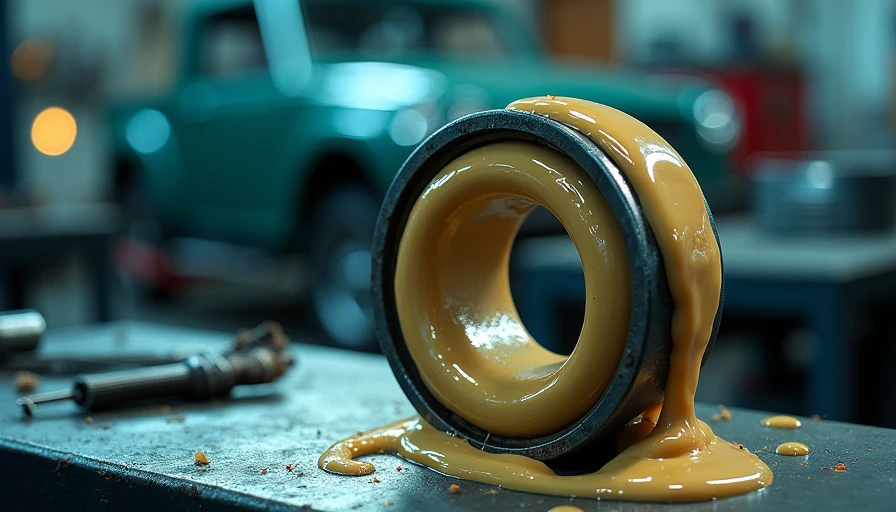
Application Note: On an oven conveyor bearing running moderate speed at sustained elevated temperature, I usually care more about oxidation resistance and controlled oil release than about extreme-pressure hype. On a wet marine deck winch bearing, calcium sulfonate complex often earns its keep because water washout resistance is part of the failure equation.
Matching grease chemistry to the bearing application
High temp grease for bearings in an electric motor is not the same as high temp grease for bearings in a wheel hub or kiln conveyor. Electric motor bearings usually want a grease with good channeling, oxidation stability, and the correct base oil viscosity for DN value, the product of bearing bore in millimeters and speed in rpm. Overgreasing is a frequent killer here. Excess grease churns, creates heat, and oxidizes faster.
Wheel bearings and trailer hubs face a different package of stresses: intermittent heat, shock load, water intrusion, and long idle periods. Here, mechanical stability and corrosion protection move up the list. In steel mills, paper mills, or marine auxiliaries, contamination can dominate everything. A technically strong grease still fails if solids, water, or incompatible grease residue enter the housing.
Compatibility deserves special emphasis. Mixing polyurea with some lithium-complex products can soften or harden the mixture unpredictably. By NLGI compatibility guidance, treat grease changes as engineering changes, not housekeeping. If you switch products, purge thoroughly or clean the housing during planned maintenance.
Standards and test data worth reading before you buy
When I review a grease data sheet, I want more than a bold “high temperature” claim. I look for NLGI grade, thickener type, base oil viscosity at 40°C and 100°C, dropping point by ASTM D2265, water washout by ASTM D1264, oil separation, corrosion results by ASTM D1743, and oxidation stability data. For wheel-bearing style service, ASTM D4950 can be relevant because it classifies automotive service greases such as GC-LB, but industrial users still need to go beyond that label.
In the lab we call this selecting by performance envelope — on your shop floor, it means checking whether the grease can survive your real duty cycle, not a bench number in isolation. A premium synthetic PAO or ester-based grease often justifies its cost where heat is continuous, because oxidation resistance and viscosity retention are materially better than low-cost mineral products.
Still, skip the obvious mistake of assuming synthetic automatically means best. If the thickener, additive package, or viscosity grade is wrong for the bearing geometry and relube practice, expensive grease can fail very efficiently.
Relubrication, storage, and failure analysis
Even the best high temp grease for bearings cannot rescue poor relubrication practice. At elevated temperature, grease life shortens quickly because oxidation roughly accelerates with heat. The exact rate depends on chemistry, but the direction is never your friend. That means shorter relube intervals, smaller controlled shots, and attention to purge paths. If old grease cannot exit, fresh grease simply packs the cavity and raises temperature.
Application Note: For electric motors, regrease with the machine condition in mind, not by calendar alone. Vibration trend, bearing temperature, acoustic data, and purge appearance tell you more than habit does. For slow hot bearings, inspect for hard crusting near the seal land; that is often oxidized residue, not usable lubricant.
Storage matters too. Keep cartridges clean, sealed, and away from direct heat. Grease can separate in storage, and contamination introduced at the grease gun is still contamination. If a bearing fails, cut through the symptom list systematically: Was the grease incompatible? Was the base oil too light? Was the cavity overfilled? Did water ingress strip the film? Three failure modes, one root cause — here they are again: wrong product, wrong amount, wrong interval.
Practical selection checklist
If you need a working rule, begin with actual operating temperature, bearing speed, and load. Then choose thickener family, base oil viscosity, and NLGI grade to suit that duty. Confirm oxidation stability, water resistance, and corrosion protection from recognized ASTM data. For many industrial applications, lithium complex remains the general-purpose baseline; for electric motors, polyurea is often a serious candidate; for wet, hot, loaded service, calcium sulfonate complex deserves close attention.
My practical advice is simple: do not buy high temp grease for bearings by maximum temperature claim alone. Buy it by bearing duty, standard test data, and compatibility discipline. That approach is less exciting than a bold label, but it is how bearings stay quiet, cool, and in service.



No feedback yet — submit the first.