
As a tribologist who spends summers sea kayaking the San Juan Islands, I've seen firsthand what salt water does to marine equipment. In the lab we call this galvanic corrosion — on your shop floor, it means pitted propeller shafts and failing engine blocks. These prevent boat corrosion tips will help protect your vessel from the electrochemical attack that never stops.
Salt water is an aggressive electrolyte. When two dissimilar metals are electrically connected, a galvanic cell forms, and the more active metal corrodes. On a boat, you have bronze propellers, stainless steel shafts, aluminum outdrives, and copper-based antifouling paints — a perfect recipe for accelerated corrosion. The economic impact is staggering: hull replacements, engine overhauls, and lost time on the water. To effectively prevent boat corrosion, you need to understand the electrochemistry and apply proven strategies.
Understanding the Electrochemical Mechanism Behind Boat Corrosion
Corrosion on a boat is primarily galvanic corrosion. The driving force is the difference in electrode potential between metals in the presence of seawater. The standard reference is the galvanic series in seawater. Zinc and aluminum are anodic (corrode), while stainless steel and bronze are cathodic (protected). The greater the potential difference, the faster the corrosion. Temperature, salinity, and oxygen concentration all affect the rate. In the lab, we measure corrosion potential with a silver/silver chloride reference electrode. On your shop floor, you can use a simple multimeter to check if anodes are working. The key to prevent boat corrosion is to control the galvanic cell — either by introducing a sacrificial anode, applying a protective coating, or ensuring proper electrical bonding.

Application Note: Sacrificial Anodes and ASTM B418 Compliance
Sacrificial anodes are the most common method to prevent boat corrosion. They are made of zinc, aluminum, or magnesium. For saltwater, zinc anodes per ASTM B418 (Standard Specification for Cast and Wrought Galvanic Zinc Anodes) are standard. Aluminum anodes are also used in higher-temperature or polluted waters. Magnesium anodes are for freshwater only — they overprotect and cause hydrogen embrittlement in saltwater. The anode must be electrically connected to the metal it protects. A common mistake is painting the anode or mounting it on a painted surface, which insulates it. Application Note: For an inboard engine with a bronze propeller, install a zinc anode on the propeller shaft and another on the engine transmission cooler. I've seen anodes consumed in three months in Puget Sound — check them every haul-out. The following prevent boat corrosion tips from my consulting work emphasize anode sizing: use the right weight based on the wetted surface area of protected metals.
Lubrication Strategies to Prevent Boat Corrosion
Proper lubrication creates a physical barrier that excludes moisture and oxygen. For marine equipment, use greases that meet NLGI Grade 2 with corrosion inhibitors and water resistance. ASTM D1743 (Standard Test Method for Determining Corrosion Preventive Properties of Lubricating Greases) provides a benchmark. For example, a lithium-complex grease with moly disulfide works well for steering cables and propeller shaft splines. For through-hull fittings, use a Teflon-based marine grease that withstands water washout. I recommend applying grease to every fastener before assembly — it prevents galling and seals out saltwater. These prevent boat corrosion tips extend beyond lubrication: ensure all grease fittings are clean, and reapply after every launch if the boat sits in water. Don't use automotive greases; they lack the water resistance and emulsify in saltwater, causing rust.
The Role of Coatings and Sealants in Marine Environments
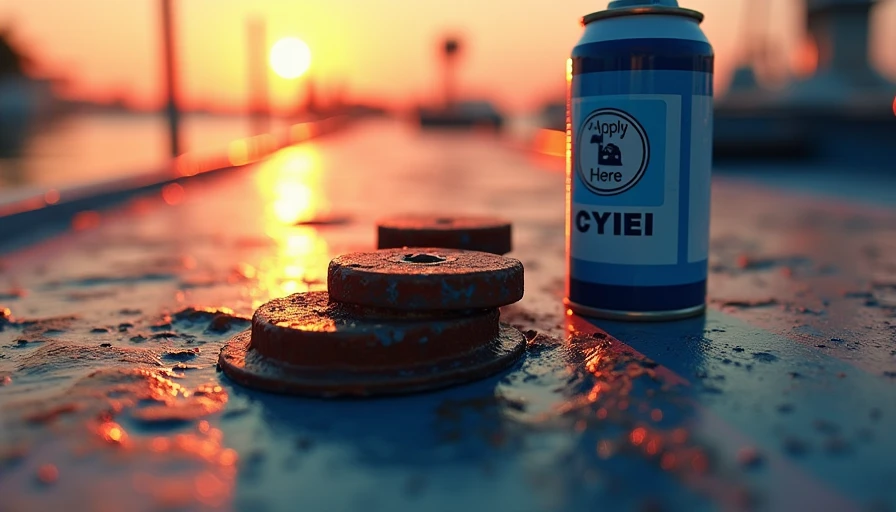
Coatings provide a second line of defense. For engine blocks, apply a marine-grade epoxy primer followed by polyurethane topcoat. ISO 12944 (Paints and Varnishes — Corrosion Protection of Steel Structures by Protective Paint Systems) defines coating categories. For underwater hulls, use antifouling paints with copper or biocides, but ensure they are compatible with anodes — copper is cathodic to aluminum, so it accelerates corrosion of aluminum outdrives if not properly painted. Sealants like polysulfide or polyurethane should be used on all deck fittings and hull penetrations. A common oversight is failing to seal the keel bolts — water wicks up, causing internal corrosion. These prevent boat corrosion tips include annual inspection of coatings: look for blisters, cracks, or delamination, especially around fasteners.
Routine Inspection Checklist for Corrosion Prevention
A systematic inspection can catch corrosion before it becomes critical. Here is a checklist I give to clients:
- Check all sacrificial anodes: measure weight loss and replace when 50% consumed.
- Measure galvanic potential between bonded metals: should be less than 0.2V difference.
- Inspect all electrical bonding wires and connections for continuity.
- Look for rust stains around fasteners, which indicate crevice corrosion.
- Check lubricant condition on steering system, cables, and through-hulls.
- Examine coatings for damage, especially near the waterline and at fitting bases.
- Test zinc anodes with a reference electrode to ensure they are active.
Adopting these prevent boat corrosion tips will extend the life of your vessel. In my years consulting for Pacific Northwest fisheries, routine inspections halved corrosion-related repairs.
By applying the principles of galvanic corrosion control, proper anode selection, quality lubrication, and protective coatings, you can significantly reduce corrosion damage. These prevent boat corrosion tips are grounded in tribology and marine engineering practice — use them to keep your boat running reliably season after season.


No feedback yet — submit the first.