Synthetic marine engine oil gets discussed as if it were just a premium version of automotive oil. It is not that simple. A marine engine lives under long steady loads, frequent cold starts, moisture exposure, fuel dilution risk, and corrosion pressure that road engines rarely see for long. When the lubricant is wrong, the failure pattern is predictable: oxidation thickening, varnish, ring sticking, bearing distress, and rust where no one wants it. In the lab we call this lubricant degradation under thermal and contaminant stress — on your shop floor, it means expensive downtime at the dock.
Why marine engines ask more from oil
A boat engine often runs at sustained RPM for long periods, especially in offshore fishing, tow, and cruising duty. That matters because oil film thickness, oxidation resistance, and deposit control are being tested continuously, not in short bursts like many passenger cars. By the relevant standard, viscosity grade is only the starting point. You also need the additive system to match the engine type: FC-W oils for four-stroke gasoline marine engines are defined under NMMA performance requirements, while many marine diesels call for heavy-duty oils meeting API categories specified by the engine builder.
Synthetic marine engine oil usually earns its keep in three places: better oxidation stability, stronger low-temperature flow, and improved resistance to viscosity loss from shear. Shear is the mechanical tearing-down of polymer structures used to control viscosity. In the lab we call this temporary or permanent viscosity loss — on your shop floor, it means the oil gets thinner where bearings and cam lobes need margin. For engines that idle cold, then pull hard for hours, that margin matters.
Three failure modes, one root cause — here they are: heat, contamination, and wrong formulation. Saltwater itself should not be entering the crankcase, of course, but marine service creates a corrosion-prone environment that punishes weak rust inhibition and marginal maintenance habits.
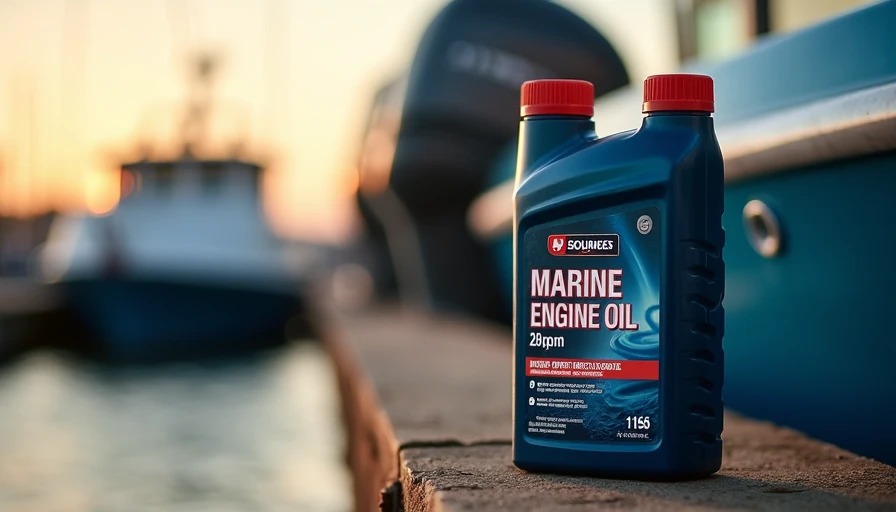
What “synthetic” really changes in the base oil
Synthetic does not mean magic; it means the base stock is built for tighter molecular control than conventional mineral oil. In practical terms, that usually improves volatility, oxidation resistance, and cold-flow behavior. Lower volatility means less tendency for lighter fractions to evaporate at heat, which helps control oil consumption and deposit formation. Oxidation resistance matters because oxidation byproducts create acids, sludge precursors, and varnish on hot surfaces such as ring lands and valve train components.
For many readers, the useful comparison is this: a quality conventional oil can be entirely acceptable if the OEM calls for it and the duty cycle is moderate, but synthetic marine engine oil offers more reserve when sump temperatures climb, intervals are seasonal, or the engine sees repeated heavy loads. ASTM D445 viscosity and ASTM D2270 viscosity index are the sort of laboratory properties behind that behavior. You do not need to memorize the test methods, but you do want to understand the consequence. A higher-quality base oil generally keeps its intended viscosity over a wider temperature range.
Application Note: On a sterndrive gasoline engine that sees spring cold starts and midsummer trolling followed by high-load runs home, synthetic oil often improves startup lubrication and deposit control more than the sales label suggests.
Viscosity grade, standards, and what label details matter
Start with the owner’s manual. If the manual specifies an SAE 25W-40 FC-W oil, that requirement outranks generic advice. SAE viscosity grades describe flow characteristics at low and high temperature, but they do not tell you everything about corrosion resistance, foaming, or deposit control. That is why standards matter. NMMA FC-W and FC-W Catalyst Compatible oils are formulated for marine four-stroke gasoline engines, with attention to rust protection, shear stability, and aeration control. Aeration means air entrained in the oil; on your shop floor, that means a weaker oil film and less predictable hydraulic lifter behavior.
For marine diesels, the decision usually follows the engine manufacturer’s specification, often referencing API CK-4, CJ-4, or earlier categories depending on engine age and emissions hardware. Do not assume an automotive gasoline synthetic is interchangeable with a marine formulation. The additive package can be wrong for corrosion protection, and catalyst compatibility or ash levels may matter.

If you run multiple assets, label discipline pays. Keep separate inventory for outboards, inboards, and diesel auxiliaries. The cost difference between a standard oil and a premium synthetic marine engine oil might be modest per service, often tens of dollars, but one wrong fill can cost far more in teardown labor.
When synthetic marine engine oil is worth the extra cost
I generally recommend paying for synthetic when one or more of these conditions are true: high output per liter, supercharged marine gasoline engines, turbocharged diesels, long no-wake idling followed by hard load, cold-weather starts, or seasonal storage where oxidation reserve and corrosion protection matter. The chemistry margin is real. Better base stocks and a robust additive package help the oil survive fuel dilution, moisture, and thermal cycling with less sludge and fewer deposits.
That does not mean every skiff with a lightly used naturally aspirated engine needs the most expensive bottle on the shelf. If the OEM specifies a conventional or blend and the service is mild, changing on time may matter more than upgrading. But once you see elevated oil temperature, darkened varnish under the fill cap, sticky ring behavior, or consumption creep, the value equation changes quickly.
Application Note: For charter or commercial duty, I like pairing synthetic marine engine oil with used oil analysis. A basic lab panel for viscosity, oxidation, fuel dilution, wear metals, and water can show whether the premium product is buying real drain stability or simply peace of mind.
Practical selection and maintenance mistakes to avoid
First, match engine type before brand. Two-stroke outboards use entirely different lubricant chemistry than four-stroke crankcase oils; TC-W3 is not interchangeable with FC-W. Second, do not chase viscosity upward just because the engine is older. Higher viscosity can mask pressure concerns while hurting cold flow and startup lubrication. Third, storage matters. A half-open bottle on a damp dock is not ideal quality control.
If you are comparing products, look beyond the front label. Check the approvals, intended application, and whether the product is marketed for marine gasoline, marine diesel, or mixed fleet use. Major brands such as Mercury/Quicksilver, Yamaha, Shell Rotella, Mobil Delvac, and Chevron Delo each have legitimate use cases, but the right answer depends on the specification, not the logo.
My working rule is simple: choose the exact standard first, the correct viscosity second, and the synthetic upgrade third. Synthetic marine engine oil is not a cure-all, but in the right engine it gives you better thermal stability, cleaner hardware, and more operating margin when the day gets long and the water gets rough. If you maintain boats for a living, that margin is often the cheapest reliability upgrade on the vessel.