Every machine shop has a coolant that smells off, a rust ring on a machined part, or a sump that needs dumping early. Most of the time, the problem traces back to a mismatch between the metalworking fluid standard you spec and the job the fluid actually has to do. In the lab we call this a classification error — on your shop floor, it means downtime, scrap, and hours spent troubleshooting.
Why a Metalworking Fluid Standard Matters
A fluid standard exists for the same reason a gear oil spec exists: so a product is consistent, testable, and safe to use. Without a standard, every supplier could call any green liquid a coolant. You would have no way to compare fluids, no way to know if a new batch matches the old, and no legal defense if a fluid causes dermatitis or a fire hazard. By the relevant standard — ISO 6743-7 — you get a classification that tells you what the base oil is, what the emulsifier system is, and what the fluid is intended to do. The metalworking fluid standard you choose sets the baseline for every test your shop performs.
The Key Standards Behind the Metalworking Fluid Standard
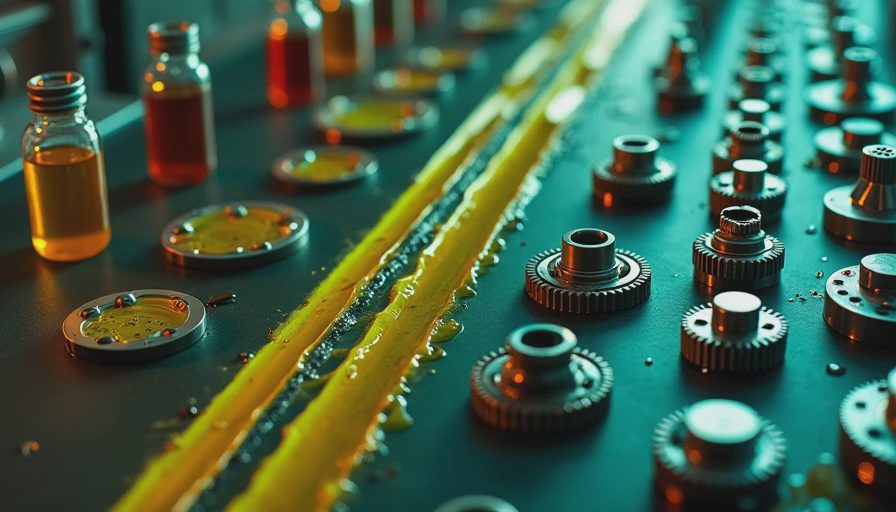
In the United States, the classification landscape is built on two documents. ASTM D2881 provides a classification of metal working fluids according to the types of base stock used. It separates straight oils, soluble oils, semisynthetics, and synthetics. ISO 6743-7, the international standard, goes further and assigns code letters based on the application and the fluid's formulation. It uses the prefix L-M (for lubricants, metalworking) followed by letters like A, B, C, D, E, F, G, H. For example, L-MHA is a neat oil, L-MHB is a water-miscible fluid. These codes give you a precise shorthand for what a fluid can do.
How to Read an ISO 6743-7 Classification
In the lab we call this a classification system — on your shop floor, it means you can tell a fluid's intended use just from its name. The first letters L-M tell you the product is a metalworking lubricant. The next letter, like A or B, indicates the family. A refers to neat oils, B to water-miscible fluids. The third letter narrows it further by specific operation such as grinding, drilling, or heavy cutting. When a drawing calls out an L-MHB fluid, you know it is water-miscible, intended for light to medium operations, and likely needs dilution. The standard also sets test methods for things like pH, corrosion resistance, and microbiological resistance. So a metalworking fluid standard is not just a name — it is a contract between supplier and user, verified by ASTM tests.
Applying the Standard on the Shop Floor: Practical Checks
The classification tells you what the fluid should be, but your daily checks tell you whether it is still that. A refractometer, pH strips, and a simple tramp oil test are cheap. But you have to calibrate them to the exact fluid and concentration you use. For example, a semisynthetic cutting fluid at 7% dilution should hold a pH around 8.8 to 9.2. If it drops below 8.5, bacteria are starting to win. If the concentration drifts by more than one point from the manufacturer's spec, test results become meaningless. That is why every maintenance manual worth its salt references the standard and its associated test methods. The standard keeps everyone honest.

Common Mistakes When Interpreting the Standard
Mistake number one: treating a classification as a performance guarantee. The standard classifies, it does not certify performance. Two fluids in the same ISO category can behave differently on your specific machine, with your water hardness, and with your part material. Mistake two: ignoring the water quality. Most water-miscible fluids will split with hard water. The standard assumes a reasonable water chemistry, but it won't fix a high magnesium problem. Mistake three: using the wrong category entirely. If you are cutting aluminum and your fluid is formulated for ferrous metals, you'll see staining and built-up edge. These mistakes cost real money. A fluid change on a 20-tool CNC line with 500-gallon sumps runs about $8,000 to $15,000 with disposal and labor. The metalworking fluid standard helps you avoid that, but only if you read it correctly.
Application Note: Choosing a Fluid for Your CNC Line
Application Note: Suppose your shop runs both aluminum and stainless steel parts on the same machining center. A single ISO classification won't serve both. Neat oils like L-MHA give the best surface finish on aluminum but create smoke risks. A water-miscible semisynthetic designed for ferrous metals may leave white powdery stains on aluminum. The solution is to split the line or choose a product that carries two classifications. Some suppliers offer a heavy-duty semisynthetic that meets L-MHB requirements and carries a specific corrosion protection additive for aluminum. That is the kind of subtlety a classification alone cannot convey. Run a controlled trial for two weeks, measure tool wear and surface finish, and then let the standard confirmation be your backstop.
Final Thoughts
No one got a raise for reading a standard, but plenty of plants have been shut down for using the wrong fluid. The classification is your first line of defense against sump failures, dermatitis complaints, and rejected parts. Learn the ISO 6743-7 codes, keep a copy of ASTM D2881 near the coolant mix station, and verify every new drum against the classification you actually need. That will keep your spindle turning and your foreman happy.


No feedback yet — submit the first.