Keeping Data Centers Online: What the Army’s Caterpillar Generator PM Specs Signal for Any Mission-Critical Site
The Big Picture
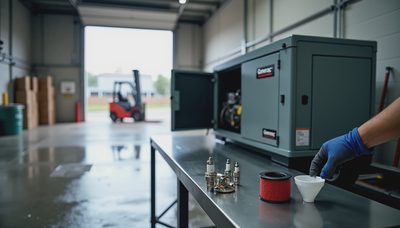
When standby generators fail, it is rarely a “generator problem” in the abstract—it is an uptime, safety, and business-continuity problem. In tribology terms, we often see failures that begin as lubrication, contamination, or wear issues and end as a no-start event, unstable frequency/voltage under load, or an overheat shutdown. On your shop floor, that means a dark facility, stalled operations, and potentially damaged IT equipment.
A recent U.S. Army solicitation for “Generator Semi-Annual Preventive Maintenance (PM), Emergency Repair Services (ERS)” underscores what mission-critical operators already know: preventive maintenance schedules and documented load testing are not optional when battery backup runtimes are short and loads are heavy. The solicitation’s clarifications center on two practical requirements: rapid emergency response and standardized load bank testing across a fleet of Caterpillar generator sets.
Key Details
The government Q&A attached to the solicitation provides several operationally specific requirements that translate cleanly to industrial best practice for critical power.
Emergency response expectation tied to battery backup limits
The government clarifies a two-hour on-site requirement for emergency calls as a must-have, explaining why: these are back-up generators that must be operational within 2 hours or less because IT equipment switches to battery back-up, and that battery capacity “only lasts for a very short time with the heavy data center load.”
For fleet and facilities managers, this frames ERS not as a vague service-level goal, but as a hard constraint driven by the downstream system (UPS runtime under real load). It also implies that contract language and dispatch logistics must be aligned with the site’s actual ride-through capability.
Load bank testing: defined levels and durations
Testing requirements are specified in the performance work statement (PWS) referenced in the addendum. The government’s answer points directly to the load steps:
- 30 minutes at 20% of rated load of the genset
- 30 minutes at 50% of rated load of the genset
This is not a generic “test it under load” statement; it is a defined two-step protocol with both percent-of-rating and dwell time. It gives maintenance supervisors something concrete to audit against: the load bank must be capable of stable loading at the specified percentages, and the test must be long enough at each step to observe thermal stabilization trends and control behavior.
Standardization across equipment
In response to whether requirements differ by generator, the government states: No—the generators are all Caterpillar and “follow the same type of load bank testing.” For multi-site operators, the takeaway is the value of a single, repeatable test regimen across like equipment, which simplifies technician training, checklists, and trend analysis.
Test frequency
The solicitation clarifies frequency: an annual load bank test.
Semi-annual PM paired with annual load testing is a common pairing in critical environments: PM addresses condition and readiness; load testing verifies performance under controlled demand.
Reporting turnaround
On Caterpillar “Advantage ESC,” the government specifies that after services are performed, the vendor finalizes the service and sends a copy to facilities management and the COR, typically in less than 2–3 days (depending on workload). For industrial operators, the operational lesson is that documentation latency matters—especially when compliance, warranty alignment, or audit readiness depends on timely reports.
---
Application Note: Data center standby gensets with short UPS runtime
In the lab we call it *time-to-functional-load acceptance*—on your shop floor, it means your generator must be producing stable power before the UPS batteries are depleted. A two-hour on-site requirement only protects you if the technician can diagnose, repair, and return the unit to service inside your real ride-through window. Validate UPS runtime under the “heavy data center load” you actually run, then align ERS language and parts staging to that constraint.
Operational Impact
Mean time between failures (MTBF) is shaped by readiness, not just runtime
Standby units may accumulate few operating hours, yet they fail at the moment of need because of neglected degradation mechanisms—fuel quality, coolant issues, battery health, or lubrication problems that only show up under heat and load. A semi-annual PM cadence, as indicated by the solicitation, is intended to reduce latent failure modes that shorten MTBF in emergency starts.
Load bank testing converts “it starts” into “it carries the load”
The specified protocol—30 minutes at 20% and 30 minutes at 50%—is an operational verification that the engine, alternator, controls, and cooling system remain stable at defined load points. For procurement specialists, this is where scope clarity prevents change orders: ensure the contract explicitly includes the load bank capacity and time-on-load needed to execute the PWS steps.
Standardization lowers total cost of ownership (TCO) through repeatability
The government’s statement that all units are Caterpillar and use the same load bank testing approach is a reminder that standard work reduces cost: fewer test variants, fewer technician errors, simpler QA, and cleaner trend comparisons across the fleet. If you operate a mixed fleet, consider where you can still standardize procedures (even if OEMs differ) to reduce administrative and execution friction.
Documentation turnaround is part of uptime management
A 2–3 day reporting cycle may seem administrative, but it affects how quickly deficiencies are closed and how rapidly leadership gets visibility. If a PM reveals a trending issue, delays in paperwork often become delays in approvals, parts ordering, and corrective work execution.
---
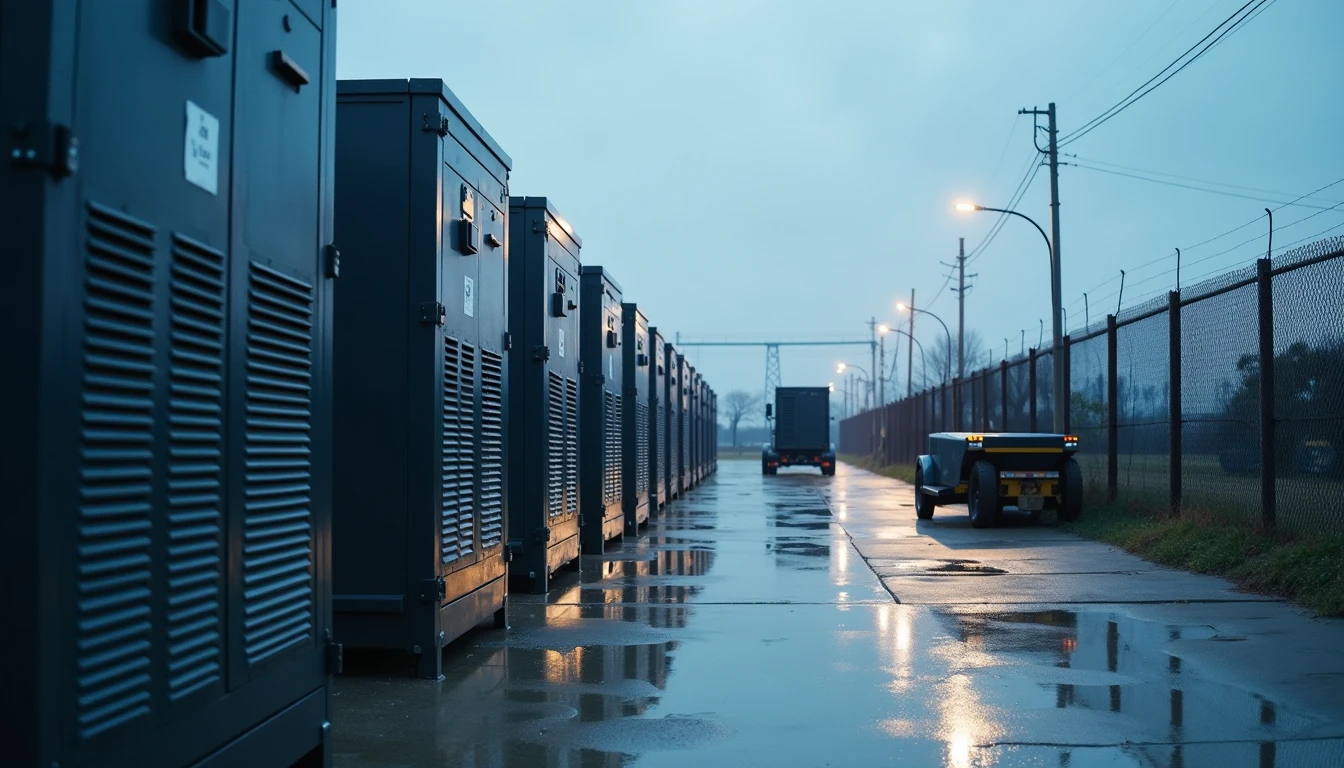
Application Note: Multi-unit Caterpillar generator fleet at industrial sites
In the lab we call it *procedural control*—on your shop floor, it means every genset gets the same checklist, the same load steps, and the same acceptance criteria. If your vendor cannot deliver consistent documentation within a few days, your corrective actions will lag and your risk exposure grows between PM cycles.
What to Watch
Service-level commitments must match operational reality
The solicitation’s two-hour on-site requirement is explicitly justified by limited battery backup duration under heavy IT load. For any mission-critical facility—data center, hospital, process plant—service response time should be derived from actual ride-through and restart constraints, not arbitrary contract norms.
Audit-ready proof of testing
Even when a solicitation does not cite a specific industry test standard in the excerpt provided, the level-and-duration specificity implies the owner expects objective evidence that testing occurred as written. Build internal controls so test records, reports, and corrective actions are retrievable and consistent.
Alignment between PM frequency and load testing frequency
Annual load bank testing with semi-annual PM suggests a two-tier readiness strategy. If your operational risk profile changes (load growth, environmental changes, aging equipment), reassess whether the annual load test remains sufficient.
Bottom Line
For fleet and facilities decision-makers managing standby power for mission-critical loads, this solicitation’s requirements reinforce a practical playbook: lock in a rapid ERS response time that matches your actual battery backup limits; execute defined load bank testing (30 minutes at 20% and 30 minutes at 50% of rated load) at least annually; and demand consistent reporting within a few days so corrective actions do not stall. The business outcome is straightforward: fewer surprise no-starts, higher confidence in emergency readiness, and tighter control of uptime risk.