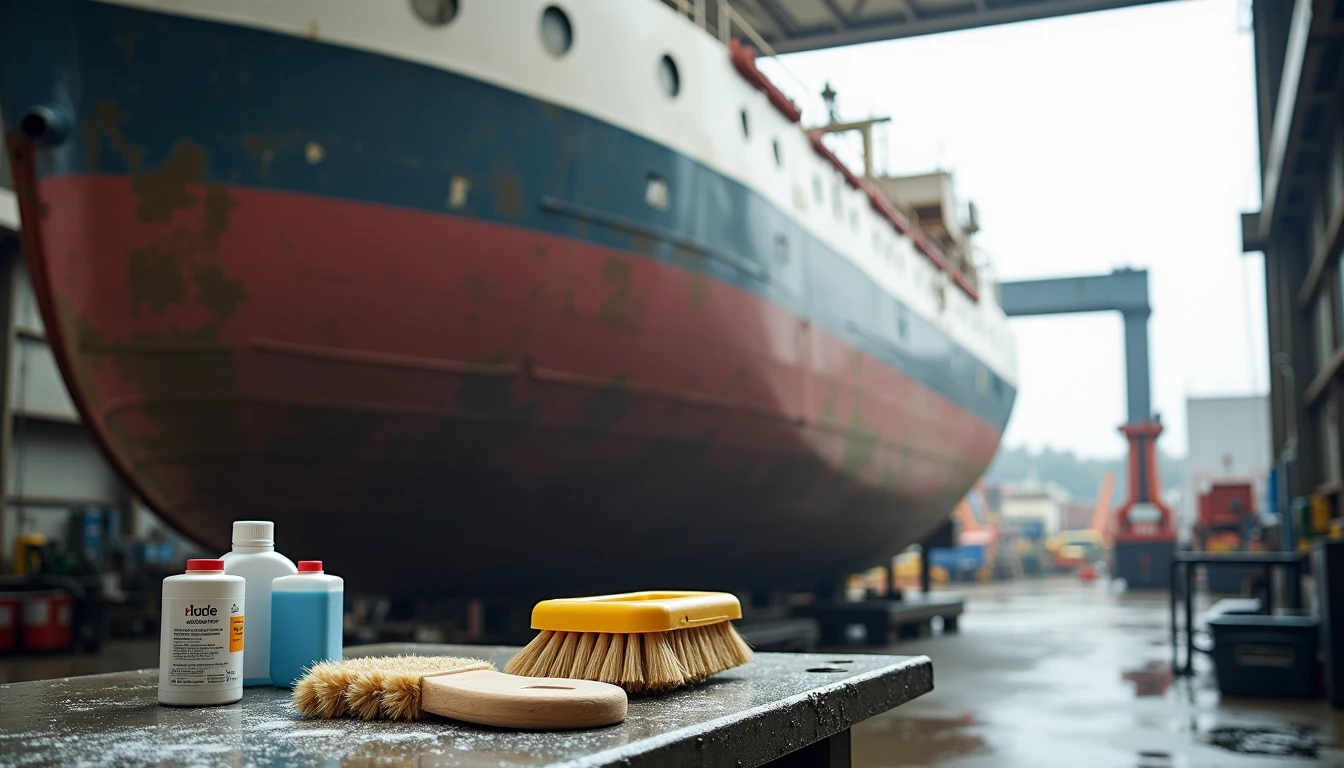
Hull Maintenance Protocols for Marine Fleets: Reducing Drag, Extending Uptime, and Protecting ROI
The engineering problem is straightforward: unmanaged surface friction and biological fouling accelerate coating degradation, compromise structural integrity, and inflate fuel consumption. In the lab we call this hydrodynamic drag and interfacial wear — on your shop floor, it means premature hull failure, unscheduled dry-docking, and eroded total cost of ownership. For marine fleet operators, the hull is the primary load-bearing interface with the operating environment. When coatings fail or marine growth accumulates, mean time between failures drops, and regulatory compliance becomes a liability rather than a baseline.
The Big Picture
Marine hulls operate in a highly abrasive, corrosive, and biologically active environment. Whether managing displacement hulls that cut through water at lower speeds or planing hulls designed to rise and glide at higher velocities, the underlying physics remain constant. Surface roughness directly correlates with parasitic drag. Unchecked drag increases fuel consumption, strains propulsion systems, and accelerates mechanical wear downstream. Fleet managers who treat hull maintenance as a cosmetic exercise are ignoring a critical tribological interface. Proper upkeep transforms the hull from a liability into a controlled variable, stabilizing preventive maintenance schedules and protecting capital assets.
Key Details
Hull construction dictates inspection and cleaning protocols. Fiberglass dominates modern fleets due to durability and low maintenance requirements. Aluminum offers lightweight construction and inherent corrosion resistance but requires vigilant monitoring for pitting. Wood, while aesthetically traditional, demands frequent upkeep and is rarely deployed in high-utilization industrial applications.
Inspection frequency should align with utilization rates: perform comprehensive checks after each operating season or at minimum every few months. Technicians must document minor surface damage immediately, as unchecked micro-fractures allow water intrusion that triggers delamination and structural compromise. On fiberglass substrates, watch for small bubbles or raised areas indicating osmotic blistering. Aluminum hulls require close examination for corrosion and pitting that weakens load-bearing capacity. Across all substrates, marine growth must be quantified and removed before it embeds into protective coatings.
Cleaning protocols must preserve coating integrity. Freshwater rinsing after each outing neutralizes salt crystallization and removes abrasive debris. Material-specific cleaners should be applied according to manufacturer specifications; harsh chemicals degrade polymer matrices and compromise adhesion. Mechanical cleaning requires soft-bristle brushes to dislodge tenacious fouling without abrading the finish. Excessive scrubbing damages the coating system, creating nucleation sites for accelerated degradation. Complete rinsing and air-drying prevent residual moisture from trapping contaminants against the substrate.
Anti-fouling coatings serve as the primary barrier against biological attachment. These formulations inhibit algae, barnacles, and other marine organisms from colonizing the hull surface. Uncontrolled biological growth increases hydrodynamic drag, directly reducing fuel efficiency and limiting maximum operating speed. Over time, embedded fouling exerts mechanical stress on coatings, leading to premature failure and costly substrate repair.
> Application Note: Shop-Floor Hull Interface Management
> *In the lab we call this boundary layer disruption — on your shop floor, it means reduced fuel efficiency, slower transit speeds, and accelerated structural deterioration. When marine growth colonizes a hull, surface roughness increases parasitic resistance, forcing propulsion systems to work harder. Fleet operators should align anti-fouling reapplication cycles with ASTM surface preparation and adhesion standards to verify coating integrity before dry-docking. This prevents premature coating failure and protects the underlying substrate from water intrusion.*
Operational Impact
Integrating structured hull maintenance into preventive maintenance schedules directly influences total cost of ownership. Unmanaged fouling forces engines to operate outside optimal load curves, increasing thermal stress and reducing mean time between failures on bearings, seals, and transmission components. By maintaining a smooth, chemically stable hull surface, fleets stabilize fuel consumption profiles and extend propulsion system service intervals. Compliance with environmental discharge regulations also hinges on intact anti-fouling systems; degraded coatings can release restricted biocides, triggering EPA and port authority violations. Procurement specialists should evaluate coating lifecycle costs rather than upfront pricing, factoring in application labor, dry-dock availability, and projected fuel savings over a standard operating cycle. All coating selections must align with ISO environmental compliance frameworks and NLGI-grade compatibility guidelines for adjacent lubrication interfaces.
What to Watch
Regulatory frameworks governing marine coatings continue to tighten. The International Maritime Organization and regional environmental agencies are phasing out traditional biocide-based formulations in favor of foul-release technologies and silicone-based hydrophobic surfaces. Fleet operators must monitor ASTM and ISO updates regarding coating volatile organic compound limits and biocide leaching rates. Market shifts toward low-friction hull films and electrochemical fouling prevention systems are gaining traction, particularly for vessels operating in restricted waters. Maintenance supervisors should prepare for transitional compliance windows by auditing current coating inventories and scheduling phased replacements before mandate deadlines.
Bottom Line
Hull maintenance is a tribological discipline, not a cosmetic chore. Fleet managers must institutionalize inspection routines, enforce material-specific cleaning protocols, and align anti-fouling applications with validated adhesion standards. By treating the hull as a critical friction interface, operators will stabilize fuel consumption, extend propulsion system life, and maintain regulatory compliance. Schedule the next dry-dock inspection, verify coating adhesion per ASTM standards, and recalibrate preventive maintenance intervals around hydrodynamic performance metrics. The ROI is measured in stabilized operating costs and uninterrupted mission readiness.