Dyno-Proven Racing Oil Selection: What Joe Gibbs Engines’ Off-Road Program Learned Switching to VP Pro Grade 15W-50
The Big Picture
Racing engines fail the same way industrial powerplants do: lubrication breakdown shows up first as wear at the most highly loaded, fastest-moving interfaces—then escalates into lost events, expensive rebuilds, and reputational damage. In the lab we call this *boundary-to-mixed lubrication instability*—on your shop floor, it means the oil film isn’t consistently separating parts, so metal-to-metal contact spikes and components start to scuff.
That’s why oil selection in high-output off-road engines is not a “preference” item; it’s an uptime and total cost of ownership decision. The business impact is straightforward: fewer tear-downs, fewer parts replaced due to wear, and a longer interval between rebuild-related downtime.
A recent case study from VP Racing Fuels centers on Mark Cronquist, Director of the Engine Department at Joe Gibbs Engines, who evaluated VP Racing’s Pro Grade engine oil in the Joe Gibbs Engines off-road program. His conclusion—calling VP Pro Grade engine oil the best racing oil—matters to fleet-style racing operations because Joe Gibbs Engines supports multiple teams and engines across demanding North American off-road events.
Key Details
Who made the switch—and why it matters operationally
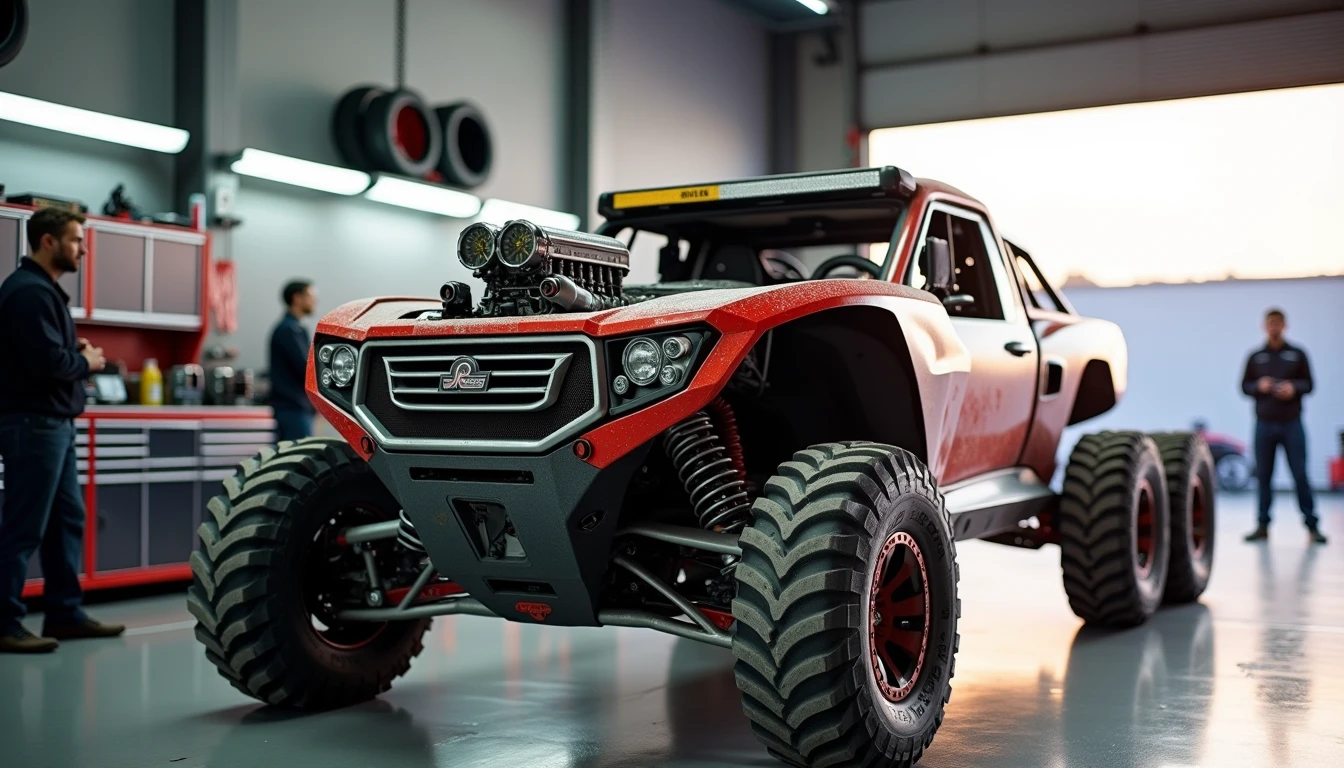
Cronquist has spent close to 30 years at Joe Gibbs Engines and is credited in the source with multiple NASCAR championships and Engine Builder of the Year awards. Several years ago he started the off-road program at Joe Gibbs Engines after encouragement from Terrible Herbst Motorsports, which runs multiple trucks across major series and races including SCORE International’s Baja races, Best in the Desert, the Mint 400, and Ultra 4 King of the Hammers.
From a maintenance management standpoint, that breadth of duty cycles is important: desert high-speed load, high-heat operation, and severe shock loading are exactly where marginal lubrication shows up as accelerated wear.
What was evaluated
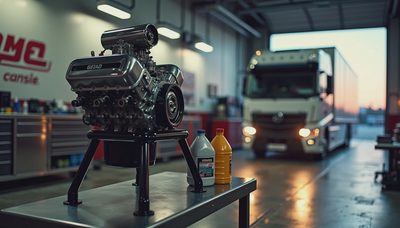
VP first met with Cronquist in spring 2020 to discuss running VP Pro Grade engine oils. Cronquist agreed to run extensive dyno testing with Pro Grade in their off-road engine program to compare it with previous oil suppliers. The source describes an entire off-season of dyno testing and real-world tests before Cronquist mandated Pro Grade use in all engines provided for off-road customers.
In the lab we’d separate this into controlled testing (dyno) and field validation—on your shop floor, it’s the difference between what the oil *should* do and what it *actually* does after vibration, heat cycling, dust, and long pulls.
The specific product called out
The interview segment notes VP Pro Grade 15W-50 specifically. Viscosity grade matters because it’s your first-order control on film thickness under load and temperature. (For readers managing mixed fleets: “15W-50” is an SAE engine oil viscosity grade; always verify suitability against your engine builder’s requirements and the applicable SAE viscosity classification framework.)
Reported outcomes after switching
Cronquist states Joe Gibbs Engines “started having some issues with our previous oil” and that after testing VP oil for about a year for Concrete Motorsports, “Everything looked so good” that they decided they had to change.
He describes post-run inspections where they “ran between probably 400 and 700 miles on motors, pulled them apart,” and questioned why they were tearing down at that point because the results looked so strong.
Most importantly for decision-makers, he identifies specific failure modes that improved after the switch:
- Wrist pin wear issues went away.
- Piston scuffing—described as rubbing on the cylinder walls—went away.
In tribology terms, wrist pins and piston skirts are classic high-load, mixed-lubrication contact zones—on your shop floor, these are the parts that tell you quickly whether the oil is maintaining an adequate protective film and controlling frictional heating.
Competitive results tied to first-time use (as reported)
The source links early wins to the mandate and VP product use:
- Ryan Arciero won the BITD 2022 Vegas to Reno race in what the source describes as the first time he used VP Pro Grade engine oil and VP Late Model Plus fuel.
- Adam Householder won the 2023 King of the Hammers, running Late Model Plus and Pro Grade in a Trophy Truck.
These are not controlled trials, but for operations leaders they function as field evidence that the lubrication package performed under extreme conditions without being the limiting factor.
Program scale
Cronquist and Joe Gibbs Engines are described as the engine provider for several off-road teams and having sold close to 20 off-road engines to top teams. Teams listed include Terrible Herbst Motorsports, Concrete Motorsports, Ryan Arciero and Kyle Washington, Householder Motorsports, and People’s Racing.
Operational Impact
Preventive maintenance schedules: inspection intervals vs. actual condition
Cronquist’s comment about pulling engines down after 400 to 700 miles and asking “Why are we pulling these apart now?” is the practical signal here. In the lab we call it *condition-based maintenance validation*—on your shop floor, it means your current tear-down interval may be conservative if lubrication-related wear drivers are controlled.
If you’re running a fleet of race trucks or supporting customer engines, the implied opportunity is to revisit:
- Engine inspection cadence (tear-down frequency)
- Parts replacement triggers for pins, pistons, and cylinders
- How dyno and post-race oil/parts inspection data feed back into your preventive maintenance schedule
Mean time between failures (MTBF): focus on wear-driven rebuild triggers
The removal of wrist pin wear and piston scuffing issues is directly tied to MTBF in off-road engines, because those wear mechanisms often force rebuilds before the rest of the rotating assembly is truly at end-of-life. Translating that to business terms: if lubrication reduces scuffing and pin wear, you can potentially avoid premature rebuild events driven by localized wear.
Standardization: reducing variation across customers and teams
Cronquist’s “mandated using Pro Grade in all engines he provided for off-road customers” is a procurement lesson. Standardizing on one validated lubricant can reduce:
- Variability in engine outcomes across teams
- Troubleshooting time spent ruling out oil as a root cause
- The operational risk of customers using mismatched oils
In industrial reliability programs, lubricant standardization is a common lever for reducing maintenance noise—on a race program, it’s the same concept applied to high-stakes uptime.
What to Watch
Evidence quality: dyno testing plus real-world verification
The source indicates extensive dyno testing plus real-world tests over an off-season, followed by inspection feedback after 400–700 miles. For fleet managers, the “watch item” is not the endorsement alone, but the workflow: controlled testing, field validation, then standardization.
Standards and compliance considerations
The source does not cite specific standards, approvals, or test methods (for example ISO, ASTM, SAE documentation beyond the 15W-50 viscosity grade mention). From a governance perspective, that means any adoption decision should request documentation that maps performance claims to recognized test methods and specifications relevant to your engine builder’s requirements.
In the lab we insist on standardized test language—on your shop floor, it protects you when an expensive engine is on the line and you need traceable justification for the lubricant chosen.
Bottom Line
Joe Gibbs Engines’ off-road program, led by Mark Cronquist, reports that after extensive dyno and real-world evaluation beginning in spring 2020, VP Pro Grade 15W-50 became the mandated oil for engines supplied to off-road customers—citing the elimination of wrist pin wear and piston scuffing issues after tear-down inspections performed at roughly 400–700 miles.
For race fleet and engine program managers, the actionable takeaway is to treat oil as a reliability control: validate via structured dyno and field testing, inspect components tied to boundary lubrication (pins and pistons), and then standardize to reduce variation and protect MTBF. If your current program is experiencing pin wear or skirt scuffing, this case study provides a clear template for how a top-tier builder justified a lubricant change—based on testing and post-run hardware condition, not branding alone.