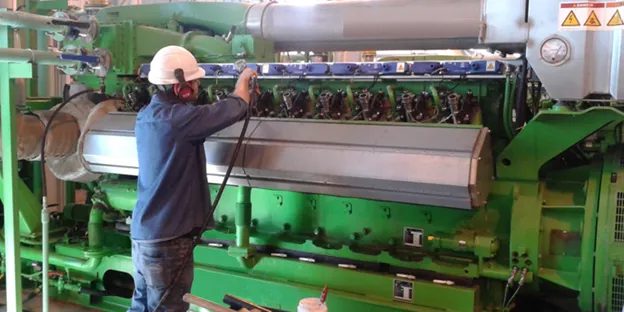
Maintenance serves as the cornerstone upon which power generation operational efficiency is built. When equipment receives consistent, systematic care, it performs at peak capacity while minimizing downtime and the likelihood of catastrophic failures. Think of it as a scheduled health check for your machinery — neglecting it invites unexpected breakdowns, expensive repairs, and disruptions that ripple through your entire business.
Beyond performance, regular servicing plays a critical role in sustaining the energy efficiency of power generation machinery. Equipment that goes without proper maintenance tends to consume more fuel and resources than necessary, driving up operational costs and leaving a larger environmental footprint. By keeping plant machinery in optimal condition, we ensure it uses energy as economically as possible, which upholds the facility's broader efficiency goals.
Safety considerations in maintenance deserve equal emphasis. Poorly maintained equipment creates heightened risks for the personnel who work around it. When machinery fails, accidents and injuries can follow, threatening worker wellbeing and potentially triggering legal and financial consequences. Conducting maintenance inspections on a regular basis allows hazards to be identified and addressed before they escalate into serious incidents.
With the foundational principles established, we can now explore the more compelling territory — the innovations that are reshaping how power generation equipment is maintained. Several transformative developments are raising the bar for the entire industry.
Consider the possibility of identifying problems with your power-producing machinery before any symptoms appear. Advances in smart sensor technology and predictive analytics have turned this scenario into reality. Smart sensors can be seamlessly integrated into power generation equipment, providing continuous, real-time monitoring of operating conditions. These devices track a broad spectrum of parameters — vibration, pressure, temperature, and acoustics — accumulating vast quantities of data that are then analyzed to anticipate wear and deterioration.
The defining strength of predictive analytics lies in its capacity to process this data and surface potential issues before they manifest as actual defects. This capability enables plant operators to transition from a reactive maintenance mindset to a proactive one. Maintenance teams can intervene before problems cascade into system-wide disruptions, preventing failures and optimizing overall equipment performance rather than simply responding to them after the fact.
To fully harness smart sensor capabilities, manufacturers integrate sensor data with their existing maintenance schedules. Advanced analytics interpret the incoming information and allow maintenance plans to be adjusted dynamically in real time. This adaptive approach accounts not only for current equipment status but also incorporates historical performance and usage patterns. The result is maintenance activity that is both precisely timed and accurately targeted, eliminating unnecessary interventions and directing resources to where they matter most.
In environments where human access is dangerous or physically impractical, sophisticated robotics and drones are fundamentally changing how maintenance is conducted. These advanced machines excel at executing high-precision tasks in hazardous or difficult-to-reach locations, substantially reducing exposure risk for human workers. Drones can be deployed to inspect turbine blades on wind farms at considerable heights, while ground-based robots can navigate the treacherous conditions of boiler rooms to detect structural defects or irregularities in heat distribution.
These technologies deliver dual benefits: they improve personnel safety while simultaneously boosting the efficiency of maintenance operations. Robots fitted with specialized sensors and cameras can gather data rapidly and with high accuracy — work that would require significantly more time if performed by human crews. Drones, meanwhile, open up aerial vantage points and access locations that are otherwise unreachable, yielding critical intelligence about the condition of infrastructure.
Pro Tip: Drone deployment is particularly effective for inspecting areas that would be hazardous or inaccessible for human workers. Flying over a facility, a drone can survey difficult terrain and hard-to-reach zones, enabling early detection of developing issues. This facilitates prompt intervention and prevents minor problems from snowballing into costly, time-consuming repairs. Drone use also reduces the need for disruptive dismantling that would otherwise halt operations, preserving continuity and efficiency in power generation — all while keeping staff out of harm's way.
The contribution of lubricants to machinery maintenance and operation is impossible to overstate. They are indispensable to the smooth, efficient functioning of mechanical components, keeping friction and wear to a minimum. Today, sustainability objectives are driving significant innovation in industrial and turbine lubricants, with the focus shifting toward both efficiency and ease of application. The newest generation of industrial lubricants is engineered to satisfy the demanding requirements of modern machinery while simultaneously reducing their impact on maintenance workflows, the environment, and production processes.
Several of these reformulated industrial lubricants incorporate biodegradable, low-toxicity materials that dramatically reduce the risk of pollution and harm to wildlife and ecosystems in the event of leaks or spills. Valvoline Bio Lical Grease, for example, is well suited for deployment in natural environments — precisely the settings where wind turbines and hydropower plants typically operate. Advances in chemical engineering have also produced lubricants capable of performing reliably across a wider range of temperatures, both high and low, which improves machinery performance and extends service life. This matters particularly in power generation, where equipment must operate effectively under varying levels of stress.
Pro Tip: For applications involving the transport of energy sources, opt for high-performance gas engine oils that are specifically formulated to reduce residue accumulation. These advanced lubricants maintain cleaner engines and meaningfully extend the intervals between maintenance checks. The practical outcome is less frequent oil changes, reduced waste oil requiring disposal, and lower aggregate maintenance costs — all while contributing to environmental sustainability goals.
Augmented reality (AR) is redefining maintenance practice in power generation and other industries by transforming how maintenance staff are trained and how they interact with equipment. AR technology — delivered through headsets and glasses — overlays digital information directly onto the physical environment, creating an immersive experience with real-world machinery. This can encompass detailed step-by-step maintenance instructions as well as live analytics and operational data presented directly within a technician's field of view.
Applying AR to maintenance tasks accelerates the process considerably while improving work accuracy. Technicians can view specific components and their real-time performance metrics simultaneously, giving them a clear picture of what needs to be done and the precise method for doing it. This proves especially valuable for complex or infrequently performed tasks, where conventional approaches would require repeated consultation of manuals or reliance on expert guidance.
AR can also render simulations of potential failure scenarios and walk technicians through the corrective steps, equipping maintenance personnel to handle a wide range of situations. This capability means that even less experienced staff can perform maintenance work with the competence and precision of seasoned professionals, guided throughout by interactive visual cues.
The emergence of 3D printing technology has sparked a revolution in the production and servicing of industrial machinery, with particular impact on the power generation sector. This technology has fundamentally changed how replacement components are manufactured and sourced. Traditional inventory management demands considerable capital investment and physical storage space to maintain a broad range of parts, many of which may only be needed infrequently. Compounding this, the logistics of locating and shipping specific components can introduce significant operational delays and downtime.
Industrial facilities and power plants can now circumvent these challenges by producing parts on-site, on demand, in real time. This capability is especially invaluable for obsolete or custom components that can no longer be manufactured through conventional methods. 3D printing enables rapid prototyping and production of intricate part designs that would otherwise be difficult or prohibitively expensive to source.
Pro Tip: Build a digital repository of 3D-printable files for critical components. This substantially reduces downtime during unplanned maintenance events and ensures that parts remain immediately available. Having these files ready eliminates the delays that traditionally accompany conventional parts procurement, allowing components to be fabricated on demand. The ability to produce a required part within hours rather than weeks can be decisive in maintaining operational continuity during unexpected outages or unforeseen maintenance challenges. As this technology matures, its role in industrial plant maintenance and operations will likely deepen, unlocking further innovations and efficiencies.
Artificial intelligence (AI) is rapidly extending the reach of condition monitoring and diagnostics across power generation and other industrial sectors. Through AI algorithms, facilities can process enormous volumes of sensor data to detect subtle patterns and anomalies that human operators would not readily identify. These patterns may signal underlying issues that could eventually result in equipment failure if left unaddressed.
AI-driven diagnostic systems are especially effective at forecasting mechanical failures before they occur. By generating these predictions ahead of time, facilities can schedule preemptive maintenance and sidestep the unplanned downtime that accompanies sudden equipment failures. This forward-looking approach avoids the steep costs associated with breakdown repairs while also substantially improving the efficiency and reliability of operations.
A further advantage of AI is its capacity to learn and improve continuously as it processes more data, becoming increasingly precise over time. This growing intelligence enables ever more accurate predictions and more informed maintenance decisions. AI can determine the optimal windows for servicing based on actual equipment conditions, moving beyond the limitations of fixed-schedule or reactive maintenance models. For example, it can recalibrate oil replacement and turbine lubrication schedules in response to actual machinery usage.
As we move through the transformative era of power generation maintenance, the integration of innovative technologies has become not merely a trend but an essential evolution. Adopting these advances allows us to keep pace with the demands of modern infrastructure while meaningfully elevating our maintenance practices. The future of power generation is unfolding now, grounded in operations that are smarter, safer, and more sustainable. With each technological advance — from AI-driven diagnostics to eco-conscious lubricants — we gain not only the ability to maintain modern energy production effectively, but to improve how our industry functions at every level. Moving forward with confidence, the tools and techniques we deploy today will lay the groundwork for tomorrow's achievements.
In maintaining power generation equipment, the products selected are as consequential as the strategy behind their use. Valvoline's portfolio of premium industrial lubricants, turbine lubricants, and gas engine oils is purpose-built to meet the exacting requirements of modern machinery. Valvoline continuously works toward meeting the latest environmental standards and developing products that support customers in reaching their sustainability objectives. This commitment to environmental responsibility establishes Valvoline as a leader not only in product performance but in principled practice, distinguishing the brand as a forward-thinking partner in the power generation sector. With Valvoline, you gain products that protect and perform alongside a partner devoted to innovation and quality. Choose Valvoline and elevate your maintenance game.

No feedback yet — submit the first.