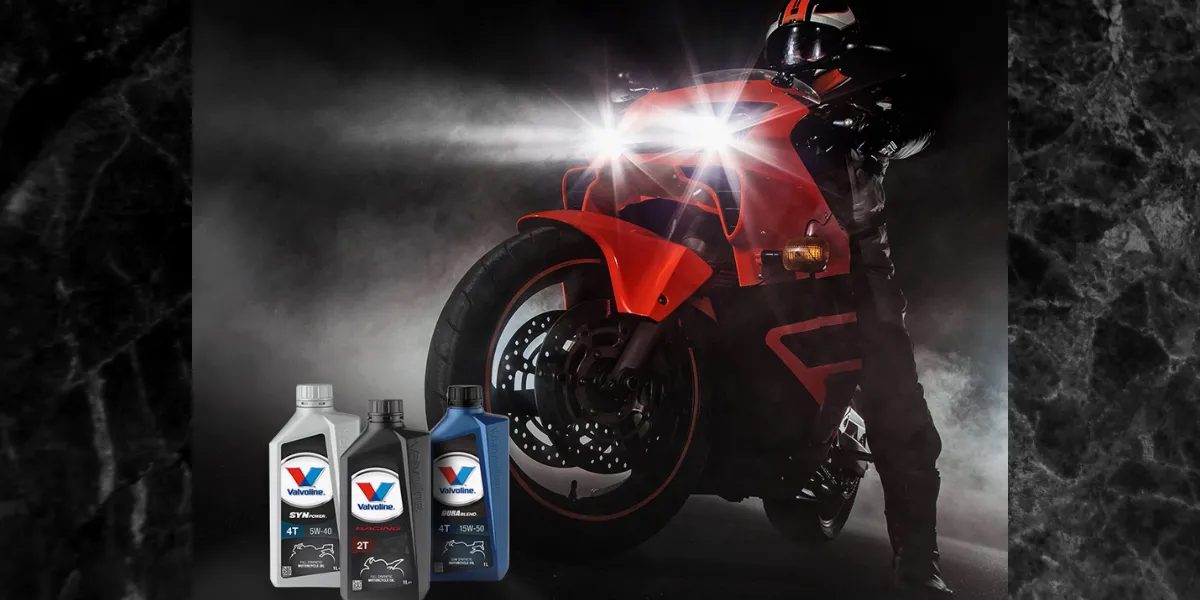
When you're out enjoying a ride, the last thing on your mind is probably what's going on inside your motorcycle's engine. It's usually only at maintenance time that most riders begin wondering which motorcycle oil their bike actually needs. Selecting the right motorcycle lubricants is no simple task, particularly given the bewildering array of numbers and parameters printed on every bottle. Below is a straightforward guide to motorcycle oil ratings and specs so you can consistently pick the ideal product for your machine.
The first essential point is that all motorcycle engines fall into one of two categories — two-stroke (2T) or four-stroke (4T) — with the fundamental distinction being how many piston strokes occur within each cycle.
In two-stroke engines, power is generated once every two piston strokes. These engines are less expensive to operate and considerably lighter than four-stroke designs, though they come with drawbacks including poor fuel efficiency, unwanted vibrations, and greater environmental pollution. 2T engines are predominantly found in mopeds, bikes, go-carts, and similarly small vehicles.
Two-stroke motorcycles demand dedicated 2T motorcycle lubricants, available in petroleum, castor, synthetic, and semi-synthetic base oils. The most advanced 2T synthetic oils incorporate additives that enhance motorcycle oil performance — fuel stabilizers, detergents, anti-wear agents, biodegradable components, and more — delivering a range of additional benefits.
A four-stroke engine operates on the same basic principle as a two-stroke, except that power is generated once every four piston strokes. These engines are more fuel-efficient and produce less pollution than their 2T equivalents, which is why they have become the standard choice for all contemporary motorcycle engines.
4T engines call for dedicated four-stroke motorcycle oil that does not combust alongside the fuel but instead circulates through the engine, lubricating every moving part. This form of motorcycle lubrication also dissipates heat and removes impurities from the system. Selecting a quality product such as Valvoline's Durablend 4T — featuring a premium base oil and performance-boosting additives — is absolutely essential.
The second consideration when purchasing or researching motorcycle lubricants is the distinction between monograde and multigrade motorcycle oil ratings.
While not typical for most motorcycles, monograde oils are worth understanding for newer riders. On an oil label, a monograde product is identified by a single number — such as 30 or 10W — following the SAE standard. This indicates the oil is suited to operation within a very narrow temperature window (either hot conditions around 30 degrees or cold conditions around 10 degrees, in this example). Because most motorcycles operate across a range of climates, it's important to select a formulation that delivers protection across a broader temperature spectrum.
Multigrade oils, now standard in most modern motorcycles, are identified by two numbers. Taking Valvoline SynPower 4T 10W-50 as an example, the first number reflects the oil's behavior at low temperatures while the second describes its performance under heat. Multigrade oils cover a wider performance range and are compatible with most 4T engines. They also eliminate the need for seasonal oil changes, giving you confidence that your bike will run reliably throughout the year.
Oil bottles typically carry another parameter indicating the base oil type used in that specific product — mineral, semi-synthetic, or synthetic.
Mineral oils represent the most fundamental category of engine oils, generally derived from petroleum processing products or by-products. They suit smaller engines well, and many manufacturers recommend that new bike owners begin with mineral oils since they offer solid engine protection.
Semi-synthetic oils blend mineral and synthetic oils together. The advantage of this approach is that they combine the strengths of both — solid protection alongside high performance — as delivered by products like Durablend 4T motorcycle oil.
Fully synthetic oils sit at the top of the range. Formulated from pure polymer oils, they are reserved for high-performance machines. Superbikes and racing motorcycles all depend on Racing 2T full-synthetic oils to reach their peak performance potential.
While manufacturers may package their lubricants differently, once you've grasped the various motorcycle oil ratings, you'll always be equipped to select the right product rather than being overwhelmed by unfamiliar numbers and terminology. With quality motorcycle lubricants from Valvoline, a safe ride, a well-maintained bike, and good value for money are all within reach. Still uncertain which oil is right for your two-wheeler? Reach out to Valvoline staff for guidance, or explore our Lubricant Advisor.




No feedback yet — submit the first.