
When a gearbox seizes on a paper mill line or a turbine bearing overheats in a power plant, the first question maintenance teams ask is: "How do we get this back online?" But the better question—the one that prevents that call at 2 a.m.—is what made the equipment fail in the first place. In my 25 years as a consulting tribologist, I've found that **equipment reliability** almost always traces back to one root cause: the lubrication program. Not the oil itself, but the entire system of selection, application, and monitoring that surrounds it.
In the lab we call this the Stribeck curve—on your shop floor, it means the difference between a machine that runs for 10 years and one that fails in 10 months. Proper lubrication management is the single most cost-effective way to improve **equipment reliability**, yet most plants treat it as an afterthought. Let's change that.
The Tribology of Equipment Reliability: What's Really Happening at the Contact Surface
Tribology is the science of interacting surfaces in relative motion—friction, wear, and lubrication. When we talk about **equipment reliability**, we're really talking about controlling those three factors. Every rotating component in your plant—bearings, gears, cams, seals—depends on a thin film of oil separating the metal surfaces. If that film breaks down, you get metal-to-metal contact, and wear accelerates exponentially.
The relevant standard here is ISO 281, which defines bearing life under ideal lubrication conditions. But ideal conditions are rare in industrial settings. Contamination particles, thermal degradation, and incorrect viscosity all degrade the lubricant film. By addressing these three failure modes, you can dramatically improve **equipment reliability**. For example, a major marine client of mine reduced unplanned downtime by 40% simply by switching to a stricter oil change schedule based on oil analysis rather than fixed calendar intervals.

Application Note: Three Lubrication Mistakes That Undermine **Equipment Reliability**
Over the years, I've seen the same patterns repeat across marine, manufacturing, and power generation facilities. Here are three mistakes that directly reduce **equipment reliability**:
- **Using the wrong viscosity grade.** An oil that's too thin won't maintain film thickness under load; an oil that's too thick causes drag and heat. Always follow the OEM recommendation or use ISO 3448 to select the appropriate viscosity grade for the operating temperature range.
- **Ignoring water contamination.** Water in oil causes hydrolysis of additives, rust, and—in extreme cases—hydrogen embrittlement of bearing steel. ASTM D6304 (Karl Fischer titration) should be part of every routine oil analysis. Keep water content below 200 ppm for most industrial gear oils.
- **Over-relying on filter bypass.** Many plants install high-efficiency filters but bypass them when they clog, essentially running unfiltered oil. That defeats the purpose. A 10-micron filter can trap particles that cause abrasive wear, but only if the oil actually passes through it. Monitor differential pressure and change filters on schedule.
Correcting these three errors alone can boost **equipment reliability** by 30–50% in a typical plant. I've seen it happen.
How to Build an Equipment Reliability Program Around Lubrication Standards
A systematic approach to **equipment reliability** requires more than buying good oil. You need a program based on measurable standards. Here's the framework I recommend to my clients:
- **Baseline oil analysis:** Start with a comprehensive sample from every critical asset. Measure viscosity (ASTM D445), acid number (ASTM D664), water content (ASTM D6304), and particle count (ISO 4406). This tells you where you stand.
- **Set cleanliness targets:** Use ISO 4406 classification. For a typical gearbox, aim for 17/15/12 or better. For hydraulic systems, 16/13/10 is common. For turbine oil systems, shoot for 15/12/9.
- **Implement condition-based oil changes:** Don't change oil on the calendar. Change it when the oil analysis says it's exhausted. That can save 30–60% on lubricant costs while improving **equipment reliability**.
- **Train your team:** Educate maintenance staff on proper sampling techniques, storage, and handling. Contamination enters through breathers, fill ports, and careless practices. A simple quick-connect sampling valve costs under $50 and ensures representative samples.
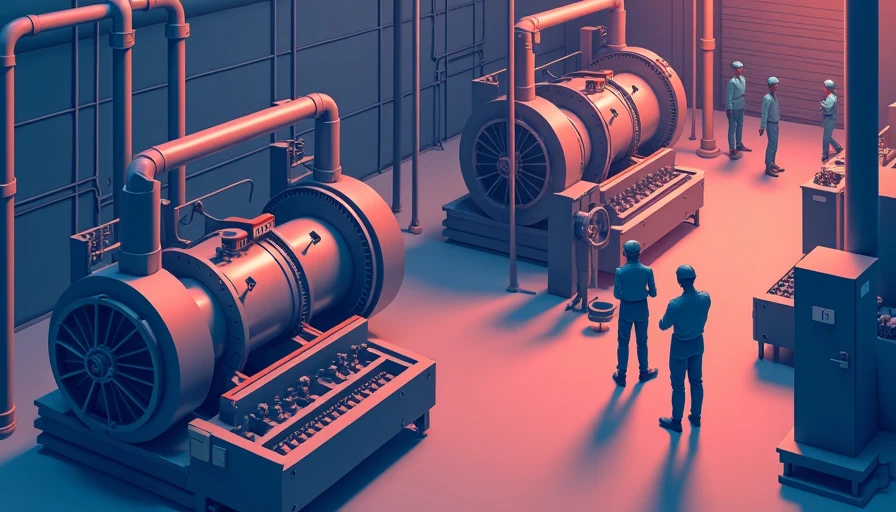
One power generation client implemented this program across six turbines. In the first year, unplanned outages dropped by 60%, and the lubricant budget decreased by 25% because they stopped dumping usable oil. That's the power of applying tribology to **equipment reliability**.
Case Study: How One Plant Boosted Equipment Reliability by 45% with Oil Analysis
A mid-sized chemical processing plant in the Gulf Coast region was struggling with frequent bearing failures on their centrifugal pumps. They were changing oil every three months regardless of condition, and **equipment reliability** was suffering with an average of one unplanned shutdown per month. After a thorough audit, we discovered that their existing oil had high particle counts (ISO 4406 code 23/21/18) and water content above 500 ppm. We implemented a three-step program: first, we switched to a synthetic ISO VG 68 oil with better thermal stability; second, we installed offline filtration carts to clean the oil continuously; and third, we introduced monthly oil analysis with action thresholds. Within six months, the particle count dropped to 18/16/13 and water fell to 120 ppm. Bearing failures dropped from twelve per year to two. Unplanned downtime decreased by 45%, saving the plant an estimated $180,000 annually in lost production and repair costs. The oil analysis program cost about $12,000 per year to run, including lab fees and sample kits. That's a 15:1 return on investment—all from focusing on **equipment reliability** through lubrication excellence.
Conclusion: Equipment Reliability Starts With the Right Oil, Applied Correctly
Every plant has a lubrication program—even if that program is "buy the cheapest oil and change it when someone remembers." But **equipment reliability** is not luck. It's the result of deliberate decisions about viscosity, contamination control, and monitoring. By adopting the standards and practices I've outlined here, you can move from reactive maintenance to predictive reliability.
In the lab we call this proactive maintenance—on your shop floor, it means fewer breakdowns, lower costs, and longer equipment life. If you're serious about **equipment reliability**, start with your lubricants. Everything else follows.

No feedback yet — submit the first.