The engineering problem in **high temp grease vs regular grease** is not marketing language. It is film survival, oxidation control, and mechanical stability after the base oil and thickener have been stressed for hours, not minutes. In the lab we call this a temperature-driven change in rheology and oxidation rate — on your shop floor, it means a bearing that stays quiet versus one that purges oil, hardens, and fails early. If you are choosing grease for wheel ends, electric motor bearings, kiln fans, or brake hardware, the real question is not which tube says “premium.” It is which formulation matches the load, speed, contamination, and operating temperature.
What “regular grease” usually means
“Regular grease” is not a formal standard category. By the relevant standard, grease is described by consistency, performance, and chemistry, not by that retail label. Most general-purpose greases are NLGI Grade 2 products made with mineral base oil and a lithium soap thickener. NLGI grade defines consistency, not heat resistance. Many of these products work very well in moderate-duty service: chassis points, lightly loaded bearings, pivots, and general shop lubrication where bulk temperatures stay reasonable.
The trap is assuming a general-purpose grease remains acceptable once the application sees sustained heat. ASTM D2265 dropping point is often quoted, but dropping point is not the same as usable operating temperature. A grease can have a respectable dropping point and still oxidize too quickly, bleed excessively, or lose structure under shear. Three failure modes, one root cause — here they are: base oil viscosity loss, thickener breakdown, and accelerated oxidation. Once those begin, you see leakage, noise, wear debris, and re-lube intervals collapsing.
What makes a high-temperature grease different
A high-temperature grease is built to resist more than melting. It typically combines a more heat-tolerant thickener system, a base oil with better oxidation resistance, and additives designed for wear control and corrosion protection. Common high-temp thickener families include lithium complex, calcium sulfonate complex, polyurea, and in some specialty cases clay or polyurea-based electric motor greases. The chemistry matters because the thickener is the sponge holding the oil in place while also contributing to mechanical stability.
Base oil selection is equally important. Mineral oil can work at elevated temperature, but synthetic base oils such as PAO, ester, or silicone are often chosen when oxidation life matters. ASTM D942 oxidation stability and ASTM D6184 oil separation become more meaningful than a simple label claim. In **high temp grease vs regular grease**, the practical difference is that a high-temp grease is formulated to keep releasing usable oil to the contact while resisting coking, hardening, and excessive bleed.
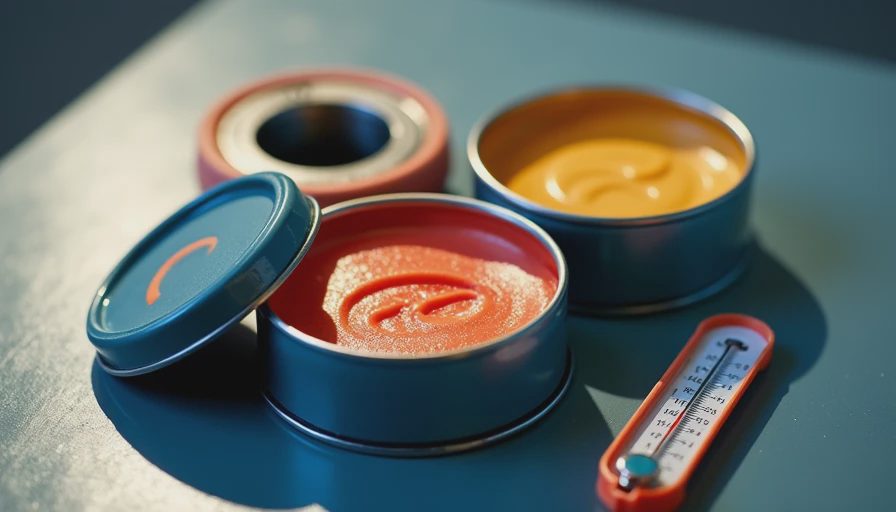
**Application Note:** For an electric motor bearing running warm but clean, a polyurea NLGI 2 grease is common because it offers good oxidation life and bearing performance. For slow, wet, heavily loaded service, a calcium sulfonate complex grease may be the better answer because it brings water resistance and inherent extreme-pressure performance.
Temperature limits are only part of the story
When people compare **high temp grease vs regular grease**, they often ask for one temperature number. That is understandable, but incomplete. Grease selection depends on bulk temperature, peak temperature, relubrication interval, speed factor, and contamination. A bearing housing at 250°F is very different from a brake slide pin that spikes hot and cools repeatedly. Repeated peaks accelerate oxidation even if the average looks acceptable.
By the relevant standard, ASTM D3336 and D3527 are useful for evaluating high-temperature bearing life in certain grease types, while ASTM D217 measures worked penetration, showing whether consistency changes after mechanical stress. In plant terms, you want to know whether the grease will stay in grade, hold its oil, and maintain a lubricating film after thermal cycling. That is why “more heat resistant” does not automatically mean “better everywhere.” Some high-temp greases sacrifice pumpability at low temperature or may not suit centralized lubrication systems.
A common shop-floor error is mixing products. Lithium complex is broadly compatible with some systems, but grease compatibility is never something to assume. Incompatible mixtures can soften, harden, or purge oil. If you are changing chemistry, purge old grease thoroughly or verify compatibility with supplier data and, ideally, a small controlled trial.
Where high-temp grease is worth the upgrade
Use high-temperature grease where failure cost is real and heat is sustained or cyclical: oven conveyor bearings, wheel bearings near heavy braking duty, exhaust-side fan bearings, kiln support rollers, and some marine auxiliary equipment in hot engine spaces. In these cases, the extra cost per cartridge is minor compared with downtime, labor, and component replacement. A quality high-temp grease may cost noticeably more up front, but one avoided bearing change usually pays for that difference many times over.
That said, not every application needs it. For a lightly loaded farm hinge, a moderate-temperature general lithium EP grease is often perfectly rational. Over-specifying can create its own issues, especially if the grease is stiffer, less pumpable, or chemically mismatched to seals or existing fill. In **high temp grease vs regular grease**, the correct answer is application-specific, not prestige-specific.

**Application Note:** Disc brake hardware and wheel bearings are often discussed together, but they are not the same lubrication problem. Brake caliper pins may require a synthetic brake lubricant compatible with rubber components, while wheel bearings need a grease meeting the load, speed, and heat demands of the hub assembly. Do not treat those as interchangeable.
How I decide between them in practice
My field method is simple. First, define temperature honestly: normal, peak, and duration. Second, check speed and load, because grease for a high-speed electric motor is not the same as grease for a slow plain bearing. Third, review water, dust, and chemical exposure. Fourth, confirm consistency and delivery method: hand-packed, grease gun, or centralized system. Then match the grease to recognized data: NLGI grade, base oil viscosity, thickener type, oxidation stability, water washout by ASTM D1264 if relevant, and four-ball wear or EP data where appropriate.
In the lab we call this matching the lubricant to the tribosystem — on your shop floor, it means stop buying by color, brand familiarity, or the word “heavy-duty” on the tube. If your current grease bakes into a crust, leaks from seals after startup, or forces very short relube intervals, move to a properly specified high-temp product. If the machine runs cool and clean, a good general-purpose grease is often sufficient.
Bottom line
The best answer to **high temp grease vs regular grease** is this: high-temp grease earns its place when heat, oxidation, and relubrication stress are the limiting factors. Regular grease remains a solid choice for moderate service where operating conditions stay inside its design window. Read the data sheet, not just the front label. Look for thickener chemistry, NLGI grade, base oil viscosity, and test methods tied to your failure mode. That is how you choose a grease that survives in service rather than one that only looks good on the shelf.





No feedback yet — submit the first.