Automatic Lubrication Cuts Line-Down Risk by Eliminating Missed Points, Wrong Lubes, and Over-Greasing
The Big Picture (why uptime and contamination control hinge on lubrication discipline)
The failure mode is simple: a bearing or chain goes dry (or gets the wrong lubricant, or too much), friction rises, heat follows, and a single seized component can cripple an entire production line. In tribology terms, you lose the lubricating film and shift into boundary contact—on the shop floor, that means metal-on-metal wear, surprise downtime, and a maintenance scramble at the worst possible time.
The business stakes are uptime, labor efficiency, and in food operations specifically, contamination risk. The source points to a common plant reality: manual lubrication is vulnerable to human error—missed points, wrong lubricant selection, and over-application. Automatic lubrication is positioned as a control strategy: keep lubrication moving so equipment keeps moving, with “the right kind of lube… in just the right amount,” avoiding the problems associated with over- or under-application.
A key driver cited is cost savings through improved equipment life and reduced lubricant consumption, alongside freeing up skilled labor. In practice, that translates to fewer emergency work orders, more stable preventive maintenance schedules, and better control of total cost of ownership (TCO) for continuously running assets.
Key Details (where automatic application fits, and how systems differ)
The source frames automatic lubrication as a broad category—from “decidedly low-tech affairs, like oil bulbs,” to “sophisticated digital technology” that can match lubricant delivery to equipment needs “at any given moment.” That range matters for procurement: not every application needs digital controls, but every application does need reliable, repeatable delivery.
Where automatic lubrication delivers the most value
The best candidates, per the source, are lubrication points on equipment that runs continuously (or nearly so), where “even a momentary lapse” can lead to failure. Examples explicitly called out include:
- Bearings for conveyors, motors, fans and blowers, and pumps
- Bearings on mixers, agitators, extruders, and fillers
- Gearboxes
- Conveyor chain lubrication
In other words, target assets with high duty cycle and high consequence of failure—especially where access is difficult, the number of points is large, or the lubrication interval is short enough that humans will inevitably miss events.
Common operating principles (what “automatic” can mean mechanically)
Automatic oilers “vary as much in their design and operation as the equipment they service.” The source lists multiple delivery principles:
- Oil drip
- Restricted flow
- Spraying
- Gravity feed
In the lab we call these “metering strategies”—on your shop floor, it’s simply how the system controls dose and placement to prevent starvation (too little) and purge/throw-off (too much).
Fixed targets vs. moving targets
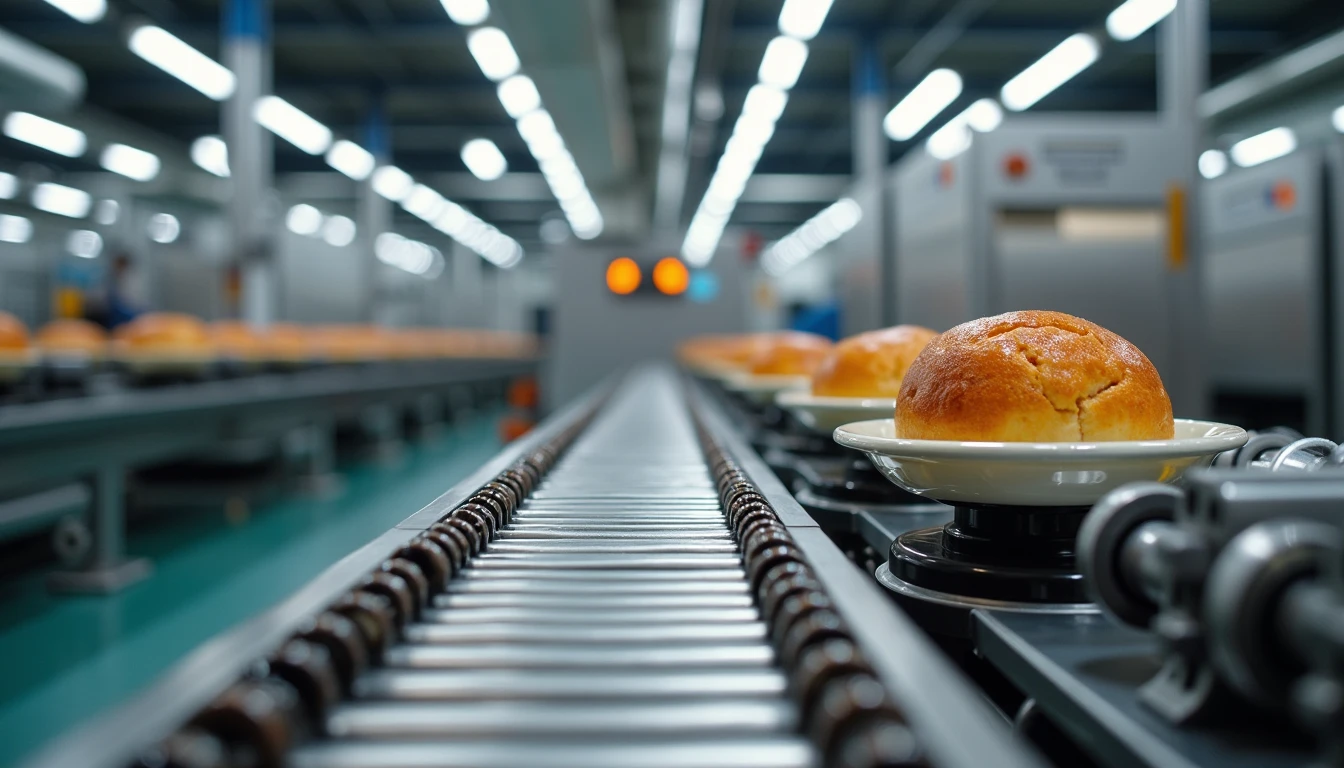
The source highlights a basic design split: whether the lubrication target is fixed or moving. Moving targets “usually means a conveyor chain,” and the article illustrates an automated system lubricating “the chain on a spiral bread cooler” (photo credit: Motion Industries). That distinction is crucial: bearing points typically need controlled replenishment into a housing, while chains need placement onto a moving interface where excess lubricant can migrate—especially problematic around packaging and product zones.
Application Note: Spiral cooler conveyor chain (moving target)
In tribology terms, chain pins and bushings operate under mixed/boundary lubrication and benefit from frequent, small doses. On the plant floor, the practical win is consistent chain lubrication without flooding the line—supporting reliability while limiting the chance of lubricant carry-off into guarded areas near product handling.
Operational Impact (maintenance execution, labor, and TCO levers)
The source is clear on the operational “why”: “The biggest reason to invest in automatic lubrication is to improve equipment life,” because “inadequate lubrication is one of the leading causes of equipment failure.” It only takes one failure—“at a crucial point like a conveyor bearing”—to “cripple a line.”
From a fleet-operations mindset applied to plant assets, the parallels are direct: the goal is to extend mean time between failures (MTBF) by removing variability in a critical care-and-feeding task.
Cost and labor impact (as stated by the source)
Ian Miller, national services business development manager for Motion Industries Canada, is quoted: “The ultimate advantage to automatic application is the cost savings.” The mechanisms he cites are:
- Extending equipment life via “optimization of the lubricant application”
- Freeing up skilled labor
- Savings from “reducing the amount of lubricant being consumed”
For maintenance supervisors, this is the actionable lever: redeploy technicians from repetitive lube rounds to higher-skill work (precision inspections, alignment, root-cause work) while reducing rework caused by missed points or wrong product.
Error-proofing: missed points, wrong lube, and over-lubrication
Automatic lubrication is also positioned as a countermeasure to human error, specifically:
- Missing one or more lubrication points
- Using the wrong lubricant
- Over-lubricating
Over-lubrication is not just waste; it can be a failure accelerator (churning, heat, seal stress) and, in food plants, a contamination risk. Kurt Rommelfaenger, sales and marketing manager for Oil-Rite Corp., underscores the food-industry concern: “we always talk to customers about contamination and the risk of over-lubricating and having lubricant either get onto the packaging or onto the food itself.”
Application Note: Conveyor bearing near packaging (fixed target with contamination exposure)
In the lab we describe over-lubrication as excess bleed and migration—on the shop floor, it’s grease or oil ending up where it should not be. Automatic metering helps maintenance teams control volume and frequency so lubrication stays in the component rather than on guards, belts, packages, or adjacent surfaces.
What to Watch (risk management and specification discipline)
The source emphasizes that automatic lubrication can ensure the “right kind of lube” is applied. That puts pressure on specification control: automatic delivery does not fix a wrong lubricant choice—it only applies it more consistently. Procurement and maintenance need disciplined lubricant selection and clear labeling/storage practices so the system is filled with the intended product.
Also watch the technology spread described in the source: systems range from simple oil bulbs to digitally controlled approaches. For decision-makers, the governance question is: who owns setup, adjustment, and verification over time? Any automatic system still needs monitoring to confirm delivery is occurring as intended and that application rates remain appropriate as equipment duty cycles change.
Bottom Line (what to do next)
If you have continuously running conveyors, mixers, agitators, extruders, fillers, fans/blowers, pumps, gearboxes, or chain-driven lines where a single bearing or chain failure can stop production, automatic lubrication is a reliability investment aimed at MTBF improvement and labor efficiency. The source’s business case centers on cost savings through longer equipment life, reduced lubricant consumption, and fewer human-error events—especially avoiding over-lubrication that can raise contamination risk in food environments.
Action for maintenance and operations managers: prioritize automatic lubrication on high-consequence, high-duty-cycle points (especially conveyors and chain systems), and treat lubricant selection and metering rate as controlled specifications—not tribal knowledge—so the system consistently delivers the right lubricant in the right quantity.