High temp grease is usually requested after a bearing turns blue, a brake slide pin sticks, or a conveyor idler starts purging oil like a candle left in the sun. The engineering problem is not simply "heat." It is heat plus load, speed, contamination, relubrication interval, and the chemistry of the thickener system holding the base oil in place. In the lab we call this a coupled tribological system; on your shop floor, it means the wrong grease can survive the datasheet and still fail in service.
A good selection process starts with the application, not the label. "High temperature" on a cartridge is marketing language unless you know the dropping point, oxidation stability, base oil viscosity, NLGI consistency, and whether the grease suits rolling bearings, sliding pins, or slow heavily loaded bushings. By the relevant standard, NLGI consistency describes how stiff the grease is, while ASTM and ISO methods help define oxidation, corrosion protection, and load carrying behavior.
What high temp grease actually means
Strictly speaking, high temp grease is not defined by one universal cutoff. In practice, mechanics and reliability teams use the phrase for greases expected to resist softening, oxidation, oil bleed, and deposit formation in hot service. The first trap is confusing dropping point with usable operating temperature. Dropping point, commonly measured by ASTM D2265, tells you when the thickener structure begins to collapse enough for the grease to drip under test conditions. It does not tell you the grease will protect a bearing right up to that temperature.
What matters more is whether the base oil keeps enough viscosity at operating temperature to maintain film thickness, and whether the thickener resists mechanical shear and chemical breakdown. Lithium complex, calcium sulfonate complex, polyurea, and some clay-thickened products are common in hot service. Each has strengths. Calcium sulfonate complex often brings strong water resistance and corrosion protection. Polyurea is common in electric motor bearings because of oxidation resistance and long life. There is no single winner across every machine.

The four properties that decide success
When I evaluate high temp grease, I focus on four properties before I look at color, brand reputation, or a dramatic temperature claim. First is base oil viscosity. A fast electric motor bearing and a slow kiln trunnion do not want the same oil viscosity, even if both run hot. Second is thickener type, because that controls structure, water response, shear stability, and compatibility with the grease already in the housing. Third is oxidation resistance, since heat accelerates oil degradation and varnish-like deposits. Fourth is load performance, often screened with tests such as ASTM D2596 four-ball EP or ASTM D2266 wear.
Application Note: For oven conveyor bearings, I usually worry less about headline dropping point and more about oxidation control and relubrication interval. For disc brake hardware, I care about material compatibility and resistance to washout. For wheel bearings, I want an automotive grease meeting the relevant performance category rather than a generic industrial tube with a flashy label.
NLGI Grade 2 is the default for many bearings, but not all. Softer grades can help pumpability in centralized systems. Harder grades may stay in place better in some slow open points. Consistency is a delivery tool, not a measure of thermal quality.
Common failure modes in hot service
Three failure modes, one root cause — here they are. First, the grease bleeds or channels improperly because the thickener structure cannot hold the oil at temperature. On your machine, that shows up as leakage, empty raceways, and shiny metal where a lubricating film should be. Second, the base oil oxidizes. Oxidation creates acids, sludge, and hard deposits, all of which reduce lubrication and raise torque. Third, the grease is simply too light for the load once temperature reduces viscosity.
Contamination makes every one of these worse. Water, process dust, or metal fines can turn a technically acceptable high temp grease into a short-lived paste. That is why the surrounding seals, purge practices, and relubrication method matter as much as the cartridge itself. By the relevant standard, ASTM D4048 addresses copper corrosion and ASTM D1743 addresses rust protection in grease, both useful indicators when moisture and reactive metals are in the system.
A compatibility mistake is another routine failure point. Switching from one thickener family to another without purging can produce softening, hardening, or oil separation. Before changing high temp grease, review supplier compatibility charts and, for critical assets, validate with a controlled field trial.
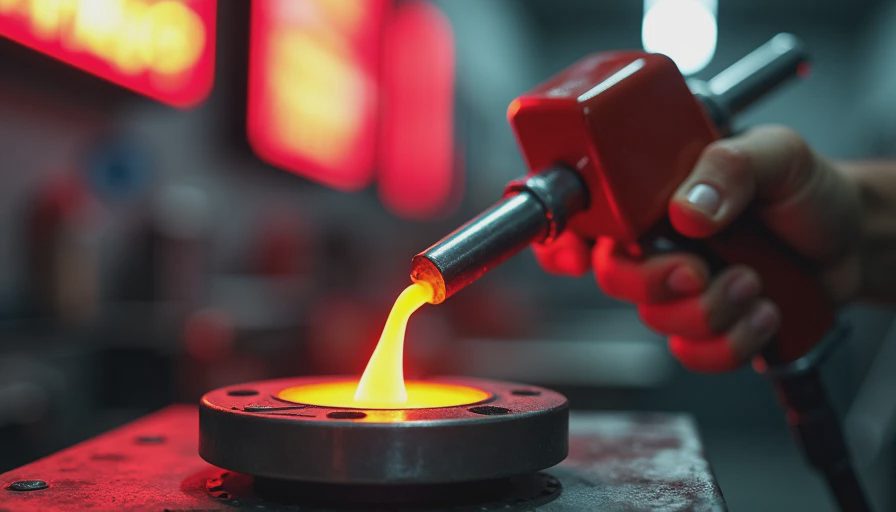
Matching grease to the application
A practical high temp grease choice depends on what is moving, how fast, and what else is happening around it. Electric motors typically need an oxidation-stable grease with suitable channeling behavior, often polyurea or lithium complex, and the right base oil viscosity for bearing speed. Slow, heavily loaded plain bearings may need a much heavier base oil and stronger EP performance. Wet, corrosive environments often favor calcium sulfonate complex because it handles water and rust risk well.
Application Note: For marine deck equipment, saltwater intrusion changes the decision more than peak temperature alone. In the lab we call this competing failure mechanisms; on your shop floor, it means a water-resistant grease with solid corrosion control can outperform a hotter-rated but less robust product.
For automotive brake components, use a product intended for that duty and compatible with rubber and metals involved. For food plants, incidental-contact requirements can matter as much as temperature, so regulatory suitability must be checked alongside tribological performance. The right answer is rarely the grease with the highest advertised number.
A field checklist before you buy
Start with operating temperature, both normal and peak. Then capture bearing type, DN or speed factor if available, load level, relubrication interval, and contaminants present. Ask whether the current failure is true overheating or a symptom of overgreasing, misalignment, electrical fluting, or poor sealing. Many "heat" problems are mechanical first and lubrication second.
Next, read the technical data sheet, not just the front label. Look for NLGI grade, base oil type and viscosity, thickener chemistry, dropping point, oxidation indicators, water washout if relevant, and corrosion test results. If the equipment is critical, ask for worked penetration after shear and any OEM approvals that actually apply to your machine class. Then check compatibility with the incumbent grease and plan a purge if chemistry changes.
The best high temp grease is the one matched to load, speed, environment, and maintenance practice. If you treat it as a heat sticker, you will buy twice and rebuild early. If you treat it as a tribological system choice, bearings live longer, grease consumption drops, and your maintenance window gets a little quieter.



No feedback yet — submit the first.