High temp grease for automotive service is usually chosen after a failure, not before one. A wheel bearing runs hot, a caliper slide starts sticking, or a chassis joint squeaks after a wet winter. The engineering problem is simple to state and expensive to ignore: heat, load, water, and oxidation attack grease at the same time. In the lab we call this thermo-oxidative stability and mechanical stability — on your shop floor, it means the grease stays where you put it and keeps separating metal surfaces when temperatures climb.
The first thing to understand is that “high temp” is not one property. Grease performance depends on base oil viscosity, thickener chemistry, additive system, and consistency grade. By the relevant standard, NLGI grade describes stiffness, not heat resistance. An NLGI 2 grease is common in automotive work because it balances pumpability and retention, but two NLGI 2 products can behave very differently at 300°F. Likewise, ASTM D2265 dropping point is useful, but it is not a service temperature rating. A grease can have a high dropping point and still oxidize, bleed oil, or harden in service.
What makes a grease truly suitable for high heat
For most automotive applications, the conversation starts with thickener type. Lithium complex remains the mainstream choice because it offers good water resistance, solid mechanical stability, and dropping points often above 500°F. Polyurea grease is also common, especially in sealed electric motor and some long-life bearing applications, because it tends to resist oxidation well. Calcium sulfonate complex is another serious contender where water washout, corrosion protection, and load carrying matter together. If you are choosing high temp grease for automotive use, these three families usually deserve the first look.
Base oil matters just as much. A grease used in a slow, loaded hub needs a different viscosity from one used in a higher-speed accessory bearing. Too light, and the oil film becomes marginal under load. Too heavy, and churning losses and heat generation rise. Additives then fine-tune behavior: extreme pressure agents support heavily loaded contacts, antioxidants slow degradation, and rust inhibitors help when road spray or wash water gets involved.
Application Note: For wheel bearings on trailers, older serviceable hubs often favor a high-temperature lithium complex or calcium sulfonate complex grease in NLGI 2, provided the product is suitable for bearing service and compatible with the grease already in use.

Automotive locations where heat actually changes the grease decision
Not every grease point on a vehicle sees the same duty. Disc brake hardware lives beside repeated thermal spikes, but the grease used on caliper slide pins is not necessarily the same material you want in a rolling bearing. Brake components may require a dedicated synthetic formulation compatible with rubber components and resistant to washout. Wheel bearings, by contrast, need a grease built for rolling contact fatigue, oxidation control, and mechanical shear stability.
Chassis points add another layer. Ball joints, tie-rod ends, and U-joints often face shock loading, dirt intrusion, and water. Here, the best high temp grease for automotive work is often the grease that balances heat tolerance with adhesion and contamination resistance. “Tacky” is a shop term, not a standard, but the practical meaning is clear: the grease should not fling off or purge out prematurely.
For technicians working around exhaust-adjacent components, motorsport hubs, or heavy towing, synthetic base oils become more attractive. Synthetic grease generally offers better oxidation resistance and low-temperature mobility than mineral-oil grease, though the right product still depends on speed, load, and seals. Three failure modes, one root cause — here they are: wrong viscosity, wrong thickener, wrong application fit.
Standards and labels worth trusting
By the relevant standard, one of the most useful labels for general automotive bearing grease is the NLGI GC-LB classification. “GC” covers performance for wheel bearing service, while “LB” covers chassis lubrication performance. If a grease carries GC-LB, that gives you a stronger starting point than marketing language like “multi-purpose” or “extreme heat.” It does not mean the product fits every brake or specialty application, but it does mean the grease has cleared recognized performance tests for common automotive duty.
ASTM test methods also help interpret the data sheet. ASTM D1264 measures water washout. ASTM D217 addresses worked penetration, which ties back to consistency. ASTM D2596 is commonly used for extreme pressure behavior in four-ball testing. ASTM D1742 addresses oil separation, and ASTM D2266 looks at wear in a four-ball configuration. No single test decides the purchase, but a credible grease supplier should publish enough information for an informed decision.
I tell clients to be careful with dropping point headlines. A very high dropping point can be useful, but grease usually fails by oxidation, hardening, softening, contamination, or additive depletion before it literally melts out of service. In the lab we call this a multi-factor failure envelope — on your shop floor, it means do not buy by one number.
Mixing, relubrication, and the mistakes that cause repeat failures
One of the most common errors with high temp grease for automotive service is mixing incompatible thickener systems. Some mixtures behave acceptably; others soften, harden, or release oil unpredictably. If you are switching from lithium complex to polyurea, or to calcium sulfonate complex, purge as thoroughly as the component design allows and follow the product guidance. Compatibility charts are directional, not guarantees.
Over-greasing is the second recurring problem. In rolling bearings, excess grease can churn, generate heat, and accelerate oxidation. More grease is not more protection once the cavity is already carrying the required supply. Under-greasing, of course, starves the contact and invites wear. The right interval depends on bearing size, speed, contamination level, and temperature history.
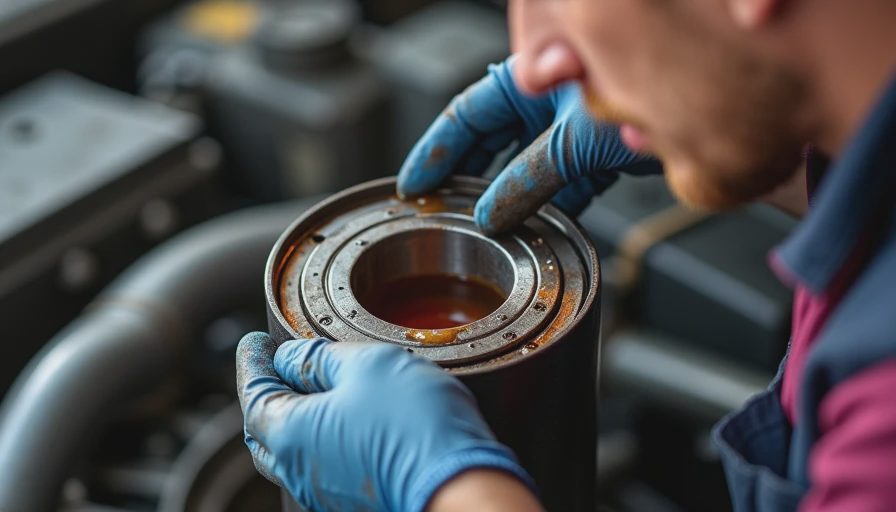
Application Note: On serviceable wheel bearings, clean-out and repack is still the best reset when grease condition is unknown. If the old grease smells burnt, shows hard soap deposits, or contains metallic debris, the problem is not solved by adding a premium product on top.
A practical buying framework
If you need a short decision path, start with the component. For wheel bearings and chassis points, look first for NLGI 2 products carrying NLGI GC-LB credentials. For brake slide pins and hardware, use a brake-specific high-temperature grease designed for that purpose, especially where elastomer compatibility matters. For wet-duty, corrosion-prone service such as trailers and frequent washdown, calcium sulfonate complex deserves serious attention. For long-life heat resistance and oxidation stability, polyurea can be excellent when compatibility is managed correctly.
Then read the data sheet with discipline. Check thickener type, base oil viscosity, operating temperature range, water resistance, and whether the product is intended for rolling bearings, chassis service, or brake hardware. That is how to choose high temp grease for automotive work without guessing. The right grease is not the one with the loudest label. It is the one whose chemistry matches the contact, the temperature, and the contamination path.





No feedback yet — submit the first.