If you are selecting **high temp grease for electric motors**, the engineering problem is usually not grease in the abstract. It is bearing life, temperature rise, relubrication interval, and avoidable downtime. Electric motor bearings live in a narrow operating window: too little grease and you lose film strength, too much and you churn the lubricant, build heat, and shorten life. In the lab we call this thermo-oxidative stability and channeling behavior — on your shop floor, it means whether a motor runs quietly through summer load or starts throwing vibration alarms after a shutdown cycle.
What “high temp” really means in a motor bearing
A common mistake is treating all hot-running applications as the same. They are not. For electric motors, "high temperature" usually means sustained bearing operating temperatures above roughly 160 F, with periodic excursions higher during heavy load, poor cooling, or high ambient conditions. Grease selection should not be based on dropping point alone. Dropping point is the temperature where grease structure softens enough to flow in a test, often measured by ASTM D2265. It is useful, but it is not a service temperature rating.
By the relevant standard, grease consistency is defined by NLGI grade. Most electric motor applications use NLGI 2, though some centralized systems or very cold starts may push you elsewhere. What matters more is the base oil viscosity, oxidation resistance, and the thickener system. Polyurea and lithium complex are the most common families for high-speed motor bearings. Polyurea is widely used because it often performs well in electric motor service, especially where low noise, oxidation control, and long life matter.
Three failure modes, one root cause — here they are: thermal oxidation, mechanical shear, and incompatible regreasing practices. A grease can survive one and fail at the others.
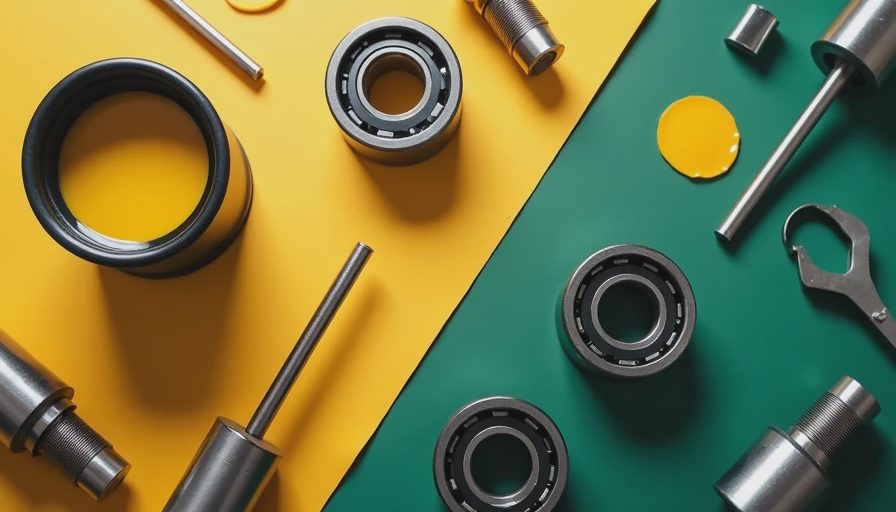
The properties that actually matter
When I evaluate **high temp grease for electric motors**, I start with five questions. First, what is the bearing speed factor? High-speed motors need a grease that resists churning and releases oil at the right rate. Second, what is the bearing temperature, not just the motor frame temperature? Third, is the environment clean, wet, dusty, or chemically aggressive? Fourth, how will the grease be relubricated? Fifth, is there already another grease in the housing?
Base oil viscosity is often overlooked. For many motor bearings, a base oil in the neighborhood of ISO VG 100 to 150 is a practical starting point, but the right target depends on bearing geometry and speed. Too heavy a base oil raises drag and temperature. Too light, and the elastohydrodynamic film can be too thin under load. In the lab we call this film thickness relative to surface roughness — on your shop floor, it means whether you hear bearing hiss turn into bearing growl.
Oxidation stability matters because electric motors can hold grease at elevated temperature for long periods. Look for strong oxidation control by ASTM D942 or similar manufacturer data, and pay attention to oil separation behavior and mechanical stability, often evaluated through worked penetration testing such as ASTM D217.
Polyurea vs lithium complex for motor service
If you need a short answer, polyurea is often the safer default for dedicated electric motor grease, while lithium complex remains a strong general-purpose high-temperature option when compatibility and broader plant inventory matter. That said, the details matter.
Polyurea greases are non-soap thickened and are widely used by motor manufacturers and bearing suppliers for sealed-for-life and long-service applications. They are often favored for oxidation resistance and low bleed control. Many also perform well acoustically in small rolling-element bearings. Lithium complex greases, by contrast, are common across plants because they offer good high-temperature capability, water resistance, and broad availability.
Application Note: If you are maintaining a large fan motor in a paper mill with moderate heat and frequent washdown nearby, a lithium complex grease with appropriate rust protection may fit the broader contamination risk. If you are dealing with a clean, high-speed motor in a controlled enclosure, a polyurea electric-motor grease is often the better technical choice.
The trap is mixing them casually. Grease incompatibility can soften the blend, harden it, or alter bleed behavior. Before switching products, review compatibility charts, confirm with the supplier, and if the motor is important, purge thoroughly or clean out during overhaul.

How to read the label without getting misled
Not every product marketed as **high temp grease for electric motors** is truly optimized for motor bearings. Some products are excellent wheel-bearing or chassis greases but too tacky, too viscous, or too additive-heavy for a high-speed motor. Terms like "high temp" and "premium" are marketing language; the useful data are technical.
Look first for NLGI grade, usually NLGI 2. Then look for the thickener type: polyurea, lithium complex, or another specialty system. Next, review the base oil viscosity and operating temperature guidance. Scan the data sheet for oxidation stability, worked penetration change, four-ball wear, and corrosion performance. Four-ball wear, typically ASTM D2266, is not a complete predictor of motor performance, but it does tell you something about antiwear behavior. For electric motors, I also like to see evidence of shear stability and long-life intent.
Do not overvalue extreme-pressure, or EP, additives unless the application truly needs them. Many electric motor bearings are lightly loaded and high speed. In those cases, oxidation stability and correct oil release usually matter more than a heroic EP package.
Practical relubrication guidance
The best **high temp grease for electric motors** will still fail if the regreasing practice is poor. Overgreasing is one of the most common and most expensive maintenance mistakes. Excess grease gets churned by the rolling elements, causing heat rise, leakage, and sometimes seal damage. That is not a grease chemistry problem; it is a volume control problem.
Use the motor or bearing manufacturer’s relubrication interval when available. If not, build the interval from bearing size, speed, operating temperature, and contamination level. Regrease while the motor is warm when practical, add small measured quantities, and make sure purge paths are open if the housing design expects purging. For critical assets, ultrasound-assisted regreasing can help identify the point at which added grease stops reducing friction and starts causing distress.
Application Note: On a 1,800 rpm TEFC motor driving a belt conveyor in a hot plant area, I would rather see a disciplined ounce-based relubrication route with the correct grease than a premium product applied by guesswork. Precision beats enthusiasm.
Bottom line: choose for temperature, speed, and compatibility
Selecting **high temp grease for electric motors** is not about finding the product with the most dramatic temperature claim on the cartridge. It is about matching thickener, base oil, consistency, oxidation stability, and relubrication method to the actual bearing duty. For many motor programs, that points toward an NLGI 2 polyurea grease designed for electric motor bearings. In mixed inventories or wetter environments, a carefully chosen lithium complex grease can also be entirely appropriate.
By the relevant standard, the data sheet should drive the decision, not the label color. Start with the motor OEM guidance, verify NLGI grade and base oil viscosity, avoid incompatible top-offs, and treat regreasing volume as a controlled maintenance task. Do that, and you are no longer guessing about grease. You are managing bearing life.



No feedback yet — submit the first.