Multigrade motor oil is the difference between easy cold starts and sluggish winter cranking, but it is also the difference between a stable oil film and excess wear when the sump gets hot. In the lab we call this viscosity control under changing temperature; on your shop floor, it means the engine gets the flow it needs on startup and enough film strength once the metal is fully loaded. That is why one bottle can be right for a commuter car in November and wrong for the same car after a tow-heavy summer trip.
How multigrade motor oil is graded by SAE J300
The SAE J300 system is the first thing to understand because it tells you how the oil behaves when cold and when hot. A label such as 0W-20 or 5W-30 has two parts: the number before the W describes low-temperature cranking and pumping performance, while the number after the W describes viscosity at operating temperature. The oil does not turn into two different products; it is one formulation tested across a temperature range.
By ASTM D445, viscosity is measured as kinematic viscosity at 40 C and 100 C, and by ASTM D2270, viscosity index describes how much that viscosity changes as heat rises. Higher viscosity index usually means the oil thins less as the engine warms up, which helps maintain a lubricating film in bearings, cam lobes, and chain drives. A straight-grade oil can still be useful in controlled industrial service, but passenger-car engines live in a wider world of mornings, traffic, and heat soak.
Why cold starts and oil pressure are the real test
Application Note: A pickup that spends January nights outside in Minnesota asks more of the oil than the same pickup parked in a heated garage. During the first few seconds after start, the pump is pushing thick fluid through narrow galleries, and the camshaft, timing chain, and turbocharger bearings depend on how fast that fluid reaches them. ASTM D5293 covers cold-cranking behavior, and ASTM D4684 looks at pumpability at low temperature; those are the lab numbers behind what a driver feels as easy or reluctant starting.
This is also where wear starts. Most mechanical damage happens before a stable hydrodynamic film is fully established, not after the engine is cruising down the highway. In the lab we call this boundary lubrication — on your shop floor, it means the oil film is thin enough that anti-wear chemistry matters. A good formulation has to balance low-temperature flow with enough film thickness once the oil is hot, which is why the old habit of choosing the thickest oil on the shelf is a poor habit for modern engines.

When a lighter or heavier grade makes sense
Multigrade motor oil earns its keep when the duty cycle is messy. A Seattle commuter with short trips, a delivery van idling in August, and a turbocharged sedan all stress the lubricant in different ways, even if the dipstick looks fine. A 0W-20 can help a cold-starting gasoline engine reach critical parts faster, while a 5W-30 or 10W-30 may be specified where the manual allows a broader viscosity window. Towing, mountain grades, and long highway pulls create higher oil temperatures, so the upper end of the SAE grade matters more than people think.
Older engines are a special case. If bearing clearances are larger, oil consumption is already present, or the engine has a known history of hot idle pressure loss, a higher hot-viscosity grade can be reasonable when the manufacturer permits it. The point is not to thicken everything; the point is to match film strength to load, temperature, and clearances. That is a tribology decision, not a brand loyalty decision.
What the additives are doing behind the scenes
A modern oil is not just base stock with a viscosity label. It includes detergents to neutralize acidic byproducts, dispersants to keep soot and varnish precursors suspended, anti-wear chemistry such as ZDDP in controlled amounts, antioxidants to slow oxidation, and friction modifiers when the formulation targets fuel economy. For gasoline engines, API SP and ILSAC GF-6 are the current reference points for many North American vehicles because they address timing-chain wear, turbo deposit control, and low-speed pre-ignition in a more disciplined way than older categories.
Some engines also ask for an OEM approval such as dexos1 Gen 3 or an ACEA A3/B4 specification, and that approval matters as much as the viscosity grade itself. A bottle can say the correct weight and still miss the chemistry target. Application Note: if you service a mixed fleet of compact cars, half-ton trucks, and a few European sedans, write the approval down before you price the oil. The wrong spec can create a false economy that shows up later as noise, deposits, or shorter drain intervals.
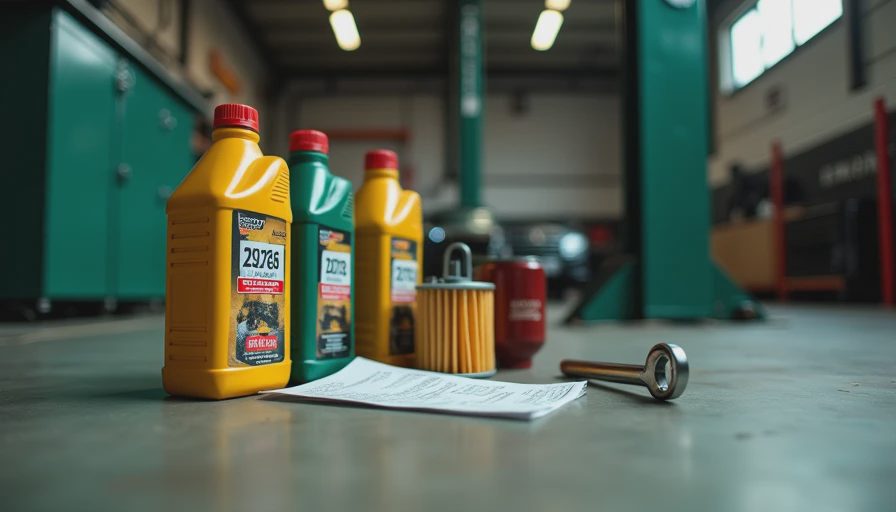
How to read multigrade motor oil labels without overthinking it
Start with the SAE grade, then look for the service category, then check for any OEM approval printed on the bottle or data sheet. If a product says 5W-30 and API SP, that tells you something useful, but it does not tell you everything. The back label or technical data sheet should also list kinematic viscosity, viscosity index, pour point, and sometimes high-temperature high-shear viscosity. Those numbers tell you whether the oil behaves like a commuter-car lubricant, a heavy-duty highway lubricant, or something in between.
For shops, the smartest habit is to read the label like a spec sheet, not a marketing brochure. The front of the bottle is about shelf appeal; the approval line is about compatibility. If the oil does not meet the handbook requirement, save the money and buy the correct product. A premium name brand such as Mobil 1, Pennzoil, Castrol, Valvoline, or Quaker State is not automatically right or wrong; the approval and viscosity are what decide the match.
A practical buying rule for shops and driveways
Use the viscosity and approvals listed in the owner manual first, then adjust only when climate, duty cycle, or wear history justify a change. Full synthetic and synthetic-blend products often sit around seven to twelve dollars per quart at retail, while a quality oil change can run sixty to one hundred twenty dollars depending on the vehicle and labor market. That is why the cheapest bottle is rarely the cheapest maintenance decision. If a fleet truck stays in hard service, the cost of a wrong spec can outrun the price difference very quickly.
For a quick decision, ask three questions: does the grade match the manual, does the approval match the engine family, and does the temperature range fit the environment? If the answer is yes to all three, you are probably close to the right choice. If not, the engine is telling you to slow down and read the label again. For most passenger cars and light trucks, the right multigrade motor oil is the one that matches the handbook, the climate, and the load, not the thickest bottle on the shelf.





No feedback yet — submit the first.