A bearing fails in the field for ordinary reasons: water enters, a heavy load squeezes out the oil, or corrosion begins beneath a seemingly intact grease film. Calcium sulfonate is one response to that combination of threats. In the right formulation, it provides strong water resistance, useful load-carrying capacity, and corrosion protection without relying on a conventional soap thickener alone. The important question is not whether calcium sulfonate is good, but whether its chemistry matches the bearing, temperature, speed, and contamination profile in front of you.
What calcium sulfonate grease is made to do
Calcium sulfonate grease uses a calcium sulfonate thickener system to hold base oil in a semisolid structure. Many industrial products are based on overbased calcium sulfonate, meaning the thickener contains an alkaline reserve associated with calcium carbonate. Through a controlled conversion process, that system develops a complex soap structure with strong mechanical stability and load-carrying behavior.
In the lab we call this a structured thickener with reserve alkalinity; on your shop floor, it means a grease that can remain coherent when a wet conveyor bearing, marine linkage, or steel-mill roller is exposed to pressure and contamination. The thickener is not the same as the base oil. A calcium sulfonate product can use mineral oil, polyalphaolefin, or another synthetic base, and those choices change low-temperature flow, oxidation resistance, and price.
The product should still be specified by NLGI grade. NLGI 2 is common for general industrial bearings, while NLGI 1 or 0 can be easier to pump through centralized systems in cold weather. NLGI grade describes consistency, not operating temperature or overall performance. ASTM D217 worked penetration is the familiar laboratory test behind that consistency classification.
A frequent mistake is to treat calcium sulfonate as a universal replacement for every grease already in the plant. Thickener compatibility, seal materials, oil viscosity, and relubrication intervals all matter. A conversion should begin with the equipment manual, the existing product data sheet, and a controlled purge or cleaning plan.
Why water and corrosion resistance matter
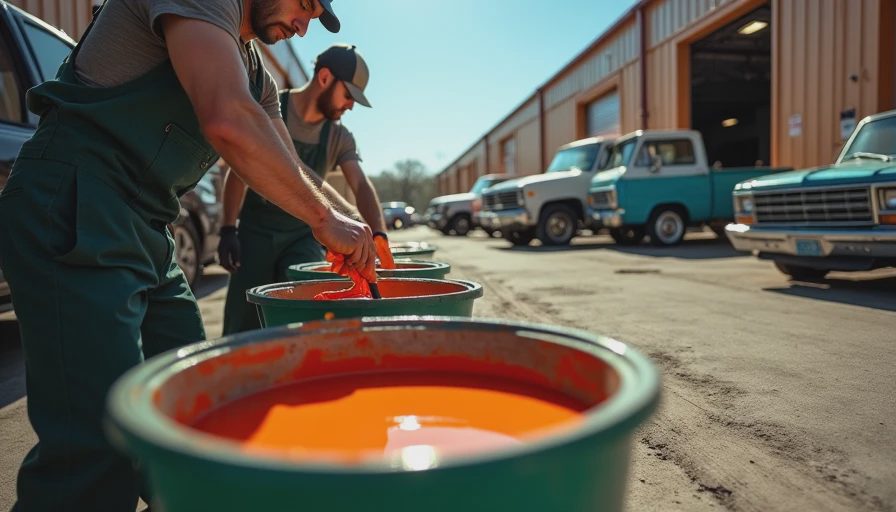
Water contamination changes the lubrication problem. It can reduce film strength, promote rust, wash grease from a raceway, and transport abrasive particles into a contact. Calcium sulfonate formulations are often selected for wet service because their thickener structure resists water washout and can provide corrosion protection at exposed metal surfaces.
That advantage is particularly relevant to paper machines, washdown conveyors, wastewater equipment, marine deck machinery, steel processing lines, and aggregate plants. ASTM D1264 water washout testing gives a comparative indication of how much grease is removed from a bearing under specified water exposure. It is useful for screening, but it is not a promise that a product will survive every pressure washer, spray angle, temperature, or relubrication interval.
Corrosion performance should be reviewed separately. ASTM D1743 evaluates rust-preventive properties of lubricating greases under a defined procedure, while ASTM D6138, the Emcor test, is commonly used to assess corrosion protection in the presence of water. Ask for the actual test method and result rather than accepting a general phrase such as marine grade.
Application Note: On a wet conveyor bearing, inspect the purge after the first few cycles. A milky appearance, excessive thinning, or rust-colored discharge tells you more about contamination control than a marketing label does. Improve the seal, reduce direct spray, and set a measured relubrication quantity before simply adding more grease.
Load carrying, shock, and temperature limits
Calcium sulfonate is attractive where bearings see shock loads, oscillation, or boundary lubrication. The thickener structure can support load during short periods when a full elastohydrodynamic film is not established. ASTM D2509 four-ball weld load and ASTM D2266 four-ball wear testing can help compare extreme-pressure and wear behavior, although neither test reproduces an entire gearbox or bearing arrangement.
Dropping point is another commonly quoted value. ASTM D2265 measures the temperature at which a grease releases a drop of liquid under a defined test condition. It is not the maximum continuous bearing temperature. A product with a high dropping point can still oxidize, bleed excessively, or damage seals if operated beyond its stated temperature range. For continuous hot service, base oil viscosity, oxidation stability, bearing speed, and heat removal deserve more attention than one headline number.
At low temperatures, an NLGI 2 mineral-oil grease may resist pumping even if its thickener performs well. For a cold outdoor conveyor or a centralized system, compare low-temperature torque and pumpability data. For high-speed electric-motor bearings, confirm the manufacturer’s speed factor and use a product designed for that application rather than assuming more mechanical strength is automatically better.
Compatibility and changeover procedure
Calcium sulfonate grease should not be mixed casually with lithium complex, polyurea, aluminum complex, or clay-based products. Some mixtures soften dramatically, harden, separate oil, or lose corrosion protection. Compatibility charts are helpful, but a bench blend followed by worked penetration, oil separation, and visual inspection is more reliable for a critical asset.
A practical changeover has five steps. First, identify the old thickener, base oil, NLGI grade, and additives. Second, confirm compatibility with the equipment builder and grease supplier. Third, remove as much old product as practical from the housing, lines, and automatic lubricator. Fourth, introduce a limited quantity of the new grease while watching purge condition, temperature, and vibration. Fifth, sample or inspect the purged material after the first service interval.
Do not overfill a bearing to force the old grease out at high pressure. Excess grease can raise temperature, increase churning, and shorten seal life. Record the quantity in grams or shots, not merely the phrase one pump. Pump output varies substantially between grease guns and automatic dispensers.

Choosing the right grade for real equipment
For a slow, heavily loaded bearing exposed to water, an NLGI 2 calcium sulfonate product with suitable base-oil viscosity may be a sensible starting point. A centralized lubrication system operating in winter could need NLGI 1 or 0, provided the bearing manufacturer accepts the softer consistency. A high-speed motor bearing may need a lower-viscosity base oil and a specialized filling quantity, even when water resistance is desirable.
Review the product data sheet for NLGI grade, base-oil type and viscosity, operating temperature range, four-ball results, water washout, corrosion testing, and compatibility guidance. ASTM D4950 can help classify automotive service greases, but industrial selection should not stop at an automotive category. ISO 6743-9 provides a broader framework for lubricating greases and their applications; the exact equipment duty still controls the final choice.
Price comparisons should use cost per operating hour, not just the cost of a cartridge. A $12 cartridge that lasts 500 hours costs less in material than a $9 cartridge that lasts 150 hours, even before accounting for bearing replacement and downtime. The arithmetic is simple: divide grease cost and application labor by verified service hours, then compare failure history.
A maintenance decision that survives the audit
Start with the failure mode. If the bearing is rusty, investigate water ingress and sealing before changing grease. If it runs hot, check fill quantity, speed, alignment, and base-oil viscosity. If the grease washes out, compare ASTM D1264 data and inspect the housing. If the raceway is damaged by shock loading, review load, fit, contamination, and relubrication timing.
Calcium sulfonate can be an excellent tool for wet, loaded, corrosive service, but chemistry does not repair a damaged seal or an overloaded bearing. Specify the NLGI grade, test evidence, base oil, and compatibility plan in writing. Then track temperature, vibration, purge condition, and bearing life after the change.
Three failure modes, one root cause: selecting by label instead of duty. In the lab we call this application matching; on your shop floor, it means fewer surprises at the next inspection round. If you are evaluating calcium sulfonate for a critical asset, compare the data sheets, run a controlled trial, and document the result against a defined baseline.



No feedback yet — submit the first.