Bearings rarely fail because the steel suddenly became weak. More often, the operating envelope was misunderstood: a grease was too stiff, a seal admitted water, a shaft fit was incorrect, or a machine ran beyond its calculated load. Bearings convert sliding or rolling contact into controlled motion, but they do so under a thin and easily disturbed lubricating film. When that film collapses, metal-to-metal contact begins, temperatures rise, and the failure accelerates.
I approach bearings as tribology problems first and replacement-parts problems second. The correct question is not simply which bearing fits the housing. It is which bearing, lubricant, clearance, seal, mounting method, and maintenance interval will support the actual duty cycle. That distinction matters in a paper mill, marine gearbox, electric motor, and race engine alike.
How bearings carry load
Rolling-element bearings use balls or rollers between inner and outer raceways. Ball bearings suit moderate radial loads and relatively high speed. Cylindrical roller bearings carry greater radial loads, while spherical roller bearings tolerate housing or shaft misalignment. Tapered roller bearings support combined radial and axial loads, making them common in wheel ends, gearboxes, and heavily loaded rotating assemblies.
The catalog rating is only the beginning. Dynamic load rating is used for life calculations under rotating load; static load rating addresses permanent deformation when a bearing is stationary or heavily loaded at low speed. A basic rating life calculation uses the equivalent dynamic load and the bearing's load exponent. For ball bearings, life changes approximately with the cube of the load ratio. Reducing load by 10 percent can therefore produce a meaningful life improvement, while a modest overload can consume life quickly.
In the lab we call this elastohydrodynamic lubrication, or EHL. On your shop floor, it means the contact surfaces deform microscopically and trap a pressurized oil film between them. Surface finish, viscosity, speed, temperature, and load all influence that film. A bearing can have an impressive catalog life and still fail early if the lubricant cannot maintain separation.
Choosing the right bearing and clearance
Start with the load direction, speed, temperature, contamination level, and allowable misalignment. A deep-groove ball bearing is a versatile choice, but versatility is not the same as suitability. A high-speed electric motor may need low-friction seals and carefully controlled internal clearance. A vibrating screen may need a spherical design and robust cage construction. A marine pump may require corrosion-resistant materials or sealing designed for wet service.
Internal clearance is the space between rolling elements and raceways before installation. C3 clearance, a common designation, is greater than normal clearance; it is not automatically a higher-quality bearing. It can be appropriate when an interference fit or elevated temperature will reduce operating clearance. Excessive clearance, however, increases vibration and permits roller or ball skidding. Insufficient clearance can create preload, heat, and rapid smearing.
Shaft and housing fits deserve the same attention. A rotating inner ring under a fixed radial load commonly needs an interference fit so it does not creep on the shaft. A stationary ring may use a looser fit for removal or thermal movement. Consult the manufacturer fit tables and ISO 286 tolerance system rather than choosing a fit by habit.
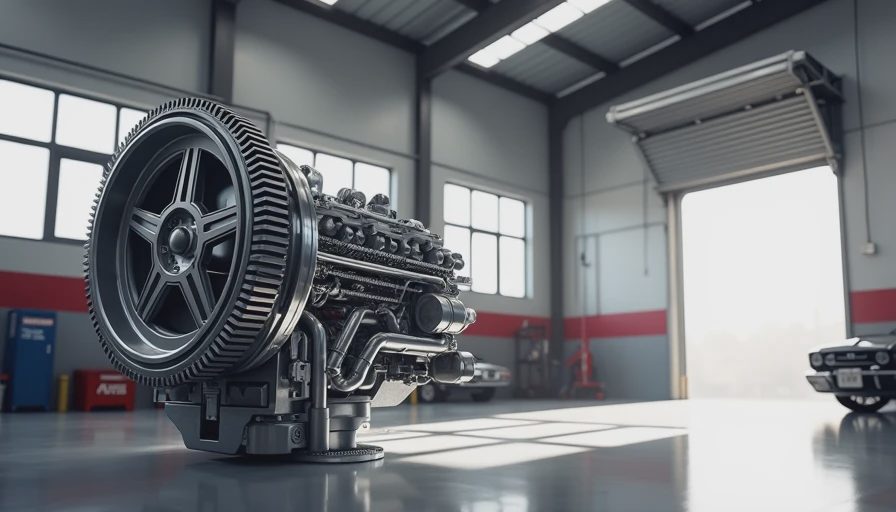
Application Note: On a 1,800-rpm motor driving a centrifugal pump, verify the shaft fit, operating temperature, and coupling alignment before upgrading the bearing. A premium bearing cannot compensate for a bent shaft or excessive belt tension.
Lubrication: viscosity, grease, and quantity
Lubrication controls friction, removes some heat, protects against corrosion, and limits wear. For oil lubrication, viscosity is the central property. ISO VG grades identify the kinematic viscosity range at 40 degrees Celsius under ISO 3448. Selecting ISO VG 46 instead of ISO VG 220 is not a matter of preference; it changes film thickness, churning losses, and starting torque.
Grease combines a base oil with a thickener and additives. The NLGI grade describes consistency, not oil viscosity. NLGI 2 is common for general industrial service, but a thinner NLGI 1 grease can help in cold or high-speed applications. Two greases with the same NLGI grade may still be incompatible because their thickener systems differ. Mixing lithium complex with polyurea grease, for example, should not be treated as harmless without compatibility information.
Quantity is equally important. Under-greasing can starve a contact, but over-greasing can cause churning and heat. Use the bearing cavity, free-space, speed, temperature, and relubrication interval to establish a quantity. An automatic lubricator is useful only when its delivery rate matches the application. Purging grease onto a motor shield every Friday is not a lubrication program.
Contamination and the three common failure modes
Three failure modes, one root cause: the machine allowed the contact environment to become uncontrolled. Abrasive particles create dents and raised edges in raceways. Water can reduce lubricant film strength, promote corrosion, and degrade grease. Electrical current through a motor bearing produces fluting, often visible as evenly spaced washboard marks. Each condition requires a different corrective action.
Use cleanliness targets appropriate to the machine and lubricant. ISO 4406 codes are widely used to report particle contamination in hydraulic and circulating oils. Sampling technique matters: a dirty bottle or sample taken from a stagnant drain can produce a misleading result. For grease, inspect color and texture as clues, but confirm suspected contamination through laboratory analysis when the equipment is critical.
Seals are part of the bearing system, not an accessory. Contact seals reduce contaminant entry but increase friction. Noncontact shields run cooler at high speed but provide less protection in wet or dusty environments. In a washdown plant, improve the sealing path and avoid directing high-pressure water at the seal lip.
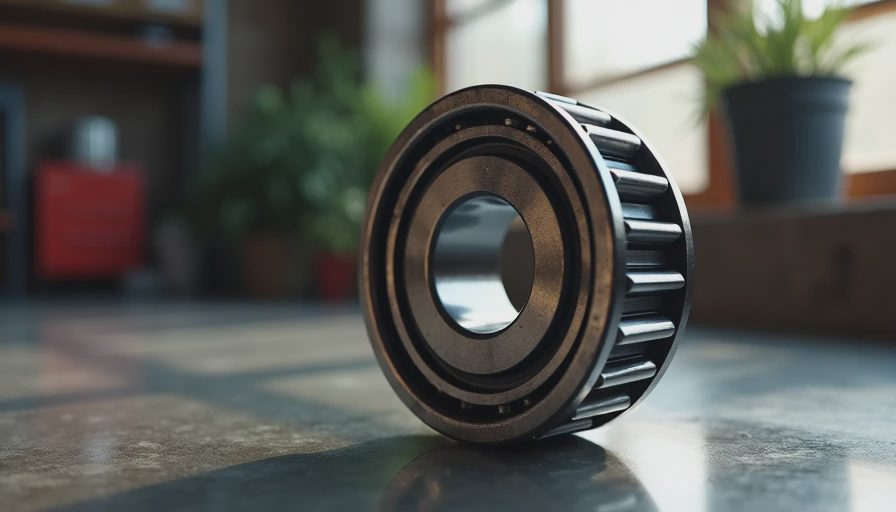
Application Note: In a coastal pump house, rising bearing temperature after a washdown often points to water ingress or overgreasing rather than excessive mechanical load. Check the grease condition, seal lips, drain path, and vibration trend before replacing parts.
Installation and inspection procedure
Cleanliness begins before the bearing leaves its package. Keep replacement bearings sealed until installation, use lint-free materials, and never wash a factory-preserved bearing unless the procedure specifically requires it. Measure shaft and housing dimensions at several positions to detect taper, ovality, or fretting damage.
Apply mounting force only to the ring receiving the interference fit. Pressing through the rolling elements can brinell the raceways, creating permanent dents that later become fatigue initiation sites. For larger bearings, controlled heating can ease installation, but avoid open flames and do not exceed the manufacturer’s specified temperature. Induction heating provides better control than a torch.
After installation, rotate the shaft by hand and verify that there is no binding. Record baseline temperature, vibration, speed, and lubricant condition. ASTM E2412 provides guidance for used oil analysis by infrared spectroscopy, while ASTM D4378 addresses in-service monitoring of turbine oils; use the standard that fits the lubricant and machine rather than treating every sample alike.
Inspection should compare trends, not isolated readings. A gradual increase in envelope acceleration can indicate developing rolling-contact fatigue. A sudden temperature rise can indicate lubricant starvation, preload, or seal drag. Audible clicking may reflect contamination, cage damage, or a damaged raceway. Confirm the diagnosis with teardown evidence whenever production consequences justify the effort.
A practical reliability plan
For critical bearings, create an equipment record containing the exact designation, clearance, seal type, lubricant, fill quantity, shaft and housing fits, installation method, and operating conditions. Record why a change was made. If a bearing lasted four months after a grease change but eighteen months with the previous product, that evidence deserves investigation rather than dismissal.
Set relubrication intervals from speed, load, temperature, contamination, and bearing size. Shorten the interval for wet, dusty, or shock-loaded service, but do not compensate for a failed seal with unlimited grease. Train technicians to use calibrated grease guns and dedicated fittings. Color-coding containers can prevent cross-contamination, but it does not replace product identification.
When a failure occurs, preserve the evidence. Photograph the raceways, cage, seals, shaft seats, and lubricant before cleaning. Look for discoloration, spalling, smearing, false brinelling, rust, and circumferential fretting. The failed component is a record of the operating history. Read it carefully, correct the root cause, and only then install the replacement. That approach costs less than repeating the same failure on the next maintenance shift.




No feedback yet — submit the first.