When a gearbox, hydraulic power unit, or marine diesel begins showing rust, foaming, cloudy lubricant, or premature bearing wear, the root cause is often moisture. The search phrase water for oil usually means one of two things: how to detect water in an oil sample, or how water changes lubricant performance. Both questions matter because even a small amount of free water can destroy an oil film, accelerate oxidation, and initiate corrosion.
In my work, I treat water contamination as a failure mechanism rather than a minor housekeeping problem. Water for oil analysis should identify whether moisture is dissolved, emulsified, or present as free water. Each form behaves differently, and a simple visual inspection cannot reliably quantify any of them.
What water for oil contamination does to machinery
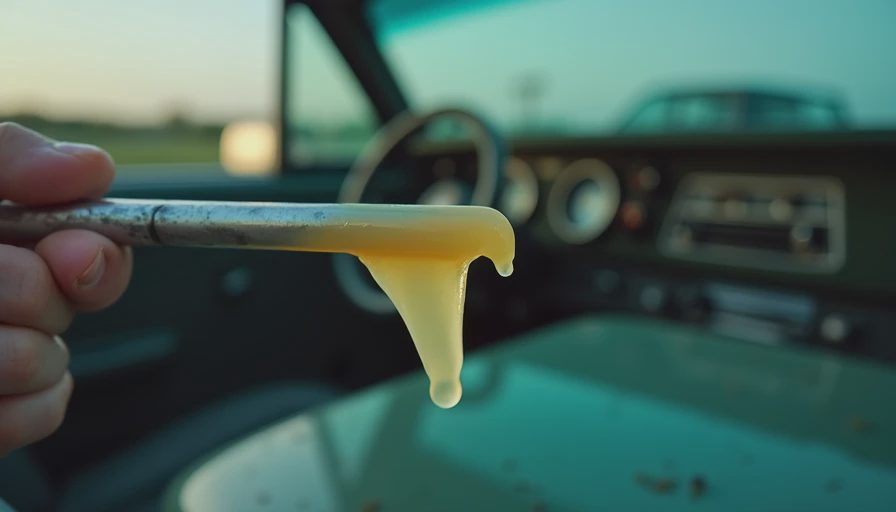
Oil and water are chemically different fluids, but lubricants can carry water in several physical states. Dissolved water is held within the oil at a molecular level and may be invisible. Emulsified water forms tiny droplets suspended through the lubricant, producing a hazy or milky appearance. Free water separates and settles in a tank, sump, or bearing housing. That bottom layer is especially dangerous because it can reach metal surfaces directly.
Water reduces lubricant film strength and promotes vapor formation in heavily loaded contacts. In rolling bearings, the combination of water and load can contribute to hydrogen-related damage and surface fatigue. In gears, water can disrupt the elastohydrodynamic film that separates asperities, meaning microscopic peaks on opposing surfaces begin to touch. The result is scuffing, pitting, and accelerated wear.
Water also reacts with additives. Rust inhibitors, antiwear chemistry, and detergents can be depleted or altered by prolonged moisture exposure. In hydraulic systems, water can cause pump wear, valve sticking, corrosion, and inconsistent control response. That is why water for oil testing belongs in a condition-monitoring program, not only in a post-failure investigation.
How to test water for oil accurately
The preferred laboratory method for many lubricating oils is Karl Fischer titration, commonly performed under ASTM D6304. This method measures water at low concentrations and reports a numerical result, often in parts per million. One part per million is one unit of water per million units of oil by mass, although the laboratory report should identify its reporting basis.
For heavier petroleum products, ASTM D95 uses distillation to collect and measure water. It is useful when a sample contains substantial free water, but it is generally less sensitive than Karl Fischer testing for low-level dissolved moisture. ASTM D1401 is different again: it evaluates demulsibility, or how readily an oil separates from water after agitation. It does not directly report the sample's total water content.
A field crackle test can provide a quick warning. A few drops of oil placed on a hot plate may sputter when water flashes into vapor. This test is qualitative and presents burn and fire hazards, so it should never replace laboratory analysis. Portable moisture meters can be useful for trending, but their calibration and oil-specific response must be understood before treating a reading as a maintenance limit.
Application Note: For a circulating gearbox, take the sample from a live-zone sampling port while the machine is operating or shortly after shutdown. A drain-port sample may contain settled water and sludge rather than representative circulating oil. Label the equipment, oil grade, operating temperature, and time since shutdown; without that context, water for oil results are difficult to interpret.
Reading moisture results without guessing
There is no universal safe water limit for every lubricant and machine. A turbine bearing, paper-machine gearbox, mobile hydraulic system, and diesel engine have different designs, temperatures, seal arrangements, and operating loads. The equipment maker's limit is the first reference. If no limit exists, establish a clean baseline and trend changes over time.
As a practical starting point, many circulating oil systems become more vulnerable as water rises from several hundred parts per million into the low thousands. That is not a permission slip to run at a fixed number. A sealed precision bearing may demand a much lower target than a slow-speed enclosed gearbox. Free water is an immediate response condition regardless of the dissolved-water number because separated water can sit against steel and generate corrosion.
Look for changes in the complete sample report. Rising water accompanied by increasing particle counts suggests seal failure, washdown ingress, or tank-breather problems. A high acid number suggests oxidation or additive depletion. A sudden viscosity change can indicate contamination, thermal degradation, or the wrong lubricant. Water for oil interpretation is strongest when moisture is considered alongside these other indicators.
Finding where the water enters
The corrective action depends on the entry path. Common sources include failed shaft seals, damaged breathers, open inspection covers, condensation during temperature cycling, washdown spray, leaking coolers, and new oil stored in damp conditions. A gearbox that cools overnight can draw humid air through a breather. In a marine environment, salt-laden air makes the resulting corrosion more aggressive.
Inspect breathers first, especially on reservoirs that experience frequent temperature swings. Desiccant breathers should be replaced or serviced when the indicator changes color according to the product instructions. Examine shaft seals for wear tracks and pressure damage. On hydraulic units, inspect water-cooled heat exchangers and sample the cooling circuit if cross-contamination is possible.
Storage matters too. Keep drums under cover, upright where appropriate, and protected from standing water. Do not assume a sealed drum is dry simply because its exterior looks clean. Temperature changes can draw moisture through imperfect closures. Before transferring oil, wipe fittings and use clean, dry transfer equipment with filtration suited to the lubricant.
Removing water and preventing a repeat
Free water can sometimes be drained from the lowest point of a reservoir after the machine has been still long enough for separation. That action removes only the separated layer. Dissolved and emulsified water require equipment such as vacuum dehydration, coalescing filtration, or properly selected centrifugal separation. Ordinary particle filters do not remove dissolved water merely because their micron rating is small.
Vacuum dehydration is often effective for circulating oils because it lowers the water vapor pressure and removes moisture at controlled temperature. Coalescers work best when water is already present as separable droplets. The treatment must match the oil, additive package, flow rate, and machine cleanliness requirements. After treatment, repeat the water for oil test and inspect the reservoir, seals, and breather rather than declaring success from appearance alone.
Use ISO 17359 as a general framework for condition monitoring, while keeping the lubricant supplier's technical data and the equipment manufacturer's limits in view. ISO 4406 particle coding can describe solid contamination, but it is not a water measurement. Separating these measurements prevents a common mistake: assuming a clean particle code means the oil is dry.
A practical response plan for maintenance teams
When a report shows elevated moisture, first verify the sample identity and method. Confirm whether the result came from Karl Fischer testing, distillation, or a field screening method. Next, determine whether the water is dissolved, emulsified, or free, then compare the value with the machine-specific target and historical trend.
If free water is present, drain it safely and inspect low points, seals, breathers, and coolers. If the value is rising but no free layer is visible, send a confirmation sample and schedule dehydration before bearing or gear damage develops. Record the intervention, treatment method, post-treatment result, and suspected ingress path in the lubrication log.
The useful lesson from water for oil work is straightforward: moisture is measurable, but the measurement must be matched to the failure risk. In the lab we call this multiphase contamination; on your shop floor, it means finding the entry path, removing the right form of water, and proving that the oil returned to service in a controlled condition.



No feedback yet — submit the first.