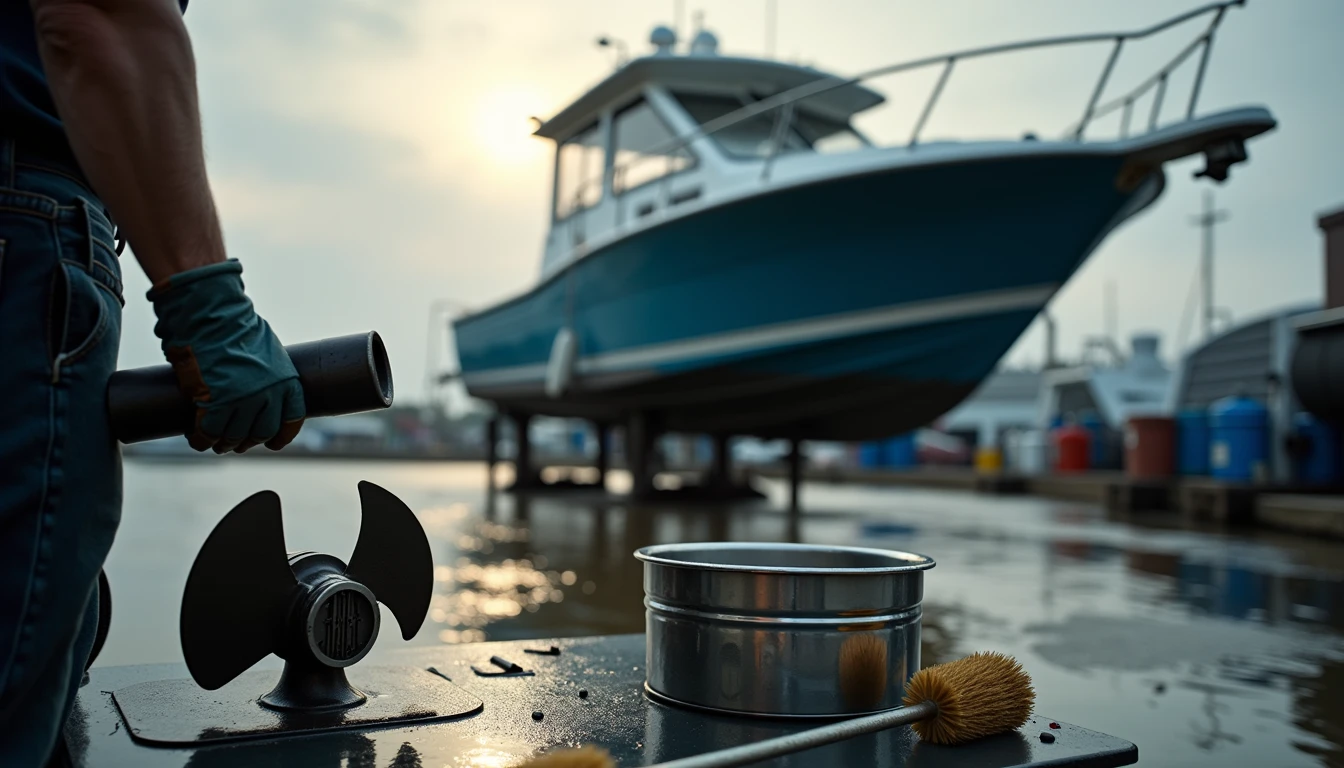
Marine Preventive Maintenance That Pays: Clean Hulls, Correct Oil, and Propeller Checks to Protect Uptime
The Big Picture (industry context, why this matters now)
What fails on small and mid-size marine fleets isn’t usually the “big dramatic” component—it’s the slow, expensive grind of avoidable wear: fouled hull bottoms that drag fuel economy down, degraded lubrication that shortens engine life, and propeller/gearcase issues that begin with something as simple as fishing line. What’s at stake is straightforward for fleet managers and owner-operators: higher fuel burn, unplanned downtime, and repair bills that spike your total cost of ownership.
In the lab we call this tribological loss—energy and component life consumed by friction, wear, and lubricant breakdown. On your dock and in your maintenance bay, it shows up as: boats that feel “slower than last season,” engines that wear faster than expected, and gearcases that start leaking after a minor oversight.
The source guidance focuses on three high-ROI preventive maintenance levers: cleanliness (especially for saltwater operations), disciplined oil changes using proper marine oil, and routine propeller/shaft inspections with correct grease practice and torque to specification.
Key Details (specs, performance, features, comparison)
Cleanliness: hull condition is fuel efficiency
The source makes a direct operational claim: a boat with a clean hull bottom is more fuel-efficient than a hull fouled with algae or aquatic scum. That’s not marketing—it’s hydrodynamics plus tribology. Fouling increases surface roughness and boundary-layer drag; your propulsion system pays for it every hour.
Actionable practices from the source:
- Wash the boat regularly, using purpose-built boat soaps and cleaners to avoid damaging the finish.
- For saltwater duty, rinse thoroughly with fresh water to remove salt residue.
- Use tools that reduce labor time: a long-handled boat brush and an auto-style spray wand (commonly sold at auto parts stores) to avoid hand-scrubbing “acres of hull sides.”
Application Note — Saltwater rinse-down as corrosion control (outboard and sterndrive fleets)
In the lab we call salt residue a corrosive electrolyte—on your shop floor it means salt left on surfaces accelerates corrosion and can complicate later fastener removal and component service. A consistent fresh-water rinse is a low-cost control that supports more predictable service work.
Oil: service interval guidance and why marine oil matters
The source specifies a practical service cadence for four-stroke outboards, inboards, and stern drive boats:
- Change oil at least once a year or every 100 hours of operation (+/-) (manufacturer intervals vary).
The oil-change workflow described mirrors automotive practice (warm engine, drain, filter, refill), with one critical boundary:
- Do not use automotive oil in your boat.
- Use only name-brand marine oil. The source states marine engines “work much harder” and automotive oil lacks the “chemical composition necessary for a marine engine.”
From a tribologist’s perspective, the chemistry point matters: marine duty cycles often involve sustained load, humidity exposure, and corrosion risk. On the floor, the takeaway is procurement discipline—don’t let “equivalent automotive oil” creep into inventory as a cost-saving measure unless your engine manufacturer explicitly approves it.
Application Note — Oil selection control for mixed fleet maintenance
In the lab we call this lubricant specification control—in your storeroom it means physically separating and clearly labeling marine oils versus automotive oils to prevent misapplication. Wrong-oil events are rarely caught immediately but can reduce mean time between failures.
Propeller and gearcase: small checks prevent big failures
The source outlines a pre-launch and in-season routine for outboard and stern drive propellers:
- As part of pre-launch, use a deep well socket and ratchet/breaker bar to confirm the propeller nut is secure.
- Remove the propeller several times during the season to check for discarded fishing line wrapped around the prop shaft.
- If fishing line is found, the source warns it can cut into the propshaft seal in a “surprising short time,” allowing gear oil to leak out and water to enter the gearcase.
- If you discover fishing line, the source advises taking the boat to a local marine dealer for gearcase inspection; beyond changing gear oil, gearcase service is not a do-it-yourself job.
- While the prop is off, inspect for nicks, dents, and impact damage. Missing paint is acceptable, but evidence of impact should be sent for repair.
- Before reinstalling, apply a liberal amount of waterproof marine grease on the prop shaft.
- Tighten the prop nut to the manufacturer’s specifications.
This is a classic failure chain: debris → seal damage → lubricant loss/contamination → accelerated wear. In the lab we call it abrasive ingress and lubricant contamination—on your vessel it means “a few wraps of line” can turn into a gearcase rebuild.
Application Note — Preventing gearcase water ingress (rental fleets and training operations)
High-turn operations tend to pick up more submerged debris. Scheduling “prop pull and shaft check” multiple times per season (as the source recommends) is a practical control that reduces surprise gearcase failures and protects uptime during peak demand.
Operational Impact (maintenance, TCO, fleet implications)
For decision-makers, the maintenance moves here aren’t exotic—they’re about executing basics with discipline:
- Fuel cost exposure: The source ties hull cleanliness directly to fuel efficiency. If you operate multiple boats or long duty hours, a fouled hull becomes a recurring operating cost, not a cosmetic issue.
- Preventive maintenance schedules: The source’s interval guidance—annual or ~100 hours (+/-)—gives you a baseline for a calendar-and-hours PM program, especially useful where multiple operators share equipment.
- Downtime avoidance: Prop shaft seal damage and gearcase water ingress typically surface as leaks, poor performance, or escalating noise/vibration—often at the worst time. The recommended “remove and inspect several times during the season” is a downtime-avoidance measure.
- DIY vs dealer boundary: The source draws a clear line: routine prop removal/inspection and grease application are feasible; gearcase service beyond gear oil changes belongs with a marine dealer. That boundary helps control risk and rework.
From a standards standpoint, the source repeatedly points you back to manufacturer specifications (notably for propeller nut tightening). In practice, that means your maintenance documentation should reference the OEM torque/spec values and treat them as the controlling requirement.
What to Watch (regulatory, market trends, upcoming changes)
The source does not cite OSHA, EPA, ISO, ASTM, SAE, or NLGI requirements, so I won’t manufacture compliance claims. What it does imply is worth watching operationally:
- Chemical compatibility and finish protection: Using boat-specific soaps and cleaners reduces the risk of finish damage. If your procurement team substitutes general-purpose cleaners, you may increase cosmetic degradation and future reconditioning cost.
- Lubricant misapplication risk: “Automotive oil is cheaper” is a common purchasing pressure point. The source explicitly warns against it. If you run mixed vehicle/marine shops, your biggest risk is inventory and human error, not the oil change itself.
Bottom Line (recommended action for fleet/ops managers)
If you want measurable uptime protection with minimal capital spend, build three repeatable controls into your preventive maintenance schedules using the source’s guidance: (1) regular washing and saltwater fresh-water rinsing to protect surfaces and fuel efficiency, (2) oil changes at least annually or every ~100 hours (+/-) using name-brand marine oil—not automotive oil, and (3) multiple in-season prop removals to clear fishing line, inspect for impact damage, apply waterproof marine grease, and torque the prop nut to manufacturer specifications. Then enforce the DIY/dealer boundary on gearcase work to reduce expensive secondary damage.