If you run a boat long enough, you learn that **4-stroke marine engine oil** is not just automotive oil with a different label. The engineering problem is simple: a marine engine sees sustained load, frequent idle-to-throttle transitions, moisture exposure, and corrosion risk that passenger-car service does not. In the lab we call this a combined oxidation, shear, and corrosion challenge — on your shop floor, it means stuck rings, varnish, bearing wear, and hard starting at the ramp. Choosing the right oil starts with standards, not marketing language.
Why marine four-stroke engines stress oil differently
A four-stroke outboard or inboard often operates at a much steadier and higher percentage of rated load than a typical road engine. That changes lubricant duty in a meaningful way. Oil must maintain film strength — the separating layer that keeps metal surfaces apart — while also resisting viscosity loss from mechanical shear. By the relevant standard, NMMA FC-W and FC-W Catalyst Compatible define performance expectations for many marine gasoline four-stroke applications, especially around rust protection, foaming control, and high-temperature deposit resistance.
Water is the other major variable. Even when liquid water does not enter the crankcase, marine service creates persistent humidity swings and cool-down condensation. Add in fuel dilution from trolling, extended idle, or repeated short runs, and the oil can thin out and oxidize faster than many owners expect. Three failure modes, one root cause — here they are: degraded viscosity, additive depletion, and corrosive exposure. If you miss those, the engine may still run, but it will not stay clean or protected for long.
What the label should tell you
Start with the owner manual, then verify the oil label. For most modern gasoline marine engines, viscosity grades such as SAE 10W-30 or 25W-40 are common, but the right answer is application-specific. The first number describes low-temperature behavior; the second reflects viscosity at operating temperature. In the lab we call this multigrade behavior — on your shop floor, it means cold-start flow without giving up hot-load protection.
The most important marking for many gasoline marine products is **FC-W**. That certification is issued under the National Marine Manufacturers Association program and is designed around marine operating conditions, not general automotive duty. If the engine has a catalyst, look for **FC-W Catalyst Compatible** where specified. Also check whether the engine maker calls for synthetic blend or full synthetic chemistry. A synthetic base stock can improve oxidation stability and low-temperature flow, but the additive package still does most of the hard work in corrosion control and deposit management.
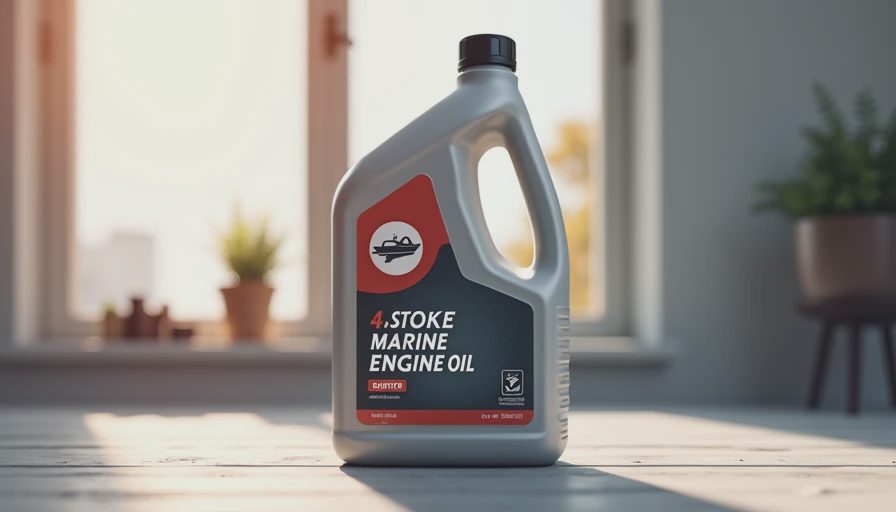
Application Note: For a late-model four-stroke outboard used in salt water, I would prioritize the correct SAE grade, FC-W approval, and a drain interval aligned with engine hours rather than calendar guesswork. Salt exposure punishes neglect faster than most owners realize.
Additive chemistry that actually matters
Not all performance comes from base oil viscosity. Additives determine how well **4-stroke marine engine oil** survives real service. Detergents and dispersants keep oxidation byproducts and soot-like contaminants suspended so they can be drained rather than baked onto pistons and ring lands. Anti-wear chemistry protects components during boundary lubrication, the regime where the oil film is very thin and metal surfaces approach contact. Rust and corrosion inhibitors are especially important in marine environments because inactivity can be as damaging as operation.
Foam control is another marine-specific concern. Aerated oil does not carry load as effectively because air compresses and disrupts film continuity. That matters in high-speed bearings and valvetrain components. Shear stability matters too, particularly in multigrade oils exposed to sustained high rpm. By the relevant standard, ASTM test methods used in qualification work help characterize viscosity, volatility, corrosion behavior, and oxidation resistance, though the end user usually sees those results filtered through FC-W certification or OEM approval.
What I tell mechanics is straightforward: do not buy on brand familiarity alone. Mercury, Yamaha, Quicksilver, Valvoline, Lucas, and others all offer marine formulations, but the correct choice is the one that matches the specification, viscosity, catalyst requirements, and service severity of your engine.
Synthetic vs conventional and how to set drain intervals
The synthetic-versus-conventional debate is usually framed too loosely. Full synthetic oil generally offers better oxidation resistance, cleaner high-temperature performance, and improved low-temperature pumpability. Those are real advantages for a boat that sees long summer runs, intermittent storage, or cold-morning starts. Conventional oil can still perform well if it meets the required standard and is changed on time, but its margin under severe service is typically smaller.
Drain interval should be based on the engine manufacturer’s hour recommendation, operating profile, and storage pattern. A boat that trolls for long periods, idles in no-wake zones, or sits for months between uses places different stress on the oil than one that runs steady and hot every weekend. Fuel dilution and moisture accumulation often justify conservative changes even when hour totals look modest.

Application Note: If an engine is used seasonally and then stored, I prefer fresh oil before lay-up unless the OEM says otherwise. Used oil carries acids, moisture, and combustion residues into storage, and that is an avoidable corrosion risk.
Common mistakes that shorten engine life
The most common mistake is substituting automotive oil for a marine application without checking certification. Some automotive oils are excellent in their intended duty cycle, but marine engines need stronger rust protection and different deposit control priorities. Another mistake is mixing viscosities casually because “oil is oil.” It is not. If the manual calls for 25W-40 or 10W-30 with FC-W approval, there is usually a tribological reason behind it.
I also see owners stretch intervals based on low annual hours while ignoring harsh service. Ten short trips with cool operation can contaminate oil more than fewer long runs that fully stabilize sump temperature. Finally, do not ignore the filter. Clean oil through a quality filter is part of the system, not an afterthought. If you want long bearing life, clean rings, and fewer corrosion surprises, use a compliant **4-stroke marine engine oil**, match the viscosity to the engine, and change it with discipline. That is not glamorous advice, but it is the kind that keeps engines alive.




No feedback yet — submit the first.