A gearbox does not fail because a label looks unfamiliar. It fails when the lubricant cannot maintain a separating film, control heat, resist contamination, or protect surfaces during the actual duty cycle. Chevron is widely used across industrial, automotive, marine, and commercial equipment, but selecting the right product requires more than recognizing the brand. The viscosity grade, additive system, operating temperature, load, and equipment specification must all agree.
I approach Chevron products the same way I evaluate any lubricant: start with the machine, then identify the chemistry that supports its failure modes. In the lab we call this tribological matching; on your shop floor, it means preventing micropitting, varnish, sludge, bearing distress, and unplanned downtime.
Where Chevron Fits in an Industrial Lubrication Program
Chevron produces lubricants under several product families, including industrial gear oils, hydraulic fluids, greases, compressor oils, turbine fluids, engine oils, and metalworking products. The brand name is not a specification. A hydraulic power unit might need an ISO viscosity grade hydraulic oil with anti-wear performance, while a heavily loaded enclosed gearbox could require an industrial gear lubricant with a different additive package and viscosity.
That distinction matters because viscosity controls film thickness and flow, while additives address oxidation, rust, foam, extreme pressure, and wear. ISO 3448 defines industrial viscosity grades by kinematic viscosity at 40 degrees C. An ISO VG 46 fluid is not automatically interchangeable with an ISO VG 68 fluid, even if both are sold for hydraulic service. A change can alter pump efficiency, cold-start behavior, leakage, and bearing lubrication.
When reviewing Chevron documentation, look for the equipment maker's required viscosity and performance language. Terms such as DIN, AGMA, ASTM, and OEM approval are more useful than a general claim that an oil is suitable for machinery. The product data sheet and safety data sheet should be part of the maintenance record.

Choosing Chevron Hydraulic and Gear Oils
Hydraulic systems are particularly sensitive to viscosity and contamination. A fluid that is too thin can reduce volumetric efficiency and weaken the lubricating film at pumps, valves, and servo components. A fluid that is too thick can increase startup torque, restrict flow through filters, and create heat. For many systems, an ISO VG 32, 46, or 68 fluid is common, but the correct grade depends on ambient temperature, pump design, pressure, and manufacturer instructions.
Chevron hydraulic products should also be evaluated for demulsibility, rust protection, air release, foam control, and filterability. ASTM methods are used for several of these properties, but a pass in a bench test does not replace a contamination-control program. Keep water, dirt, and incompatible top-up fluids out of the reservoir. ISO 4406 cleanliness codes provide a practical way to report particle contamination using particle counts at selected size thresholds.
For enclosed gears, confirm whether the application calls for an AGMA viscosity grade, an ISO VG grade, an extreme-pressure formulation, or a specific OEM approval. Gear tooth surface distress often develops quietly. A dipstick sample can look acceptable while wear particles indicate scuffing or micropitting. Trend ferrous debris, viscosity, water, oxidation, and particle counts rather than relying on color alone.
Application Note: On a paper-mill gearbox, a reasonable practice is to establish a clean baseline sample after the oil has circulated, then compare samples at a consistent operating temperature and location. Consistent sampling is often more valuable than collecting a large number of random samples.
Grease Selection: NLGI Grade Is Only the Beginning
Grease selection is frequently reduced to the NLGI number, but that number describes consistency, not the complete performance envelope. NLGI 2 grease is a common choice for electric-motor bearings and general industrial service, while NLGI 1 can improve pumpability in colder conditions. Neither statement is a universal rule. Bearing speed, load, temperature, water exposure, relubrication interval, and compatibility determine the real choice.
Chevron greases may use different thickener systems, including lithium-based or complex formulations. Do not mix greases simply because both carry an NLGI 2 designation. Thickener incompatibility can soften the mixture, harden it, separate the oil, or reduce the grease's ability to release oil into the contact. If a change is necessary, purge the old grease where practical, inspect the purge, and document the new product.
ASTM D217 is commonly associated with worked penetration, a test related to grease consistency. It does not predict every bearing outcome. For high-temperature electric motors, review the base-oil viscosity and oxidation resistance. For wet marine machinery, examine water resistance and corrosion protection. For slow, heavily loaded pins, load-carrying performance can matter more than easy pumpability.
Chevron for Marine and Mobile Equipment
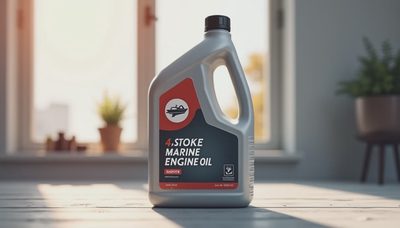
Marine and mobile equipment impose changing loads, vibration, water exposure, and irregular operating temperatures. An outboard engine, stern-drive gearcase, deck crane, and diesel generator do not share one lubrication requirement. Engine oil specifications are separate from gear-oil requirements, and a lubricant designed for a combustion engine should not be substituted into a gearcase without explicit approval.
For marine service, water contamination deserves special attention. Free water can strip additive films, promote corrosion, and accelerate bearing fatigue. A milky sample is an obvious warning, but dissolved water can be present before the oil becomes visibly cloudy. Use the equipment maker's sampling procedure and investigate repeated water ingress at seals, breathers, coolers, or condensation points.
Chevron marine and heavy-duty products should be matched to the engine builder's stated service category and viscosity. Do not choose solely by horsepower or oil color. A modern diesel with aftertreatment equipment can require chemistry compatible with emission-control hardware, while an older engine may have different ash, detergent, or wear-control needs.

A Shop-Floor Method for Evaluating Chevron
Start with an asset list that records the machine, component, current lubricant, viscosity, fill volume, operating temperature, and OEM requirement. Next, identify the dominant failure mechanism. A hot hydraulic pump suggests viscosity, aeration, contamination, or inlet restriction. A noisy bearing suggests alignment, load, installation, overgreasing, or lubricant starvation. A pitted gearbox suggests load, film thickness, contamination, alignment, or additive suitability.
Then compare the proposed Chevron product against the required specification, not against a neighboring machine's label. Verify viscosity at the relevant temperature, additive type, compatibility, and any formal approval. Establish a clean storage and transfer process using sealed containers, dedicated pumps, and desiccant breathers where appropriate. New oil is not necessarily clean oil; filtration before filling can be sensible for precision hydraulic and lubrication systems.
Finally, measure results. Track operating temperature, pressure, vibration, filter debris, oil analysis, and lubricant consumption. If a gearbox runs 8 degrees C cooler after a controlled lubricant change, that observation is useful, but it becomes stronger when supported by consistent load and speed data. Avoid changing oil, alignment, seals, and operating conditions simultaneously; otherwise the cause of improvement remains uncertain.
When to Change the Lubricant
Calendar intervals are easy to schedule but can waste serviceable oil or leave degraded oil in operation. Oxidation, additive depletion, water, particles, and thermal stress provide better evidence. Routine oil analysis can include viscosity, acid number, elemental metals, particle count, Karl Fischer water testing, and oxidation indicators. The correct test panel depends on the component and the lubricant family.
For Chevron products, record the exact product name and viscosity grade in every sample submission. “Hydraulic oil” or “gear oil” is not enough for meaningful trend interpretation. A sudden viscosity increase can indicate oxidation, contamination, or an incorrect top-up. A viscosity decrease can indicate fuel dilution, solvent contamination, or shear-related change in some formulations.
The practical objective is not the longest drain interval. It is a controlled interval that protects surfaces, reduces waste, and gives maintenance staff enough warning to plan work. Use ISO, ASTM, NLGI, and OEM requirements as the technical framework, then use machine data to refine the interval.
Chevron can be a sound choice when the selected product matches the machine's specification and the maintenance program controls contamination, storage, sampling, and application. The brand is only one part of the engineering decision. Start with the failure mode, verify the standard, and prove the result with repeatable condition data.




No feedback yet — submit the first.