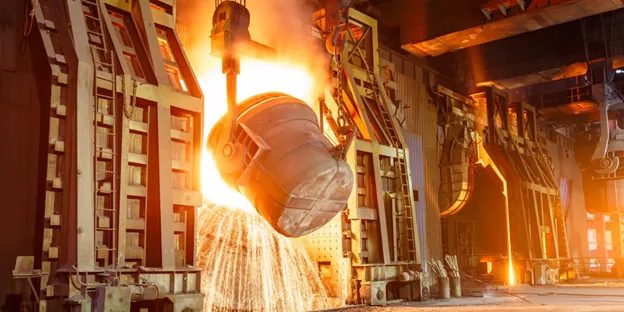
Metalworking fluids play an indispensable role throughout the machining process. Their primary applications include lubricating, cooling, protecting, and cleaning the machinery, equipment, and tools involved in metal manufacturing. Relevant operations encompass milling, metal forming, grinding, cutting, honing, stamping, and more.
Identifying the ideal lubrication for metal parts is not as simple as it may appear. Multiple key factors must be carefully evaluated before arriving at a final decision.
The appropriate lubricant is largely determined by your specific metalworking requirements. Because each process demands case-specific fluids with distinct properties, selecting the right one can present a real challenge.
To eliminate confusion, this comprehensive guide covers metalworking fluids in full — their functions, benefits, types, and proper usage.
Metalworking fluid (MWF) is a broad term encompassing a wide range of oil- and water-based fluids intended for industrial lubrication. Every metalworking fluid carries its own chemical composition and set of properties. Most formulations contain somewhere between 10 and 30 ingredients and additives, and each combination delivers its own unique performance characteristics.
The core purpose of MWFs is to cool, lubricate, maintain, optimize, and clean metalworking equipment, tools, and parts as they undergo the three primary metalworking operations: cutting, abrading, and metal forming.
Beyond these core functions, these fluids also promote the safety and efficiency of all metalworking operations, as well as the overall quality of the finished product.
MWFs serve four principal functions:
MWFs are essential to facilitating and optimizing the complete metalworking process. Among their most significant benefits are the following:
The primary objective of industrial lubrication in machining is to prevent direct solid-to-solid contact between the tool and the metal workpiece. To achieve this separation, the lubricant must form a chemical or physical film that functions as a barrier, keeping metal-to-metal contact to a minimum. The result is a substantial reduction in friction, which safeguards both the tool and the workpiece.
The degree of friction directly influences the amount of energy required for metal forming. It also affects the rate of surface wear and the likelihood of equipment failure. Minimizing friction extends the tool's life expectancy and lowers its operating costs, which ultimately reduces the total cost of ownership.
In addition to friction reduction, this protective layer shields metal surfaces from deterioration and damage caused by environmental factors, contaminants, extreme temperatures, and corrosion. Corrosion control is accomplished through anti-corrosion additives, which are engineered to protect both metal parts and the machine itself from exposure to water and other corrosive substances.
MWFs are also formulated to prevent contaminants from infiltrating and damaging equipment components. Contaminants are suspended and carried to system separators such as filters, ensuring they do not interfere with normal machinery operation.
A further critical property of industrial lubricants — particularly synthetic lubricants — is their ability to maintain stable operational temperatures. Their powerful cooling characteristics reduce or entirely eliminate the heat that metalworking operations routinely generate, significantly lowering the risk of thermal deformation and damage and thereby extending tool lifespan.
Keeping friction, corrosion, rust, thermal damage, and contamination under control protects equipment from excessive wear and tear. Maintaining machinery and tools in peak working condition minimizes downtime and enhances the efficiency of metalworking operations.
High friction also negatively impacts cutting speeds and feed rates. Reducing friction allows cutting speeds to reach their optimum levels, which in turn drives higher feed rates. The outcome is greater work efficiency and increased production output.
Given the direct relationship between production efficiency and profitability, implementing preventative measures and keeping every piece of machinery in proper working order should be treated as the top priority.
The protection that metalworking fluids provide minimizes material wear and decomposition, extending the lifespan of metalworking equipment, tools, and parts. Maintenance, repair, and replacement costs for machinery and components can be substantial, and left unchecked, they can significantly drive up the total cost of ownership.
The investment in selecting the best lubrication for metal parts consistently delivers returns. Quality lubricants keep metalworking machinery well protected, extend the service life of working equipment, and reduce overall operational costs.
By minimizing direct metal-to-metal contact, industrial lubricants prevent tool galling and seizure, preserving surface integrity and delivering a quality finish. The end result is an improvement in final product quality.
Ultimately, a high-quality metalworking output is what drives sales volume, increases revenue, and generates strong profit margins.
MWFs are classified based on their chemical composition and primary application.
By chemical composition, MWFs fall into four main categories:
Straight oils — also referred to as neat oils — are derived from mineral or vegetable oil and are used undiluted. Their defining characteristic is versatility. They deliver the highest level of lubrication but are limited in cooling capacity. Straight oils are typically employed in heavy-duty applications and are frequently blended with various additives to enhance performance.
Soluble oils, also known as emulsifiable oils or emulsions, offer the greatest lubricating power among water-miscible fluids. Formulated from pure mineral oils and emulsifiers, they are designed to provide lubricating, cooling, and anti-corrosive properties. Emulsions are well suited to medium- and heavy-duty processes and perform effectively with both ferrous and non-ferrous metals. Under high-pressure system conditions, they can sometimes produce foam.
Semi-synthetic fluids are engineered as a balanced blend of oil, water, and synthetic additives, with the additives serving to ensure lubricity. They are recognized for low foaming behavior and straightforward maintenance requirements. These fluids are compatible with all cutting applications and are particularly well suited for non-ferrous metals. In terms of characteristics and cost, they occupy a middle ground between natural oils and fully synthetic lubricants.
The defining feature of synthetic lubricants is that they contain no oil and no emulsifiers. Composed of chemically derived synthetic substances, they are fully water-miscible. Their greatest strengths lie in biostability and exceptional cooling performance. While synthetic lubricants offer modest lubrication on their own, lubricity additives are commonly incorporated to improve overall performance.
By application, metalworking fluids are divided into the following types:
The primary function of cutting fluids is to ensure that cutting tools remain properly cooled and lubricated. They are formulated to improve surface finish, extend tool life expectancy, and achieve higher material removal rates.
Grinding fluids combine both cooling and lubricating properties and additionally offer superior surface-protection performance. They are the preferred choice for rotational operations where belts and wheels are used to carry out the material removal process.
This category of industrial lubricant is intended for demanding operations in which metal is subjected to stretching. Drawing fluids are developed to deliver lubrication and thermal stability and typically incorporate extreme pressure additives.
Sawing fluids represent the optimal lubrication choice for metal parts during sawing operations. Beyond lubrication and cooling, these lubricants extend tool lifespan, increase the cutting rate, and produce a superior finish.
Tapping fluids are extreme-duty lubricants engineered to keep screw threads lubricated and thermally stable throughout cutting or forming operations.
For industrial lubrication in metal formation processes, stamping fluids are the preferred option. These metalworking fluids are applicable to pressing, blanking, punching, and coning operations, with outstanding lubricity as their most notable advantage.
Honing fluids are industrial lubricants best suited for material polishing and edge sharpening. They are specifically formulated to keep whetstones clean and properly lubricated.
EDM fluids are nonconductive and are primarily used to stabilize and insulate material while also removing debris from a workpiece.
Regardless of lubricant type or composition — whether neat oils, emulsions, semi-synthetic, or synthetic lubricants — the base fluid alone is generally insufficient to meet the demands of modern metalworking. For this reason, lubricants are routinely enriched with a variety of performance-enhancing additives.
Among the most widely used additives are:
When selecting the best lubrication for metal parts, several critical factors must be taken into account. The most important first step is to identify the specific type or types of metalworking processes that will require industrial lubrication.
Metal cutting involves removing material from a workpiece. When choosing a cutting fluid, the cutting speed of your operations is a key consideration. Higher speeds call for metalworking fluids with exceptional cooling properties to maintain temperature stability, while lower speeds demand powerful lubricants capable of reducing friction and preventing degradation of the cutting surface. Cutting operations also require mineral or synthetic lubricants that can resist corrosion, clear away debris, and enhance surface finish.
Our pick: Valvoline Cut and Drill Lube
Milling encompasses drilling, vertical and horizontal milling, hobbing, boring, and honing. The rotating tools central to milling machines are designed to perform a variety of cuts, which is why these operations span a broad spectrum — from precision work such as honing to material removal processes like hobbing. Soluble industrial lubricants are recommended for maximum performance in milling operations.
Our pick: Valvoline V-Belt Spray
Grinding is another operation that calls for soluble metalworking fluids. It includes cylindrical, profile, surface, and centerless grinding. The key distinction between grinding and cutting lies in the tooling: cutting employs cutting tools, while grinding uses abrasive wheels for material removal. Grinding processes benefit most from soluble fluids that combine reliable lubrication and cooling with effective wheel debris removal.
Our pick: Valvoline Slideway Oil
Drawing operations involve the stretching of metal, as rods are pulled and reduced in diameter to produce a wire-like material. This stretching and pulling generates considerable heat, making it advisable to use neat oils or emulsions — preferably wax- or soap-based — to prevent thermal deformation and friction.
These metal-forming operations are used to produce metal parts of a specific shape. The significant pressure applied during the process elevates temperature and generates mist. Straight oils, soluble fluids, and synthetic lubricants are the recommended choices for heading and stamping.
Casting involves forming workpieces by melting metal, pouring it into a die, and allowing it to solidify. This process commonly uses magnesium, aluminium, and zinc. Industrial lubricants are applied directly to the die multiple times to form a protective barrier between the cast part and the die, facilitating removal of the finished casting. Metalworking fluids for casting applications should have paraffin wax and water as their base.
In addition to the specific metalworking processes involved, other considerations — including your water's chemistry and cost preferences — should also factor into your selection.
Metalworking fluids are invaluable assets in any metalworking operation. They keep machinery and equipment properly lubricated while also influencing overall tool performance, preventing thermal deformation, reducing wear and tear, guarding against corrosion, and facilitating debris removal.
Industrial lubrication, in effect, streamlines the entire machining process, ensures every component is functioning as intended, and elevates the overall performance of your operations — driving improvements in work efficiency, productivity, and business profitability.
Achieving optimal results, however, depends on making the right selection. Bear in mind that the best lubrication for metal parts is always the one that aligns with your specific metalworking requirements.

No feedback yet — submit the first.