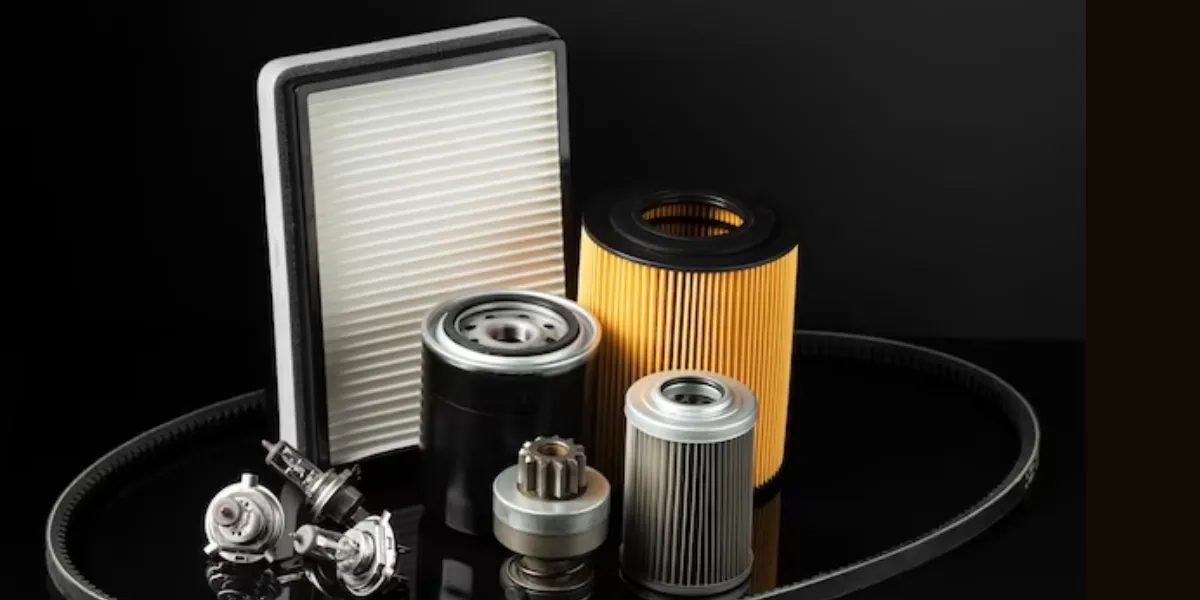
Industrial machinery continues to advance at a rapid pace, creating a growing demand for technologies that maximize equipment longevity. Central to these technologies — and frequently overlooked — is oil filtration. Industrial oil filters play a pivotal role in this equation, contributing meaningfully to equipment efficiency while enabling superior performance and extended operational lifespans. With that in mind, it is worth exploring the fundamentals of filtration and filters, and examining how they work together to boost performance and keep machinery running longer.
The significance of fine oil filtration within industrial maintenance is difficult to exaggerate, given its far-reaching influence on both machinery performance and service life. Oil filters designed for industrial applications are engineered with two key capabilities: maintaining oil cleanliness and helping to replenish depleted additives — both of which have direct consequences for how long and how well equipment operates.
Industrial oil filters have fundamentally reshaped conventional thinking about machinery upkeep. One notable advantage is the ability to extend drain intervals, reducing the frequency of oil changes and cutting associated maintenance downtime. Beyond that, by keeping lubricants free from contaminants, the filtration process can dramatically prolong engine life. Much of the remarkable extension in equipment lifespan seen in modern industrial settings can be traced directly to oil filters' consistent delivery of clean, effective lubrication.
The shift toward fine oil filtration yields a broad spectrum of benefits, spanning both the near term and the long term.
Short-term benefits of offline oil filtration:
Long-term benefits of offline oil filtration:
Industrial oil filters are indispensable to sustaining the overall operational performance of machinery. Purpose-built to serve a variety of engine configurations, these filters extend the usable life of lubricating oil by doing two things simultaneously: stripping out harmful particles and moisture while preserving the oil's beneficial additive package. This dual capability translates into numerous practical advantages. Businesses, for example, can realize meaningful cost savings by reducing expenditures on routine maintenance and oil changes. The filtration process also helps prevent the buildup of carbon deposits within machinery — deposits that, left unaddressed, can elevate operating temperatures, accelerate wear and tear, reduce lubrication effectiveness, and shorten both engine oil life and machinery lifespan.
Despite these considerable benefits, fine oil filtration — especially at sub-5 micron levels — introduces a set of nuanced technical challenges. Many of the critical additives required for optimal oil performance are formulated to bond with particles as part of their protective function within lubricants. Consequently, when particles carrying these compounds are captured and removed by the filter, the valuable additive components can be inadvertently eliminated along with them, potentially diminishing the oil's overall effectiveness.
These challenges do not, however, diminish the fundamental importance of oil filters in machinery maintenance. The issue of additive depletion, which occurs regardless of whether filtration is employed, actually underscores their value when examined more closely. Anti-foam agents, for instance, are known to bind to filter media fibres and can be removed through very fine filtration. While this might appear problematic at first glance, it is worth recognizing that such fine filtration also targets the underlying causes of oil foaming in the first place. Managing additive depletion carefully is therefore an essential part of leveraging oil filters and fine filtration to their full potential without compromising machine performance.
In summary, the contribution of oil filters and fine oil filtration to industrial operations is beyond question. Although the fine filtration process carries certain inherent challenges, the benefits it delivers far exceed those drawbacks. From improving engine efficiency to substantially lengthening the service life of both machinery and oil, industrial oil filters have transformed the approach to machinery maintenance — representing a meaningful step forward in sustainable industrial practice.
At Valvoline, we recognize the critical importance of oil filtration as well as the fundamental role that oil itself plays in machine health. We supply our customers with premium engine oils and a full range of products for both commercial and personal use. Our high-quality offerings, developed through more than 150 years of research and real-world experience, are engineered to deliver peak performance and long engine life under all operating conditions. To make more informed purchasing decisions and identify the right product for your specific equipment, reach out to your nearest Valvoline distributor or explore our convenient Lubricant Advisor tool.



No feedback yet — submit the first.