
If you manage industrial equipment, the question of **how to improve equipment reliability** is never far from your mind. Every unplanned shutdown costs thousands in lost production and emergency repairs. As a tribologist with 25 years in the field, I’ve seen reliability transform when maintenance teams shift from reactive fixes to a systematic lubrication strategy. The answer isn’t just more grease—it’s the right film thickness, cleanliness, and chemistry for each application. Let’s get into the engineering that makes it work.
Start with the Right Lubricant Selection
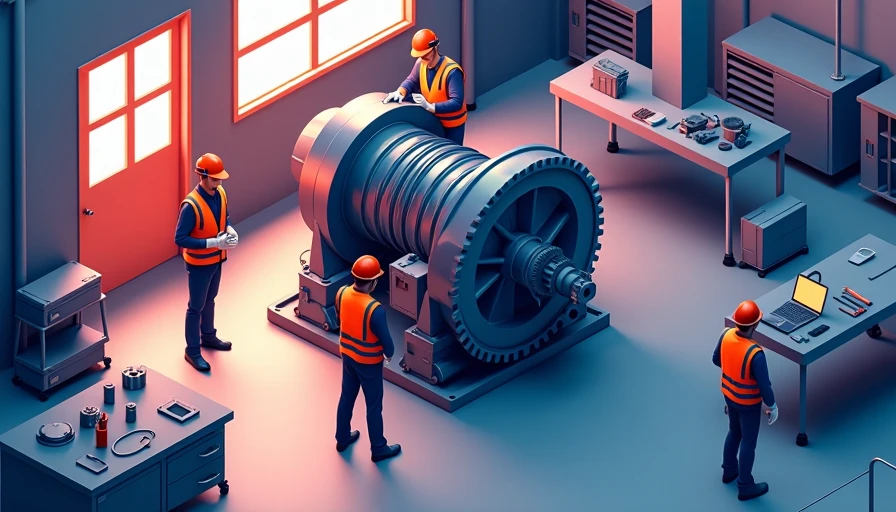
The single most impactful step in **how to improve equipment reliability** is choosing the correct lubricant for the operating conditions. This means matching viscosity grade, base oil type, and additive package to the load, speed, temperature, and environment. For example, a gearbox running at high load and moderate speed requires an ISO VG 320 or 460 extreme-pressure (EP) gear oil per AGMA 9005. In the lab we call this film thickness control—on your shop floor, it means preventing scuffing and micropitting. Application Note: A paper mill I consulted had repeated bearing failures on a wet-end press roll. They were using a mineral-based grease with an NLGI 2 consistency. By switching to a synthetic polyurea grease with a lower base oil viscosity (ISO VG 100) and better water resistance, mean time between failures (MTBF) tripled from 6 months to 18 months. The lesson: never assume a one-size-fits-all lubricant works.
Implement a Contamination Control Program
Even the best lubricant fails if it’s contaminated. Particles, water, and air are the three enemies of reliability. I tell clients: cleanliness is the cheapest way to **how to improve equipment reliability** without changing the lubricant. Target an ISO 4406 cleanliness code of 18/16/13 for most hydraulic systems and 16/14/11 for critical gearboxes. Achieve this with proper reservoir breathers (desiccant breathers for humid environments), particle filters with β ratios > 200 at the required micron, and oil sampling at regular intervals. In the lab we call this maintaining the Stribeck curve—on your shop floor, it means fewer bearing failures. A wind turbine operator I work with reduced their gearbox replacement rate by 40% after installing offline filtration carts and switching to sealed breathers. The cost? About $2,000 per turbine annually, versus a $50,000 gearbox replacement.
Establish an Oil Analysis Routine
You cannot manage what you do not measure. Oil analysis is the diagnostic backbone of **how to improve equipment reliability**. At minimum, test for viscosity, acid number, water content, and particle count quarterly. Extend to wear metals (by ASTM D5185) and oxidation stability if the equipment is critical. Look for trends, not just absolute values—a rising iron trend in a gearbox indicates gear wear accelerating. Intervene when viscosity changes by more than 10% from new oil or when water exceeds 200 ppm in a turbine oil. Application Note: A marine diesel operator I consulted for saw elevated lead and tin in their lube oil analysis. That pointed to bearing shell erosion. They discovered the fuel injection timing was off, causing acid formation. A simple injection pump calibration saved them from a mid-ocean engine overhaul.

Optimize Lubrication Intervals and Methods
The frequency and method of lubricant application directly impact reliability. Over-lubrication generates heat and shear, while under-lubrication leads to metal-to-metal contact. Use the NLGI consistency grade and the application type to set intervals. For automatic lubricators, set the unit to deliver the correct volume per bearing per hour—do not rely on guesswork. In a steel mill, we found that using a progressive divider block system instead of manual grease guns reduced bearing failures by 60%. The key to **how to improve equipment reliability** here is to match the lubricant feed rate to the bearing’s calculated requirement, which you can derive from the bearing manufacturer’s speed factor (n × dm). If you are greasing by hand, establish a strict schedule and use a grease meter to avoid over-application.
Address Lubricant Storage and Handling
Poor storage degrades lubricant before it ever reaches the equipment. Store drums indoors, temperature-controlled, and on racks to prevent water ingress from condensation. Use dedicated transfer pumps or sealed containers—never open a drum and leave it exposed. In the lab we call this maintaining the lubricant’s original properties—on your shop floor, it means you start with a clean lubricant every time. A chemical plant I worked with had chronic hydraulic pump cavitation because the oil reservoir breather was clogged, allowing vacuum to form. They solved it by installing a high-flow breather with an integral filter. That simple fix answered part of their **how to improve equipment reliability** question without any other changes.
Build a Reliability-Centered Maintenance Plan
Finally, integrate lubrication into a reliability-centered maintenance (RCM) framework. Criticality analysis determines which equipment gets a full lubrication program and which gets a simpler schedule. For each critical asset, create an FMEA (Failure Mode and Effects Analysis) that includes lubrication-related failures. This structured approach ensures you allocate resources where they yield the highest return. In my experience, companies that adopt RCM see a 25% to 50% reduction in lubrication-related downtime within the first year. That is the ultimate answer to **how to improve equipment reliability** —not a single tactic but a systematic, cross-functional strategy.
In summary, improving equipment reliability starts with lubricant selection, proceeds through contamination control and oil analysis, and is cemented by proper application methods and storage practices. None of this requires a PhD—just discipline, measurement, and a willingness to let data guide decisions. In the lab we call this sound tribological practice—on your shop floor, it means fewer shutdowns, lower costs, and more uptime.


No feedback yet — submit the first.