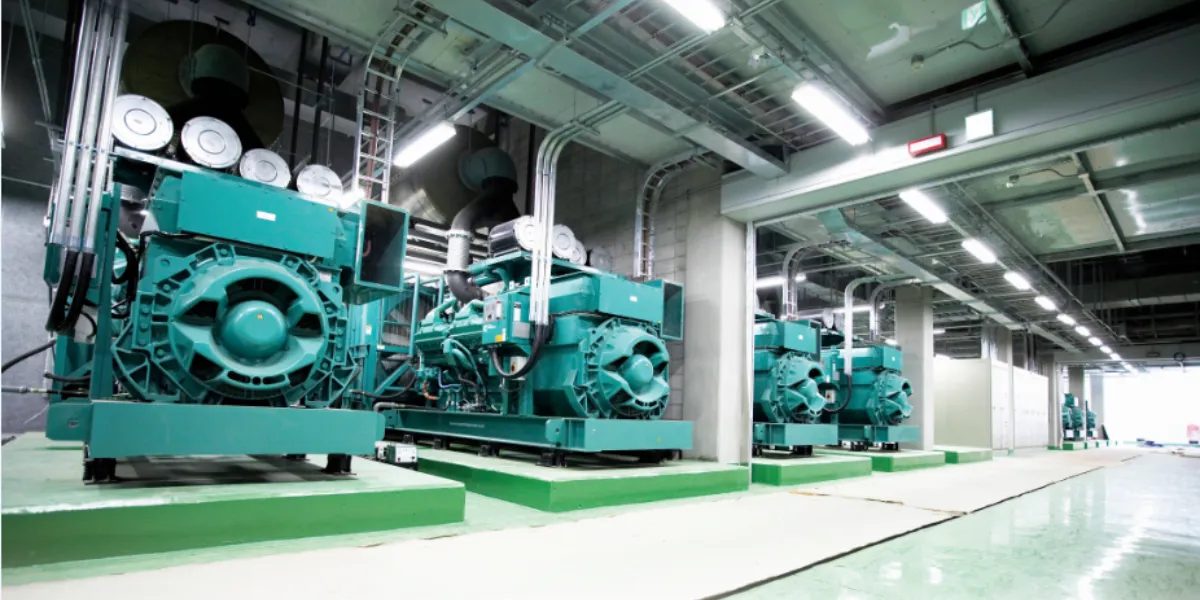
Among all the sectors driving today's economy, power generation stands out as one of the most critical. Its role in Europe's economic development — and that of individual nations — is virtually guaranteed, given that electrical energy is an absolute necessity that keeps modern civilization running. Lubrication plays an essential part in this equation, finding application across every type of generation facility, from gas engine oils and turbine lubricants to greases used in nuclear plants. As a fundamental tool, lubrication drives productivity gains and helps contain operational losses.
Every piece of equipment that incorporates moving parts depends on lubricants to function reliably. By carefully selecting and applying the appropriate oils and greases, and by maintaining lubricating systems with diligence, plant operators can fulfill the maintenance requirements of their facilities. A thorough knowledge of lubrication fundamentals, product characteristics, specific use cases, and lubricant upkeep therefore delivers real value to any powerplant. The following discussion covers the basics of lubrication and explores the distinct roles that industrial lubricants play across different types of power generation facilities.
Lubricants serve numerous functions, but reducing friction and limiting material wear between two surfaces in relative motion remains their primary purpose. Beyond that, lubricating products help dissipate heat and shield surfaces from rust and corrosion. Depending on the application, lubricants may also prevent contaminants from entering the system and offer protection to bearing surfaces. For lubricants to perform these functions effectively, maintaining a continuous lubricant film between surfaces — referred to as fluid film lubrication — is essential.
Power generation engineers worldwide are continuously seeking ways to optimize the efficiency of their operations. The right lubricant oil or grease can meaningfully improve energy output while extending the operational lifespan of machinery. By choosing high-quality industrial lubricants, operators can drive energy production higher, cut costs, reduce downtime, and create a safer working environment at the same time.
Power generation is an indispensable pillar of the global economy, supplying energy to homes and industries alike while sustaining employment for hundreds of thousands of workers around the world. Despite ongoing investment in research and technological advancement in the energy sector, a number of persistent challenges remain difficult to address — and many of them are directly tied to inadequate lubrication practices.
This represents perhaps the most frequently encountered problem with significant consequences for the energy production process. Over-greasing readily leads to elevated operating temperatures, diminished bearing lifespan, and a greater likelihood of contaminant ingression. To address the issue, experts advise equipping all bearings with purpose-built fittings that allow surplus grease to escape without compromising the seal. Furthermore, grease-gun operators should receive dedicated training on correct tool handling and proper lubrication of all components, ensuring neither the system is put at risk nor industrial lubricants are wasted.
Varnish formation presents a serious challenge that can trigger a cascade of problems for turbines. During operation, varnish deposits may develop, adhere to surfaces, and obstruct filters and openings, ultimately degrading system power and reliability. The most effective countermeasure is selecting turbine lubricants that feature appropriate base stocks combined with enhanced oxidation protection.
A range of mitigation technologies exists for managing varnish symptoms, yet beginning every cycle with a clean system and using the correct turbine oil remains the most advisable approach. Preventing varnish from forming is invariably a more practical and cost-efficient strategy than attempting to remediate it after the fact.
Safety sits at the top of every power generation company's list of priorities. While maintenance procedures — whether scheduled or unscheduled — are unavoidable, they place operators in direct proximity to machinery, which carries inherent risk. Advanced lubrication technologies, however, can lower the probability of injury and improve plant productivity. By extending component service life and reducing maintenance frequency, proper lubrication limits the amount of time employees spend exposed to potential hazards.
Statistical data indicates that roughly 20% of all electricity generated within the EU originates from coal, and that share continues to decline. Certain coal plants have even been placed on temporary standby as part of efforts to lower emissions and honor climate commitments. Nonetheless, coal retains a meaningful position in the global power generation landscape despite its diminishing appeal.
Understanding coal power plant lubrication requires first grasping how these facilities operate. In coal-fired power production, coal is pulverized and introduced into a high-temperature boiler where it combusts and releases thermal energy. A second stage involves heat exchange tubes carrying water, which is converted into steam. That steam is then pressurized, driving turbines that power the generator and yield electrical energy.
A well-designed system of this kind can run for extended periods without planned shutdowns. Operational pauses are typically scheduled for maintenance purposes, though unplanned interruptions also occur. It is the latter variety that exacts the steepest toll in terms of wasted energy, equipment damage, and time. In turbine design, component tolerances are extremely tight, making precise lubrication a necessity to preserve those tolerances. Improper lubrication can cause equipment fatigue and even catastrophic failure, underscoring the importance of getting it right every time.
The lubrication system in a gas turbine power plant is a complex assembly comprising a tank, pumps, filters, coolers, valves, and numerous control and safety components. Under normal operating conditions, these turbines can spin at up to 3600 rotations per minute, generate exhaust temperatures reaching 625°C, and produce substantial pressure ratios. Consequently, gas engine oils must not only address standard lubrication demands but also perform the critical function of extracting heat from the turbine.
Bearing temperatures frequently climb to 120°C, which means heat-transfer lubricants must exhibit the correct viscosity alongside the proper additive package. Gas turbine lubricants must deliver enhanced oxidation and varnish protection, foam stability, filterability, compatibility with multiple bearing metals, and resistance to wear and tear. To determine the appropriate lubricant, plant personnel need to evaluate the following areas:
Faced with escalating costs and tightening environmental regulations, hydropower energy producers are under constant pressure to maximize plant efficiency. This imperative applies equally to run-of-the-river installations, reservoir installations, pumped-storage installations, and every other category of hydropower generation facility. Hydropower plants also vary enormously in scale, ranging from compact units to installations capable of producing multi-hundred megawatts.
From a profitability standpoint, operational inefficiencies, environmental compliance requirements, friction, and wear all translate into efficiency losses that undermine productivity. Switching to specialty lubricants formulated for hydropower applications is a key step toward improved energy efficiency. Rather than allocating capital to generator and turbine upgrades, investing in high-quality lubricants represents a far more cost-effective path. This approach can yield greater energy output while simultaneously reducing the plant's environmental footprint.
Generator bearings and oil-lubricated turbines consume large volumes of oil, and the right product choices can push these already-efficient machines to perform even better. Specialty lubricants also deliver benefits to water flow-control wicket gates, wire ropes, trash cleaning equipment, open gears, and gearboxes used in power transmission. For applications with direct water contact, sustainability and environmental impact are the foremost considerations. Hydro lubricants address these concerns and offer a range of advantages:
As noted above, hydropower plants already operate at high efficiency levels, but rising energy prices create pressure for continued gains. Specialty lubricants give operators a means to improve efficiency without interrupting power generation or incurring additional capital investment.
Specialty lubricants contribute to extended service intervals and simpler maintenance routines, which in turn enhances equipment performance and improves employee safety.
In operations where direct contact with water is unavoidable, oil-free lubrication solutions are essential for meeting the required environmental protection standards.
Through the use of special lubricants and coolants, high-performance power generators and turbines are capable of producing greater output without any requirement to increase water volume.
Wind power generators incorporate highly valuable equipment that must be maintained in excellent condition to deliver electricity at the required efficiency. Lubrication plays a central role in wind turbine maintenance, requiring careful attention and regular application. Every component of a wind turbine contributes to electricity generation: the propeller, blades, rotor, nacelle, gearboxes, generators, controllers, and brakes all work together in a coordinated system to supply power to the generator.
The gearbox endures some of the most punishing environmental conditions of any component, all while positioned up to 90 meters above ground. It must handle everything from extreme temperature swings to saltwater exposure, and properly selected turbine lubricants can significantly strengthen gearbox protection and sustain its functionality.
Lubricants with superior heat capacity relative to hydrocarbon oils further enable more effective heat transfer and dissipation when needed. For these reasons, consistent and thorough lubrication of the gearbox is fundamental to both reliable equipment operation and the achievement of power generation targets.
Nuclear energy facilities demand specialized industrial lubricants due to the unique challenges posed by radiation exposure and stringent quality control requirements. The most common choice in these plants is R&O oils, which are widely used in steam turbine and light-duty nuclear applications.
Hydraulic grease is another frequently used product in this setting, particularly formulations that incorporate antiwear additives — a valuable feature for preventing asperity-to-asperity contact during lubrication. Gear oil ranks third among commonly used lubricants in nuclear facilities, serving primarily in gearboxes and actuators. Additional lubricant types found in this industry include compressor oils, gas turbine fluids, transformer fluids, and certain specialty oils with fire-resistant properties. Greases deployed in nuclear power plants are typically based on polyurea, calcium sulfonate, or lithium.
Every Valvoline industrial lubricant is developed around a balanced formulation philosophy and engineered to satisfy the demands of the power generation sector. Products such as Valvoline GEO-SNG 6 are manufactured with premium oils capable of enduring even the most severe operating conditions encountered with steel and aluminium pistons.
Furthermore, the complete range of Valvoline turbine oils is designed to enhance reliability and reduce losses and safety risks, drawing on a set of high-performance characteristics that include:
It is clear that Valvoline products, combined with our comprehensive fluid analysis program, represent the optimal choice for all lubrication requirements. For further guidance on our oils, greases, and coolants, our expert support team is available to assist and provide additional information on lubrication and lubricating products.
As demand on the power industry intensifies and the prospect of shortages looms, operators continue to pursue effective solutions for enhancing generator safety and productivity. The right lubricants make it possible to achieve meaningful performance gains even under conditions of high temperature, heavy load, and significant contamination. Valvoline's advanced lubrication solutions are positioned to help the entire power generation industry reach its ambitious objectives and ensure that all plants operate at full capacity.


No feedback yet — submit the first.