Food grade lubricants are not a special flavor of oil; they are a compliance class with a mechanical job attached. On a filler, conveyor, mixer, or gear reducer, the lubricant still has to survive load, heat, water, and frequent washdowns. The difference is that if incidental contact with food is possible, the product should be NSF H1 registered, and many plants also want documentation that aligns with ISO 21469 and FDA 21 CFR 178.3570. In the lab we call this a boundary between chemistry and contamination control; on your shop floor, it means the wrong SKU can create waste, rework, and a very long afternoon. The label is not enough. You still have to match viscosity, thickener, base oil, and service severity to the machine.
What food grade lubricants actually cover
Most food grade lubricants are not edible, and they are not automatically safe for direct food contact. NSF H1 means the lubricant is formulated for incidental food contact, which is the reality around bearings, gearboxes, and chains that sit near product zones. NSF H2 is for equipment where no food contact is possible, and H3 is used mainly as a release agent or rust preventive on hooks, trolleys, and similar surfaces. ISO 21469 does not replace NSF; it documents hygienic manufacturing practices at the plant that makes the lubricant. That distinction matters during audits, because a plant may need both a compliant product and a clean paper trail. Most food grade lubricants also use carefully selected base oils and additive packages, since sulfur-phosphorus extreme-pressure chemistry, tackifiers, and some antiwear systems that work fine in a steel mill can be a bad fit around food processing equipment.
Application Note: If you are running a bakery line, the risk is often flour dust, steam, and frequent wipe-downs. On a dairy filler, the risk shifts toward water ingress, caustic washdown, and corrosion. The standard does not change, but the failure mode does.

Where food grade lubricants belong on the line
The same food grade lubricants family does not belong everywhere, and that is where many maintenance programs waste money. A light-duty conveyor bearing, a spiral freezer chain, and a slow-speed mixer gearbox do not want the same viscosity or the same thickener. A simple plant with 20 relube points can easily buy three or four products when one grease and one oil would cover most of the load, but a forced one-size-fits-all approach usually creates the opposite problem: overgreasing, underprotection, or both. I often see plants running a premium H1 grease at 18 to 25 dollars per cartridge where a cheaper industrial grease would have been fine in the back room, while the real contamination risk sat on the packaging line and was underdosed.
For equipment near exposed product, I start with direct exposure, temperature, and washdown frequency. Conveyor bearings in the 20 to 40 pound load range often live happily on an NLGI 2 grease; hot gearboxes may need ISO VG 68 or 100, while lighter circulating systems can work with ISO VG 32 or 46. Food processors that standardize on a few product families, such as Mobil SHC Cibus, Shell Cassida, or Klüberfood, usually get a cleaner shelf setup and fewer emergency substitutions. That is not about brand worship; it is about reducing the odds that a weekend shift grabs the wrong cartridge because the can looked close enough.
Selecting food grade lubricants by viscosity, base oil, and thickener
By the relevant standard (ISO/ASTM/NLGI), the lubricant has to fit the machine first and the compliance class second. The base oil choice drives temperature stability, oxidation life, and seal behavior. White mineral oil is common in food processing, PAO is often chosen for temperature range and oxidation resistance, and PAG can be useful in special gear applications but needs careful seal and compatibility review. For grease, aluminum complex and calcium sulfonate complex thickeners are common in food service because they can handle water better than many general-purpose lithium greases. That said, no thickener wins every contest. If the bearing is slow, wet, and heavily loaded, water resistance and mechanical stability matter more than a glossy brochure sentence about extreme pressure.
In the lab we call this lubricant selection by film thickness and stability; on your shop floor, it means the difference between a bearing that runs cool for months and one that spits grease after a week. A practical selection for a washdown conveyor might be an H1 NLGI 2 grease with good water washout resistance, while a hot gear case might need an H1 synthetic gear oil with the right ISO VG and oxidation reserve. Do not mix products simply because they both say H1. Compatibility still matters, especially when a plant changes from a clay or lithium complex grease to an aluminum complex product. The old grease has to be purged enough that the new soap system is not turned into a lumpy compromise.
Common failure modes that show up during changeover
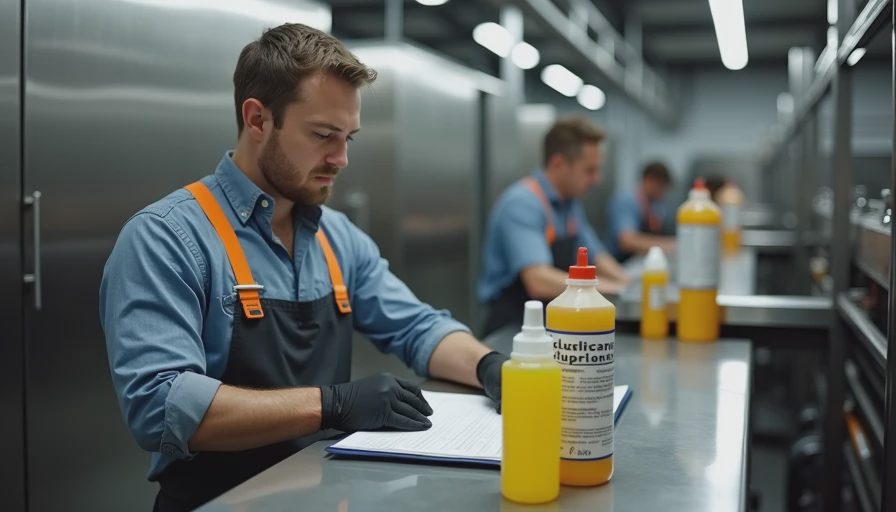
Three failure modes, one root cause — here they are. First, contamination during transfer. A clean H1 product poured through a dirty funnel becomes a dirty product. Second, overgreasing. One extra shot in a sealed bearing can push grease into the motor cavity or blow past a seal, and that failure looks like a bad bearing when it is really a bad habit. Third, poor changeover discipline. If an existing grease is left in service past its useful life, the base oil separates, the thickener hardens, and the relube interval starts to drift. Food grade lubricants are not magic; they still oxidize, shear, and wash out if the wrong service conditions are ignored.
Application Note: On a stainless conveyor in a high-moisture room, I would rather see a disciplined relube interval with a modest, well-chosen H1 grease than a premium product applied by guesswork. The first approach gives you repeatable film thickness. The second gives you a story for the maintenance meeting.
A buying checklist that keeps the plant honest
Before you order another drum, ask for the NSF registration number, the ISO 21469 statement if your audit program wants it, the SDS, the viscosity grade, the NLGI grade, and the shelf-life date. If the supplier cannot tell you what equipment family the product is meant for, keep looking. For a plant with both wet and dry areas, I like to build a small matrix: one oil for reducers, one grease for rolling bearings, one specialty product only where washdown or steam makes it necessary. That strategy usually beats a room full of one-off SKUs and emergency substitutions. It also makes training easier, because a mechanic can identify the right pail faster than a purchasing clerk can decipher a confusing part number.
If you are reviewing a food plant, a beverage bottling line, or a packaging operation, the right sale is not the most expensive lubricant on the shelf. It is the one that gives the correct film, survives the cleaning cycle, and leaves the audit trail intact. If you want fewer relube surprises, start with the equipment list and work backward to the standard. That is the cleanest way to buy food grade lubricants without paying for confusion.




No feedback yet — submit the first.