When the deep part of an oil pan is called the sump, you are really talking about the reservoir that keeps the pump fed under every load the engine sees. If that reservoir is too shallow, dented, or badly baffled, the pickup can uncover, oil pressure can fall, and bearings start living on borrowed time. In the lab we call this loss of hydrodynamic supply; on your shop floor, it means the pump gulps air and the crankshaft gets punished. That is why sump shape matters on a commuter car, a marine diesel, and a high-revving race engine alike.
Why the deep part of an oil pan is called the sump
The sump is not just a bowl under the engine. It is the lowest-volume, highest-consequence part of the lubrication circuit. Gravity moves oil there after it drains from the head, valvetrain, and cylinder walls, and the pickup tube sits in that pool so the pump can deliver a continuous column of oil. If the pan is stamped too shallow, the engine sees more uncovering during cornering, braking, or steep grades. If the oil sloshes away faster than it returns, the pump ingests foam instead of liquid, and aeration reduces the oil’s ability to carry load.
Application Note: on a grocery-run sedan, a mild pan dent may only shorten the margin before starvation. On a delivery van, a forklift, or a boat that runs at a fixed heel angle, the same dent can become a repeatable pressure-drop event. That is why technicians should think about duty cycle first and sheet metal second.
The pickup, baffles, and windage tray all work together
A healthy sump is really a system. The pickup tube sets the starting point, baffles slow the side-to-side surge, and a windage tray helps separate the rotating crank from the oil mist. In plain terms, the pan should keep liquid oil near the pickup and keep the crank from whipping that oil into foam. A loose pickup bracket, a collapsed gasket, or a missing baffle can create the same low-pressure complaint as a cracked pump.
If you are diagnosing a noise or pressure issue, do not stop at the gauge. A mechanical gauge, a look inside the pan, and a check of pickup clearance will tell you more than a dash light ever will. On many engines, the warning starts as a brief flicker at hot idle or during a hard stop, then grows into chronic bearing wear.

What real-world damage looks like before the engine seizes
The first clue is often not a seized engine but dirty oil behavior. Sludge collects in corners, varnish darkens the lower pan, and the drain plug may show a thin metallic sheen. If the deep part of an oil pan is called the sump and it is too shallow for the duty cycle, the pickup can uncover on hard braking, a cloverleaf on-ramp, or a long incline. The pressure drop may last only a second, but that is enough to strip the oil film from a rod bearing.
Three failure modes, one root cause: oil supply interruption. Low oil level, a dented pan, and poor baffling all lead to the same result. In the lab we call this film collapse from supply starvation; on your shop floor, it means the engine begins its countdown to repair.
Viscosity still matters, even when the pan is the weak link
By the relevant standard, SAE J300 defines engine oil viscosity grades such as 0W-20 and 15W-40, while ASTM D445 is the lab method used to measure kinematic viscosity. That matters because a pan issue is rarely isolated from the rest of the lubrication system. A thick oil in cold weather drains more slowly back to the sump, while a thin oil at high temperature may leave less margin when pressure dips. That does not mean one grade is always right or wrong. It means the sump, the pump, and the oil have to match the operating profile.
For marine diesels, stationary generators, and track cars, that profile can be severe. Long runs at load, repeated heat soak, and sustained lateral acceleration expose weaknesses that a short test drive will not. If you are specifying oil, the pan geometry should be part of the conversation, not an afterthought.
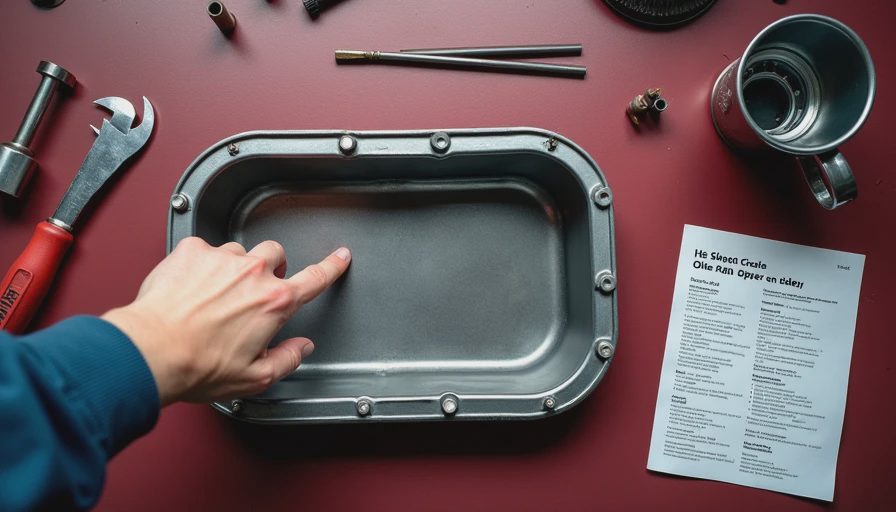
When the deep part of an oil pan is called the sump needs an upgrade
There are times when a stock pan is simply the wrong tool for the job. Towing, road racing, off-camber marine service, and some industrial engine packages benefit from deeper capacity, better baffling, or a tray that controls oil movement around the pickup. Canton and Moroso both sell baffled and performance-oriented pans for common engines, and that is not marketing fluff; it is geometry aimed at keeping the pickup covered.
A stronger pan can also help with oil cooling because more capacity slows temperature rise, although it is not a substitute for a real oil cooler where duty cycle demands one. If you are repairing repeated low-pressure events, the cheapest fix is often not another oil pump. It is measuring the pan depth, checking pickup-to-pan clearance, and replacing a bent or poorly designed sump before the bearings pay the price.
The repair decision that saves money later
A pan gasket, a pickup screen, and a proper inspection usually cost far less than a crankshaft or a full bottom-end rebuild. That is why I tell clients to treat a damaged sump as a lubrication problem first and a sheet-metal problem second. If the drain plug sits cocked, the pan has a crease near the pickup, or pressure falls only when the vehicle is loaded, the evidence points to restricted supply rather than a random sensor fault.
If you are trying to sort out low pressure, oil starvation, or a dented pan, start with the sump geometry, then confirm oil level, pickup condition, and viscosity grade. That sequence catches the real problem faster than parts swapping. And if the engine has already shown bearing debris, do not guess. Inspect the pan, verify the pickup, and fix the root cause before the next run turns a warning into a teardown.




No feedback yet — submit the first.