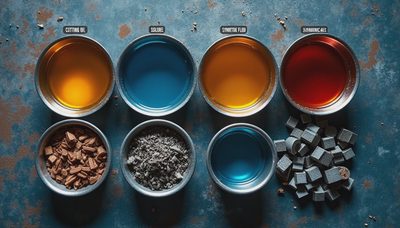
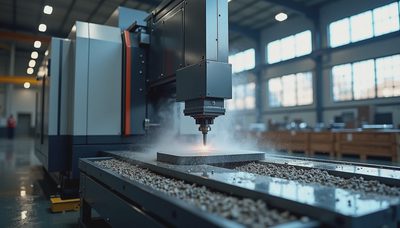
Water soluble metalworking fluids sit at the center of a familiar shop-floor problem: heat, tool wear, rust, residue, and bacterial instability all show up at once when the fluid program is wrong. In the lab we call this a coupled tribology and chemistry problem — on your shop floor, it means scrapped parts, short sump life, and operators losing confidence in the machine. If you run CNC machining, grinding, or general chip-making operations, choosing and maintaining the right fluid matters as much as tool selection. The goal is not simply “cooling.” It is controlled lubrication, corrosion protection, fines transport, and biological stability in one managed system.
What water soluble metalworking fluids actually are
Water soluble metalworking fluids are concentrates designed to be mixed with water before use. In practice, that phrase usually covers soluble oils, semi-synthetic fluids, and full synthetic fluids. The distinctions matter. Soluble oils form milky emulsions with a meaningful oil fraction, often giving strong boundary lubrication for tougher cutting. Semi-synthetics contain lower oil content and form translucent emulsions or microemulsions, balancing cleanliness with lubricity. Full synthetics typically contain no mineral oil and run clear, with excellent cooling and visibility but different lubrication behavior.
By the relevant standard, fluid performance is commonly evaluated with tests such as ASTM D4627 for cast iron corrosion and ASTM E2275 for fluid management guidance in machining systems. Those standards do not pick your fluid for you, but they frame the failure modes. Three failure modes, one root cause — here they are: wrong concentration, wrong water, wrong contamination control. If your sump is unstable, the chemistry is usually telling you something long before the smell starts.
Selection starts with the operation, alloy, and water supply
I advise plants to begin selection with three inputs: operation severity, workpiece metallurgy, and incoming water quality. A grinding line removing light stock from hardened steel asks for a different fluid balance than a machining center tapping stainless or milling aluminum. Harder cuts need stronger boundary lubrication, meaning the fluid must protect where the oil film is thin. In the lab we call this boundary lubrication — on your shop floor, it means the fluid has to keep tools alive when metal surfaces want to weld.
Water quality is the neglected variable. High hardness can destabilize some emulsions and leave soap-like residues. Very soft or deionized water can also create corrosion or foam issues if the formulation is not matched to it. As a practical range, many shops run best when make-up water is moderate in hardness rather than at either extreme. You should also know chloride and sulfate levels if corrosion-sensitive alloys are involved.

**Application Note:** For aluminum aerospace-style machining, prioritize stain resistance and residue control. For cast iron, place more weight on fines handling, tramp oil rejection, and sump cleanliness. For grinding, low foam and good filtration response usually outrank maximum lubricity.
Concentration control is where most systems win or fail
Most water soluble metalworking fluids fail in service because concentration drifts outside the intended operating window. Too lean, and you lose rust protection, lubricity, and microbial resistance. Too rich, and you raise residue, foam risk in some systems, misting, and unnecessary cost. A handheld refractometer is the everyday tool here, but it must be used with the supplier's correction factor. A raw Brix reading is not the same thing as actual concentration.
Mixing method matters too. Always add concentrate to water, not water to concentrate, because emulsion formation depends on how the surfactant package disperses. Use proportioning equipment where possible, and verify the delivered concentration at the point of fill, not just at the mixer. In centralized systems, check both the reservoir and the machine because drag-out and make-up practices create local variation.
By the relevant standard, corrosion and emulsion stability are not abstract lab traits. They are field outcomes tied to concentration discipline. If operators are topping off with straight water all week and straight concentrate on Friday, the sump is not being managed; it is being argued with.
Biological control, tramp oil, and sump contamination
Microbial growth in water soluble metalworking fluids is not only an odor issue. Bacteria and fungi can shift pH, break emulsions, consume additives, and increase corrosion risk. The usual source term is contamination: tramp oil, chips, fines, hydraulic leakage, and poor circulation. Tramp oil is especially damaging because it creates low-oxygen zones at the fluid surface where anaerobic organisms thrive.
The control hierarchy is straightforward. First, eliminate ingress where you can: fix hydraulic leaks, improve way-lube management, and keep chips out of the return flow. Second, separate contaminants with skimmers, coalescers, magnetic separation, settling, or filtration matched to the process. Third, monitor pH, concentration, and visual condition on a routine schedule. A fluid that turns dull, separates, or develops persistent odor is already reporting distress.

**Application Note:** In a high-tramp-oil CNC cell, I would spend money on skimming and leak repair before spending it on aggressive biocide intervention. Biocides have a place, but contamination control usually gives the longer sump-life improvement.
Foam, corrosion, and residue: diagnosing the chemistry correctly
Foam, staining, and sticky deposits are often misdiagnosed as “bad coolant” when the real issue is system mismatch. Foam usually points to low concentration, soft water, excessive agitation, air leaks on the pump suction side, or a formulation not suited to high-pressure delivery. Corrosion can mean low concentration, poor reserve alkalinity, contaminated water, or neglected machine surfaces. Residue can come from hard water salts, overconcentration, fluid dry-down on warm surfaces, or carryoff that is not being washed back effectively.
The important diagnostic habit is to separate chemical cause from mechanical cause. If a machine foams only at one tool station, inspect nozzle velocity and entrained air before condemning the fluid. If only one alloy stains, review metallurgy and cleaner compatibility. In the lab we call this root-cause isolation — on your shop floor, it means not dumping a sump that could have been corrected with better water, better concentration, or a repaired leak.
A practical control plan for longer fluid life
A sound program for water soluble metalworking fluids does not need to be complicated, but it does need discipline. Start with a written operating concentration range, a verified refractometer factor, and a defined make-up water source. Record pH, concentration, and top-off volume at set intervals. Inspect tramp oil daily in heavily loaded machines. Clean sumps thoroughly during changeout rather than layering new fluid over old sludge and biofilm.
I also recommend matching fluid reviews to production reality. If the shop has shifted from cast iron to mixed aluminum and stainless work, revisit the chemistry. If high-pressure coolant was added, revisit foam performance. If operators complain about dermatitis, examine concentration control, cleanliness, and exposure practices carefully. By the relevant standard and by long field experience, the best fluid is not the one with the most marketing language; it is the one that stays stable in your water, on your alloys, and in your machines.
Water soluble metalworking fluids reward attention. Run them with measured concentration, clean systems, and the right contamination controls, and they will give you cooler cuts, longer tool life, cleaner parts, and fewer unpleasant surprises between sump changes.