A gearbox rarely fails because one component suddenly forgets how to carry load. More often, failure begins with contamination, poor surface preparation, an incorrect seal, or a repair material that does not tolerate oil, heat, and vibration. That is where 3M enters the maintenance conversation. 3M is not a lubricant manufacturer in the narrow sense, but its abrasives, tapes, films, adhesives, and filtration materials can influence how reliably a lubrication program performs.
The important distinction is function. A pressure-sensitive tape does not replace a gasket, and an abrasive disc does not improve an oil’s viscosity index. Used correctly, however, these materials help maintenance teams create clean surfaces, protect components during service, and control contamination before it reaches a bearing or hydraulic valve. Used casually, they can introduce fibers, adhesive residue, or abrasive debris into the same machine.
Where 3M Fits in a Lubrication Program
Industrial lubrication begins before the grease gun appears. The technician must remove old residue, inspect the surface, install compatible seals, and prevent dirt from entering the component. In each step, material selection matters.
Abrasive products from 3M can assist with controlled surface preparation on painted guards, flange areas, brackets, and noncritical metal surfaces. The word controlled is essential. A coarse abrasive can change a sealing surface profile, round a machined edge, or release particles that later become third-body wear. Third-body wear occurs when loose particles enter a contact and roll or slide between the moving surfaces. In the lab we call this abrasive contamination; on your shop floor, it means shortened bearing life and an oil filter that loads too quickly.
For cleaning, use a lint-free wipe and a solvent approved for the substrate and the equipment procedure. Do not assume that an adhesive remover, abrasive pad, or tape is compatible with nitrile rubber, fluorocarbon seals, polycarbonate sight glasses, or painted electrical enclosures. Compatibility must be established from the product technical data sheet and the machine manufacturer’s instructions.
Application Note: On a flanged gearbox housing, surface preparation should remove old sealant without gouging the metal. A plastic scraper and an appropriate solvent are often safer than aggressive grinding. After cleaning, inspect the surface under strong light and wipe it until no visible residue remains.

Adhesives, Tapes, and Thread Protection
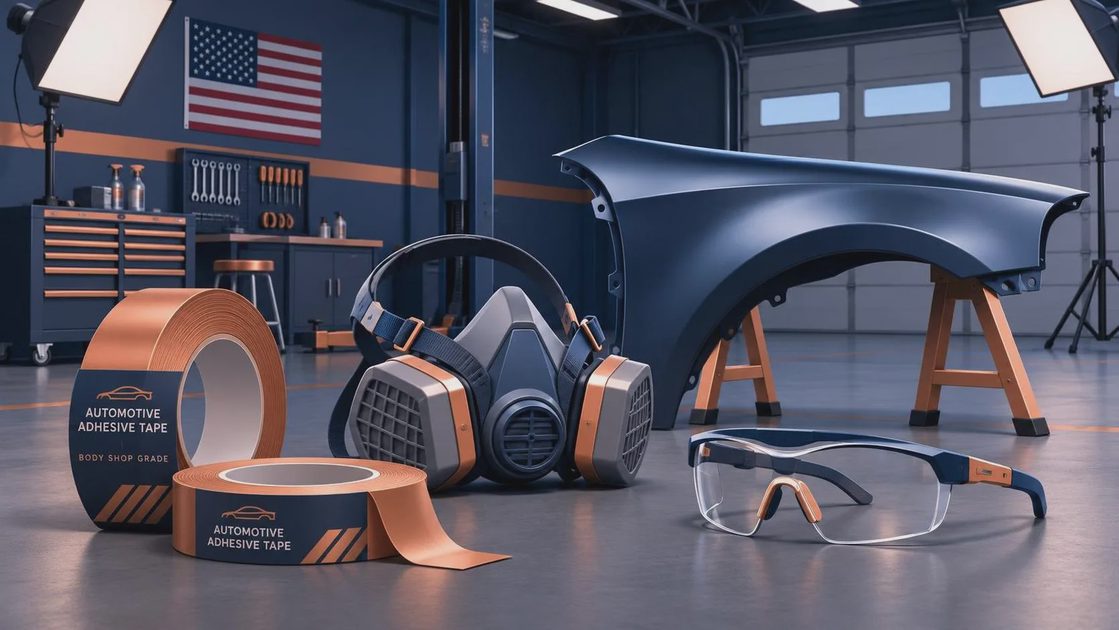
3M adhesive products are useful for temporary protection, labeling, masking, and selected bonding tasks. They are not automatically suitable for oil retention, thread sealing, or structural repair. The service temperature, chemical exposure, peel strength, shear strength, and cure mechanism all matter.
For example, a tape used to mask a painted machine panel may perform well during a short repair but fail after prolonged contact with hydraulic oil. The adhesive can soften, migrate, or leave residue. That residue attracts dust and may complicate future inspection. A bonded assembly also deserves caution: a product designed for a dry electrical enclosure is not necessarily appropriate near a hot bearing housing exposed to synthetic ester fluid.
Thread sealing deserves a separate rule. PTFE tape and anaerobic thread sealants work through different mechanisms, and both must be selected for the thread type, pressure, temperature, and fluid. A strip of general-purpose tape is not a substitute for a documented sealant specification. Excess material can break loose inside a hydraulic circuit, where a small fragment may obstruct a spool valve or restrict an orifice.
By the relevant standard, ISO 3601 concerns O-rings and seal dimensions, while ASTM D2000 classifies rubber materials by performance requirements. These standards do not approve a particular adhesive, but they remind us to match the sealing material to the operating environment rather than choosing by appearance or convenience.
Abrasive Control and Surface Finish
Surface finish is a tribological variable, not a cosmetic detail. A rougher surface can disrupt a lubricant film, increase asperity interaction, and accelerate wear. An overly smooth surface can also be undesirable in some seals because it may reduce lubricant retention or alter running-in behavior. The correct finish depends on the component, contact geometry, material, and manufacturer specification.
When 3M abrasive products are used, select the least aggressive grade that can accomplish the task. Keep abrasive work away from open bearings, breathers, oil ports, and disassembled hydraulic components. Cover exposed openings with clean, suitable protection, then remove that protection before assembly. Do not use compressed air to scatter dust across a machine; vacuum extraction or careful wiping is usually safer.
After preparation, verify cleanliness rather than trusting appearance. A white-wipe inspection can reveal dark residue, but it does not prove that a surface is particle-free. For critical systems, particle-count testing of hydraulic fluid can be compared with an ISO 4406 cleanliness code. The code reports particle counts at three size thresholds, giving the reliability team a common way to track contamination trends.
Application Note: If a pump repeatedly experiences sticking control valves after maintenance, inspect the cleaning method, abrasive choice, rag quality, and temporary tape practices. Three failure modes, one root cause: contamination may have entered during the repair rather than being generated by the pump.
Filtration, Wipes, and Contamination Discipline
3M filtration technologies appear across many industries, but a filter is never defined by brand alone. The maintenance engineer needs the nominal or absolute rating, beta ratio where applicable, pressure capability, fluid compatibility, and installation requirements. A filter that fits the housing can still provide the wrong level of control.
Wipes create a similar trap. A cloth that feels clean may shed fibers, retain solvent, or carry particles from a previous job. Use wipes specified for the task, keep them sealed until needed, and separate cleaning materials from used oily rags. For hydraulic and turbine systems, establish a clean-zone procedure: capped containers, labeled transfer equipment, dedicated funnels, and clean gloves.
NLGI grades describe grease consistency, not overall quality or compatibility. An NLGI 2 grease from one chemistry should not be mixed automatically with another simply because both carry the same consistency grade. The same practical discipline applies to 3M products: the label identifies a family, but the technical data sheet identifies the actual service limits.
A Practical Selection Procedure
Start by defining the task in one sentence: remove cured sealant, mask a painted surface, bond a cover, protect a shaft, or filter a fluid. Next, identify exposure to oil, grease, water, salt spray, ultraviolet light, temperature cycling, and vibration. Then identify the substrate: carbon steel, stainless steel, aluminum, elastomer, painted metal, or composite.
Read the technical data sheet and safety data sheet. Look for temperature limits, chemical resistance, cure time, surface preparation requirements, and removal instructions. Test the product on a noncritical sample or hidden area before applying it to a production asset. Record the product designation, batch information when relevant, application date, and technician observations.
For a marine gearbox in the Pacific Northwest, I would also consider salt contamination and condensation during layup. For a paper mill hydraulic system, I would prioritize lint control and fluid cleanliness. For a race engine workshop, rapid turnaround may matter, but speed does not justify leaving abrasive dust near an open crankcase.
Final Shop-Floor Guidance
3M can be a valuable maintenance tool when its products are treated as engineered materials rather than universal repair supplies. Use abrasives with a defined purpose, adhesives within their documented limits, and filtration products selected by performance data. Keep all consumables away from open lubricant paths until the work area is clean and inspected.
The best lubrication programs connect oil analysis, component inspection, contamination control, and maintenance workmanship. 3M supports that program at the edges of the lubrication task: preparation, protection, labeling, and controlled repair. It does not replace correct viscosity, filtration, seal selection, or a documented relubrication interval.
Before the next shutdown, list every tape, wipe, abrasive, sealant, and filter used around critical equipment. Add the required specification and the approved application. That simple inventory turns an improvised maintenance habit into a repeatable reliability practice.


No feedback yet — submit the first.