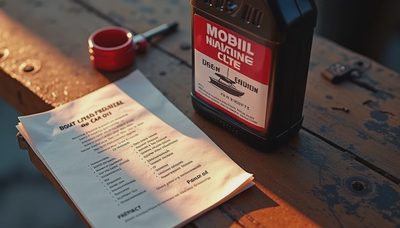
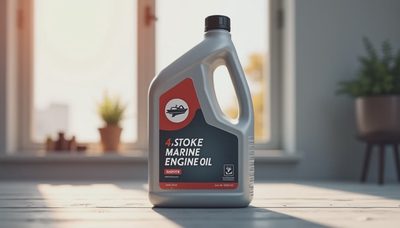
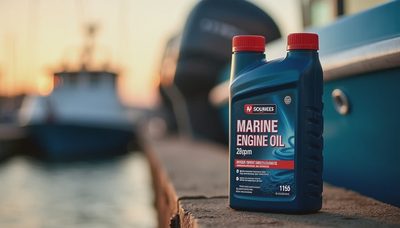
Marine engine oil API classification is one of those labels that gets read quickly and misunderstood slowly. I see it often in marinas and engine rooms: someone spots API SP, CK-4, or an older CJ-4 donut on the pail and assumes that tells the whole lubrication story. It does not. The engineering problem is simple enough: marine engines run under long steady loads, frequent moisture exposure, fuel dilution risk, and corrosion pressure that differ from many automotive duty cycles. If you choose oil by the API mark alone, you can end up with the right category but the wrong chemistry for the job.
What API classification actually tells you
API stands for the American Petroleum Institute, and its service categories define performance requirements for engine oils. For spark-ignition gasoline engines, you will see categories such as SJ, SL, SM, SN, and SP. For compression-ignition diesel engines, common categories include CH-4, CI-4, CJ-4, CK-4, and FA-4. By the relevant standard, these categories are tied to engine tests covering wear control, oxidation resistance, deposit control, soot handling, and other durability markers.
That matters, but only within limits. Marine engine oil API classification tells you the oil has met a recognized minimum performance envelope for a given engine family and era. It does not automatically tell you whether the oil has the rust inhibition, water tolerance, base reserve, or shear stability best suited to a marine duty cycle. In the lab we call this specification scope; on your shop floor, it means the API badge is necessary in many cases, but not sufficient by itself.
A quick example: an API SP gasoline oil may perform well in a modern inboard gasoline engine if the OEM calls for that category and viscosity. But if the same boat sees seasonal layup, high humidity, and intermittent use, anti-rust performance and storage corrosion protection become practical decision points that the API category alone does not fully describe.

Why marine service is harder on oil than many people expect
Three failure modes, one root cause — here they are: contamination, corrosion, and thermal stress. Marine engines often run at sustained load for long periods, which keeps bulk oil temperature elevated and accelerates oxidation if the formulation is weak. They also live around moisture, whether from humid air, condensation, or occasional water ingress. In diesel applications, soot loading and fuel sulfur history can also affect total base number, or TBN, which is the oil's alkaline reserve for neutralizing acidic byproducts.
That is why marine engine oil API classification should be read alongside OEM approval language, viscosity grade, and intended service type. A 15W-40 API CK-4 heavy-duty engine oil can be an excellent fit for many marine diesels, especially where the engine builder explicitly permits that category. But a small outboard four-stroke may instead need an NMMA FC-W oil, which targets marine corrosion control and high-rpm shear behavior in ways that better match that equipment.
**Application Note:** For a workboat auxiliary diesel, I would first confirm the engine builder's required API category and SAE viscosity grade, then check drain interval strategy, fuel sulfur exposure, and whether used oil analysis will be part of the program. The right answer is rarely just “buy the highest API letter.”
Where API ends and marine-specific standards begin
This is the key distinction. API categories are broad engine-oil performance classifications. Marine-specific standards narrow the field to service conditions common on the water. For many four-stroke gasoline outboards and sterndrives, NMMA FC-W and FC-W Catalyst Compatible are highly relevant. Those specifications were built around rust protection, foaming control, and viscosity retention under marine operating conditions. For two-stroke outboards, TC-W3 is the familiar standard, though that is a different oil family entirely.
For diesel engines, the picture depends more heavily on the OEM. Some marine diesels accept mainstream heavy-duty engine oils meeting API CK-4 or older categories, while others publish their own approval lists. That is why the phrase marine engine oil API classification should never be separated from the manual. By the relevant standard, viscosity is governed by SAE J300, while API speaks to performance category. Both are essential, but neither replaces the equipment manufacturer's approval.
If you maintain mixed fleets, keep this hierarchy in mind: first OEM approval, second viscosity grade, third API service category, and fourth any marine-specific certification required for the platform. That sequence prevents a lot of expensive guessing.
How to read the label without getting trapped by marketing
Start with the viscosity grade, such as SAE 10W-30, 15W-40, or 25W-40. Then read the API service line. After that, look for any marine specification like NMMA FC-W. Finally, review the technical data sheet, not just the front label. The data sheet should provide viscosity at 40 C and 100 C by ASTM D445, viscosity index, pour point, flash point, and often sulfated ash or TBN for diesel products.
Those numbers matter because marine equipment can be sensitive to shear loss and deposit control. A label can say “synthetic blend” or “marine formula” and still tell you very little without the performance claims behind it. I recommend avoiding any product that leans on vague wording but does not clearly state the actual service category or certification.
**Application Note:** If you are comparing two 15W-40 oils for a marine diesel, and both list API CK-4, look next at OEM approvals, TBN, and whether the supplier publishes a marine service recommendation. That is a more disciplined choice than buying by brand color or shelf position.
Practical selection rules for mechanics and operators
Here is the plain-spoken version. If the engine manual specifies an API category, meet or exceed it only where backward compatibility is confirmed. If it requires NMMA FC-W, use FC-W. If it is a modern marine diesel with exhaust aftertreatment, be careful with ash-related requirements and OEM approvals. If the boat sits for months, prioritize corrosion control and change oil before storage if contamination is present.
For commercial or high-hour service, used oil analysis is worth the effort. A basic lab package can track viscosity change, oxidation, nitration, wear metals, fuel dilution, water, and base reserve. In the lab we call this condition monitoring; on your shop floor, it means you stop arguing about oil and start measuring whether it is still fit for service.
So, what is my bottom line on marine engine oil API classification? Treat it as a critical filter, not a final answer. API gets you into the right neighborhood. Marine approvals, viscosity grade, duty cycle, and the OEM manual get you to the correct dock. If you are selecting oil for a mixed fleet or a costly rebuild, slow down, read the data sheet, and choose the specification set that matches the engine's actual life on the water.