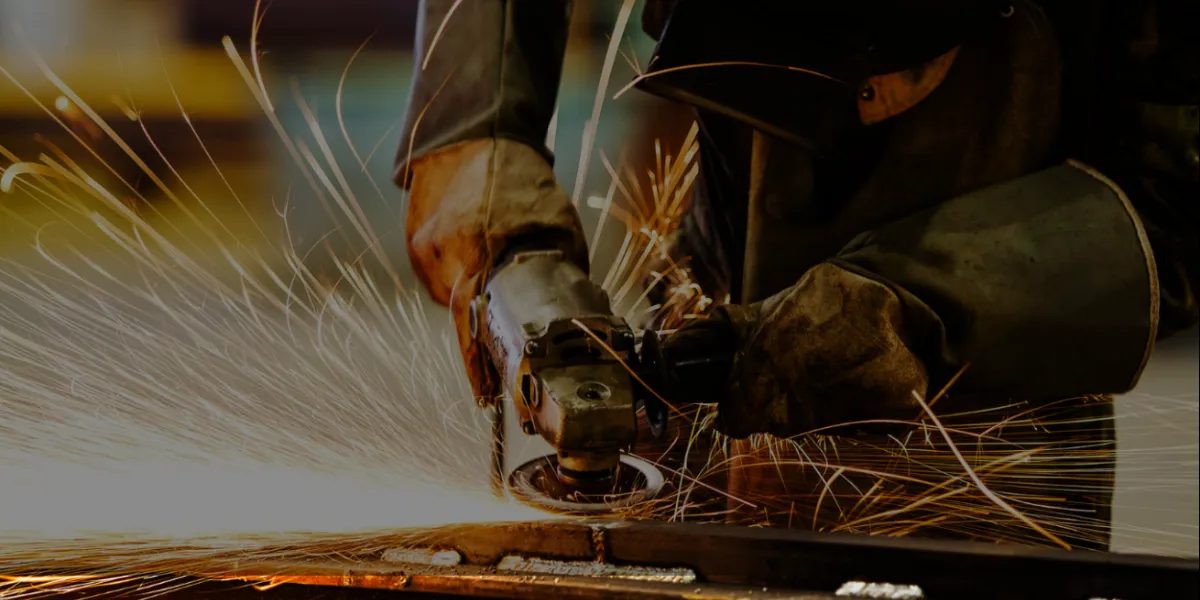
Our blog has covered various metalworking processes and lubricant types in previous posts. This time, we turn our focus to plastic deformation — one of the most important and widely used techniques in metal processing.
What exactly is plastic deformation? How does the process work, and what lubricants does it demand? Read on to find out.
Plastic deformation stands among the most prominent and broadly applied metalworking methods available today. The process subjects metal to stress levels high enough to cause permanent shape changes. Crucially, the metal holds its altered form even after the stress is removed.
Several distinct metalworking techniques fall under the umbrella of plastic deformation, including forging, rolling, and extrusion.
The concept behind plastic deformation is far from new. Centuries ago, craftsmen applied its fundamental principles when producing goods by hand. Horseshoe manufacturing is a classic illustration of this. Skilled blacksmiths would heat metal to precise temperatures to render it sufficiently pliable. While the metal remained hot and workable, they would strike it with mallets to achieve the desired form. Upon cooling, the piece would permanently hold that shape.
Today, plastic deformation has evolved into a highly adaptable process serving a broad spectrum of metalworking applications. It allows manufacturers to produce intricate shapes and configurations — from metal sculptures and wood-burning stoves to fittings, decorative wall art, and beyond.
Metal processing through plastic deformation serves numerous industries, with applications that include the manufacture of a wide variety of components and products.
As a complex discipline, plastic deformation encompasses several distinct metal processing methods. Each technique serves a particular purpose and is selected according to the precise demands of the metalworking operation in question. The following are among the key types of plastic deformation worth understanding.
At its core, the plastic deformation process works by applying stress directly to a metal workpiece. The applied force surpasses the material's yield strength, compelling the metal to change shape permanently.
So what does the plastic deformation process actually look like in practice?
The first step involves heating the metal workpiece to elevated temperatures, which causes it to deform plastically when sufficient stress is applied.
Next, a force exceeding the metal's yield strength is exerted on the workpiece. This causes the metal to undergo plastic deformation and conform to the shape of the mold being used.
The deformed workpiece is then cooled — either by air or water — which solidifies its new geometry. The metal retains this shape permanently, even once the applied force is fully removed.
In the final stage, the finished part undergoes rigorous testing to confirm it meets all required specifications, including standards for strength, hardness, and dimensional accuracy.
Plastic deformation is an exceptionally demanding metalworking process, relying on enormous forces to generate the necessary stress levels. When not properly managed, it can lead to outcomes such as metal cracking, porosity, and diminished ductility. For this reason, the tools involved in plastic deformation require the highest levels of protection and lubrication.
The lubricants formulated specifically for this process are known as deformation oils, or deform oils.
These specialized oils are engineered to reduce friction and wear on metalworking equipment, enhance the surface quality of finished parts, and guard against cracking and material failure.
Deform oils are typically developed to deliver a combination of lubrication, cooling, and corrosion resistance. Their use can increase the overall efficiency of metalworking operations, raise the quality standard of finished products, and prolong the service life of tools and machinery.
An added advantage is that deformation oils come in a wide variety of formulations — including mineral oils, synthetic oils, and biodegradable options — allowing metalworkers to select the most suitable product for their specific plastic deformation requirements.
Plastic deformation is critically important across many industrial sectors, yet it places extraordinary demands on the equipment involved. The machines operating under such high stress and force need proper care and maintenance to deliver reliable, precise results. Selecting the correct lubricants is the essential first step in that process. We hope this concise guide has given you a clearer understanding of plastic deformation and will assist you in identifying the right deform oil for your equipment.
Valvoline has spent more than 150 years developing, refining, and advancing metalworking lubricants. We take particular pride in our Deform Oils, which are produced using premium base oils and sophisticated additive packages. Our product range is suitable for a variety of plastic deformation operations, including bending, stamping, and deep extraction. Engineered from the highest-performing materials, our deformation oils are built to withstand extreme pressures and maximize the operational life of your metal processing machinery.
Unsure which Valvoline plastic deformation oil is the right fit for your operations? Reach out to us or explore our Lubricant Advisor today!

No feedback yet — submit the first.