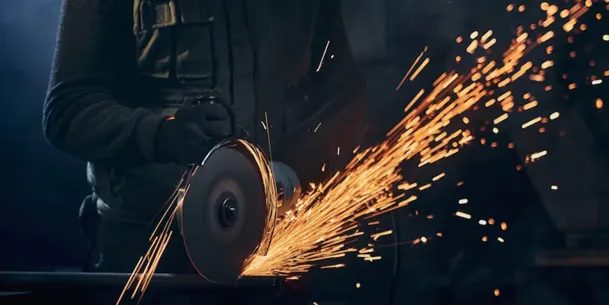
In metalworking, cutting oils are indispensable — they lubricate and cool both the cutting tool and the workpiece throughout machining operations. Depending on their formulation and function, cutting fluids fall into several distinct categories: straight, soluble, synthetic, semi-synthetic, vegetable, and solid lubricants.
One key distinction among cutting oils lies in their chemical behavior toward metal surfaces, which places them in either the active or inactive category. Active cutting oils are formulated with additives that chemically interact with metal surfaces during use. Inactive cutting oils, by contrast, contain no such additives and produce no chemical reaction with the metal surface — making them well suited for use on ferrous, nonferrous, and white metals alike.
Selecting the right cutting oil and applying it correctly can make a substantial difference in both the quality and efficiency of metalworking processes.
Cutting fluids are liquids applied during metalworking operations — milling, turning, and drilling among them. The term is frequently used as a synonym for coolants, though this equivalence is not quite accurate. Cooling is only one of several functions that cutting fluids perform.
In metalworking, cutting fluids serve two primary functions: dissipating the heat produced during machining and providing lubrication. They improve cutting conditions by reducing friction between the tool and workpiece and extending tool life. Notably, these lubricants also function as effective coolants — capable of removing heat the moment it is generated, which directly boosts production efficiency.
Prior to the development of High-Speed Steel, water served as the standard coolant, since machining was carried out at relatively low speeds. The introduction of HSS dramatically increased machining speeds and the heat that accompanied them, rendering water inadequate. This spurred the development of a wide array of cutting fluids tailored to different machining processes and materials.
Cutting fluids may exist in liquid or gaseous form and are routinely applied in metal processes such as machining and stamping. The range of available cutting fluid types is broad, encompassing oils, oil-water emulsions, pastes, gels, and beyond.
Cutting fluids come in numerous varieties, which are generally organized into the following classifications.
Among the most widely used cutting oil types in metalworking are straight oils, also referred to as neat oils, mineral oils, or petroleum-based oils. Their composition is primarily mineral oil, which is obtained from crude oil through the refining process.
Straight oils deliver outstanding lubrication, cooling, and friction-reducing performance, and they also assist in clearing metal chips and debris from the cutting zone. Neat oils are integral to several machining processes, including drilling, turning, milling, and grinding.
Despite their performance benefits, straight oils raise significant health and environmental concerns due to their elevated oil content. When heated, they can produce smoke and fumes that may lead to respiratory problems for workers. Proper disposal is also challenging, as they risk contaminating soil and water if not managed responsibly.
In response to these drawbacks, alternative cutting fluids — such as soluble oils, synthetic fluids, and vegetable oils — have been developed. These alternatives deliver better performance and a smaller environmental footprint than straight oils. Even so, straight oils remain the preferred choice in applications where their specific performance attributes are necessary.
Soluble cutting oils, sometimes called emulsifiable oils or water-mixable oils, are another widely used category of metalworking fluid. Their name reflects their nature: a base oil — typically mineral or synthetic — blended with water to create a stable emulsion.
This oil-and-water emulsion delivers effective lubrication and cooling to both the cutting tool and workpiece during machining. Soluble oils are also capable of flushing metal chips and debris out of the cutting zone, and they see regular use in drilling, turning, milling, and grinding operations.
Compared to straight oils, soluble oils offer notable advantages: better cooling performance, reduced smoke and fume output, and greater environmental compatibility, since they can be diluted with water and safely disposed of.
Nevertheless, soluble oils are not without their drawbacks. The oil fraction can still cause skin irritation and respiratory discomfort upon worker exposure. Over time, the emulsion can also degrade, providing conditions for bacterial proliferation and unpleasant odors.
To counter these issues, cutting fluid developers have introduced synthetic fluids, semi-synthetic fluids, and vegetable oils — options that outperform soluble oils in both effectiveness and environmental impact. Despite this, soluble oils continue to hold a strong position in metalworking wherever their performance is the right fit.
Synthetic cutting fluids are formulated from chemically synthesized compounds — esters, polyalphaolefins (PAOs), and polyglycols among them. These compounds are engineered to deliver superior lubrication and cooling performance relative to conventional cutting fluids.
The advantages of synthetic cutting fluids over competing types are considerable. Their high heat resistance allows them to perform consistently at elevated cutting speeds and temperatures. Their low volatility limits evaporation and reduces odor during operation. Furthermore, synthetic cutting fluids are designed with environmental responsibility in mind, featuring low toxicity and reduced biodegradability.
Different subtypes of synthetic cutting fluids each bring distinct performance characteristics. Ester-based fluids, for instance, excel in lubricity and biodegradability. PAO-based fluids stand out for their thermal stability and oxidation resistance. Polyglycol-based fluids are recognized for superior heat transfer and their ability to resist foam formation.
High-performance metalworking sectors — including aerospace and automotive manufacturing — rely heavily on synthetic cutting fluids, where precision and dependability are non-negotiable. They are also favored in environments where conventional fluids present health and safety risks, such as medical device manufacturing.
Semi-synthetic cutting oils occupy a middle ground in the cutting fluid landscape, combining mineral oil and synthetic oil alongside additives such as emulsifiers, rust inhibitors, and extreme pressure agents for use in drilling, milling, and turning operations.
These cutting oils are compatible with a wide range of materials — ferrous and non-ferrous metals, aluminum, and various alloys — and find application across the automotive, aerospace, and manufacturing industries.
By blending mineral and synthetic oils, semi-synthetic cutting oils achieve lubrication and cooling performance that surpasses that of straight mineral oils. The practical results include longer tool life, improved surface finish, and greater productivity. An added benefit is that semi-synthetic cutting oils are more straightforward to maintain and clean up compared to fully synthetic fluids.
Vegetable cutting oils are applied in machining operations including drilling, milling, and turning. True to their name, they originate from plant-based sources — rapeseed, soybean, and sunflower oil among them.
From an environmental standpoint, vegetable cutting oils have a clear edge over conventional mineral oils: they are biodegradable and carry a lower toxicity level. They also generally exhibit a higher flash point, reducing the risk of ignition at elevated temperatures.
The benefits of vegetable cutting oils extend beyond environmental considerations. They can deliver improved tool life, better surface finish, and — perhaps most significantly — health benefits, as their lower toxicity compared to mineral oils makes them safer for the workers who handle them.
Vegetable cutting oils are found across the automotive, aerospace, and manufacturing sectors and perform well on ferrous and non-ferrous metals, aluminum, and alloys alike.
Solid lubricants are a category of dry lubricants that contain no fluid whatsoever. Graphite, molybdenum disulfide, and tungsten disulfide are representative examples. Their typical application is in specialized scenarios where liquid lubricants would be impractical or unsuitable.
Also called dry cutting fluids, solid cutting fluids are applied in machining operations such as drilling, milling, and turning. In contrast to conventional cutting fluids, they are entirely solid in form, containing no liquid component.
Solid cutting fluids can be delivered as powders, pastes, or films, and they bring several advantages with them: extended tool life, improved surface finish, and minimal cleanup. Their lack of liquid content also makes them a more environmentally favorable option.
Solid cutting fluids are used across the automotive, aerospace, and manufacturing industries and are suited to ferrous and non-ferrous metals, aluminum, and alloys. It should be noted, however, that they may not be appropriate for every machining application, and the specific demands of each situation should guide the selection process.
Active and inactive cutting fluids are non-emulsifiable metalworking fluids that offer a range of benefits — excellent lubrication, high-pressure durability, and a superior surface appearance on treated workpieces. Their classification as active or inactive is based on their corrosive behavior toward copper.
Active cutting oils are lubricants widely employed in the processing of steel and its alloys. Produced using refined mineral oils in various grades, their effectiveness stems partly from the anti-oxidation and anti-corrosion additives they contain, which shield the metal being worked.
These oils also incorporate additives based on sulfur, phosphorus, and chlorine in active form. Because these additives undergo chemical reactions at relatively low temperatures, they deliver enhanced efficiency. One important caveat: these same additives can have adverse effects on non-ferrous metals.
Inactive cutting oils are manufactured from refined mineral oils across several grades and include oxidation and corrosion inhibitors, along with carefully chosen additives based on sulfur, phosphorus, and chlorine — held in inactive form. The selection of these additives is deliberate, ensuring no corrosive impact on non-ferrous metals or their alloys. Because inactive cutting oils can also lubricate machine components and fill hydraulic systems as directed by the manufacturer, they are frequently referred to as multipurpose oils.
For best results, keep a close eye on the oil level in the tank and always top it off using oil from the same manufacturer and of the same quality grade.
In addition, install mechanical cleaning devices such as spinners or sedimenters to filter out impurities. Neglecting to remove these contaminants risks pump failure, tool damage, and a deterioration in the quality of the treated surface.
Whenever the oil is changed, perform both a mechanical and chemical cleaning of the system before introducing fresh oil. This practice prevents contamination and keeps the system running smoothly.
Oil storage deserves careful attention as well — proper storage protects oil quality and guards against hazards. Whenever feasible, store oil indoors or in covered areas, with barrels laid horizontally to prevent water from pooling on their surfaces. Crucially, protect oil from high temperatures, direct sunlight, and temperatures falling below 0°C. Detailed product information and safety data sheets are available on Valvoline's website for further guidance.
For more than 150 years, Valvoline has stood as a leading manufacturer of automotive and industrial lubricants. Our lineup includes an extensive range of metalworking fluids, among them active and inactive cutting oils. Explore our full selection of active and inactive cutting oils.
Cutting fluids play a central role in metalworking operations such as milling, turning, and drilling, delivering excellent anti-wear, lubrication, and cooling properties. Their behavior toward metal surfaces determines whether they are classified as active or inactive. Active cutting oils chemically interact with nonferrous metals and their alloys at low temperatures; inactive cutting oils do not. Choosing the right formulation for your industrial application is therefore critical. If you need guidance on where to begin, reach out to Valvoline's local dealers or make use of our Lubricant Advisor tool.



No feedback yet — submit the first.