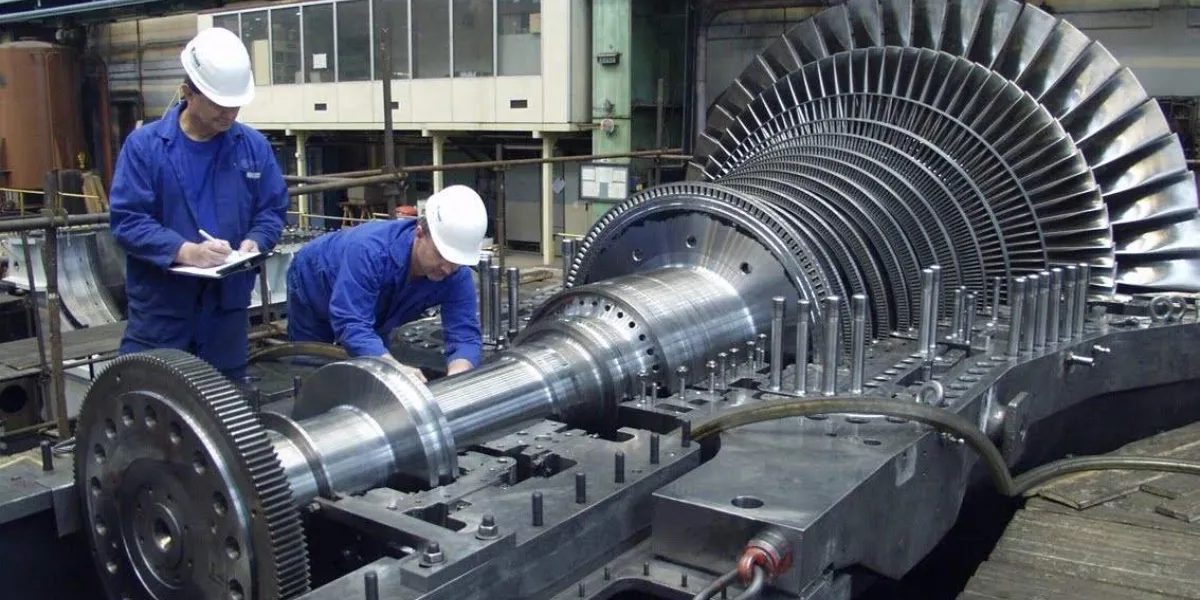
Across most industries, acquiring new equipment or machinery falls under the category of capital expenditure. Significant resources — both financial and time-related — go into procuring, installing, and incorporating new machinery into an established manufacturing workflow.
The last thing any buyer wants to discover is that their newly acquired machinery is failing to operate as intended. This represents the worst outcome imaginable for anyone making such an investment.
To prevent this from occurring, the majority of modern industries rely on a specific product evaluation method known as vibration acceptance testing.
Vibration acceptance testing serves as a means of evaluating the performance of new or overhauled machinery and equipment. Every piece of equipment must satisfy a defined set of operational requirements and standards in order to reach the desired performance threshold. Through a series of controlled tests and simulations, vibration acceptance testing verifies that all requirements have been satisfied before the manufactured product is commissioned.
At its core, this form of testing is critical for the early identification of manufacturing faults, defects, or malfunctions within the product. Throughout the evaluation process, the product is subjected to standard operating and/or transportation conditions. The purpose is to gauge the machinery's overall performance and to uncover potential operational issues relating to functional and structural integrity and mechanical weakness. Even minor defects can worsen progressively and, eventually, cause complete equipment failure. When irregularities are detected, the machinery is returned to the manufacturer for corrective action. After the required repairs have been completed and the product is performing as expected, it proceeds to commissioning.
This practice reduces the likelihood of acquiring a defective product and enhances both the efficiency and reliability of the equipment. Beyond that, the testing process helps determine the degree of machinery robustness, along with its projected service life.
Depending on which type of machinery is being evaluated and what operational standards must be satisfied, testing may be conducted in either a field or laboratory environment.
Vibration acceptance testing encompasses two primary categories — a random test and a sine test. Both are employed to detect vibration defects, where present, and to assess the robustness and reliability of the product. Nevertheless, notable differences exist between the two approaches.
A sine (sinusoidal) test is intended to measure the effect that a single sinusoidal tone at a particular frequency exerts on the product. This testing method identifies resonant conditions within the machinery and reveals how naturally occurring vibrations can influence each product. More specifically, sine tests are used to pinpoint the exact resonance frequencies of the machinery under evaluation. These frequencies drive the product to vibrate at its highest amplitude. Identifying them is essential, as they are responsible for causing the greatest degree of damage to the tested machinery.
Despite its usefulness, the sine test's most significant drawback lies in its predictability. Under real-world conditions, vibrations a product encounters are seldom sinusoidal in nature. Rather, their frequencies fluctuate considerably.
This is precisely why vibration testing engineers frequently rely on random vibration testing instead. Random testing is designed to subject the product under evaluation to multiple frequencies simultaneously. This approach more closely replicates the actual field vibrations a product experiences during everyday operation. Moreover, when all resonance frequencies are excited concurrently, potential weak points within the product become easier to detect.
Vibration acceptance testing applies across a wide range of industries where product reliability and durability are paramount concerns.
Starting with the military sector, equipment used in these applications is routinely exposed to harsh environmental conditions. It comes as no surprise, then, that the first vibration acceptance standard was conceived by military engineers.
Spacecraft — satellites in particular — represent another category of equipment that benefits considerably from this type of testing. Satellites are subjected to extreme shock and vibration immediately upon leaving the ground, making rigorous pre-launch testing an absolute necessity.
Electronic equipment is equally susceptible to shock and vibration, whether during delivery or in active use. Testing confirms that such equipment can preserve its structural integrity and endure environmental stress.
Lastly, this form of assessment delivers tangible benefits to all categories of commercial goods, contributing to the development of higher-quality products with superior performance and extended service life.
The most significant value that vibration acceptance testing provides in industrial settings is its role in reducing unforeseen costs tied to the manufacturing process. Integrating faulty machinery into a production environment affects the entire operation. Even when warranty coverage applies, the actual cost of the product rises. This says nothing of the lost revenue resulting from production downtime.
Understanding a product's operational limitations, safety profile, and quality level allows buyers to forecast its profitability, reliability, performance, and durability. Beyond that, successful completion of testing signals to the buyer that the machinery meets all applicable requirements and is in prime operating condition.
Irrespective of the industry in question, maintaining quality and dependable machinery is fundamental to a smooth and profitable manufacturing operation. Acquiring a defective product leads to elevated costs in both financial and time terms.
To mitigate this risk, a growing number of manufacturers are turning to vibration acceptance testing as a standard part of their procurement process.
When a product clears the testing successfully, both vendor and buyer gain greater confidence in its performance and longevity. Ultimately, delivering reliable results is what counts above all else.





No feedback yet — submit the first.