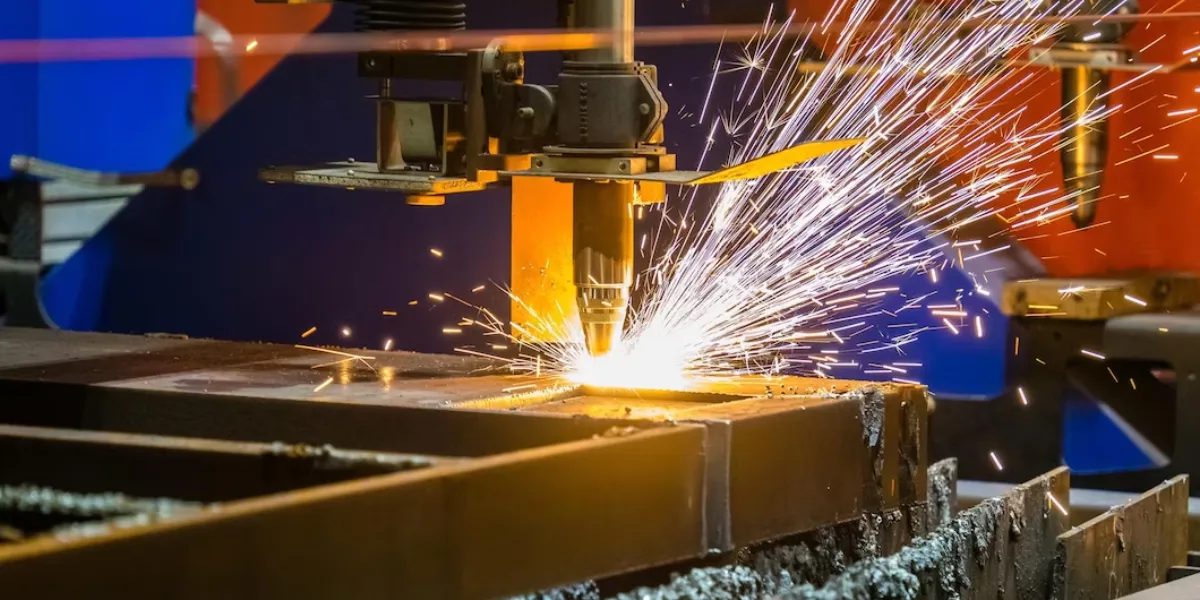
Metal shaping encompasses a broad set of methods used to transform raw metal into finished products and structures. The field draws on numerous techniques — casting, stamping, welding, cutting, and forging among them. Among these, electroerosion stands out as one of the most significant and widely adopted metalworking processes.
Industries ranging from automotive and aerospace to construction and beyond all rely on electroerosion. It ranks among the most technically demanding metal processing methods, subjecting machines and tools to exceptionally harsh operating conditions.
Keeping equipment performing at its peak, prolonging its service life, and preventing costly unplanned stoppages all depend on a commitment to proper machinery maintenance. The foundation of that commitment is selecting the correct metal processing lubricant.
Everything you need to understand about electroerosion — and the oils this process calls for — is covered below.
Also referred to as electrical discharge machining, electroerosion is a metalworking method that harnesses electrical energy to strip material away from a workpiece. During the operation, a power source connected to an electrode is submerged in a dielectric fluid.
Once power is applied, an electric discharge forms between the electrode and the metal workpiece, generating a spark that melts and dislodges a minute quantity of material.
The dielectric fluid — Erozol oil — then carries that removed material away from the work zone.
As the electrode moves relative to the workpiece, it sustains the continuous cycle of electrical discharge.
Electroerosion is a highly adaptable metalworking method capable of producing precise geometries across a broad spectrum of materials. It proves especially valuable for machining complex forms from hard materials that resist conventional metal forming techniques.
The process finds application across many sectors wherever parts demand the highest dimensional accuracy. In aerospace and defense, it is integral to producing critical machinery components. The medical field relies on it for fabricating small, precise devices and instruments, including various surgical tools. Automotive manufacturers turn to it for developing engine components, transmission parts, and similar assemblies. Even creative industries such as fine jewelry making — which demands exceptional accuracy and detail — benefit from electroerosion. It is also widely used in tool manufacturing.
Electroerosion unfolds through a series of defined stages, outlined as follows:
Because electroerosion delivers such high dimensional accuracy and can render intricate shapes and patterns, it demands the use of specialized high-precision machinery. Several key machine types are described here.
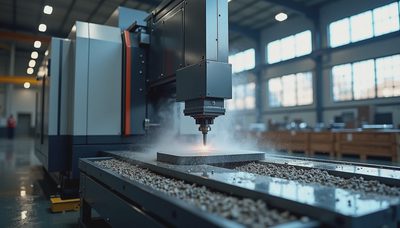
EDM machines perform the cutting and shaping of metal, producing highly precise and finely detailed forms. For this reason, they are prevalent in industries where accuracy is paramount — aerospace, medical, and electronics among them.
EDM machines accommodate a wide variety of metals, including hard alloys that are impractical to machine with conventional tools. That said, because EDM processing is time-intensive and can carry significant cost, it is generally reserved for low-volume applications.
Wire Electrical Discharge Machines — Wire EDM — are purpose-built machines that employ electrical energy to cut metal. They excel at cutting intricate profiles with tight tolerances and are particularly suited to hard materials that are difficult to process by other means, such as tool steel, titanium, and high-strength alloys.
A notable limitation is that the wire electrodes must be continuously replaced, driving up both cost and processing time. As a result, Wire EDM tends to be reserved exclusively for high-precision work.
Sink EDM machines, alternatively called Ram EDM machines, are designed to cut metal parts into specific shapes. As with all EDM equipment, the process requires immersing both the workpiece and the tool electrode in a dielectric fluid, after which an electrical discharge is applied between the two. That discharge progressively shapes the workpiece into the intended form.
Hole-drilling EDM machines — also known as Drill EDM machines — position an electrode vertically above the workpiece. An electrical discharge between the electrode and the metal produces a precisely dimensioned hole.
These machines are widely used for drilling accurate holes in metal components across aerospace, medical device, and automotive manufacturing applications. They are capable of working with hard metals such as steel. An added advantage is that the electrode can be reused across multiple operations, helping to contain overall machining costs.
It should be noted, however, that hole-drilling via EDM is a complex and comparatively expensive process. The surface surrounding the drilled hole may exhibit roughness and require secondary finishing work.
Lubricants employed in electroerosion are known as dielectric fluids, or Erozol oils. To function effectively and safely, these lubricating media must satisfy a defined set of requirements: thermal stability, chemical stability, low electrical conductivity, low viscosity, low volatility, and a flash point exceeding 100ºC.
Each of these oil properties is examined in the sections that follow.
Dielectric oils are a category of insulating fluids used in electrical systems. Their principal function is to block the passage of electrical current through the oil while also providing robust protection against electrical breakdown.
Typically deployed in high-voltage environments such as transformers and capacitors, dielectric oils also serve an important function in metal processing operations, including electroerosion. There, they act as insulation, clear debris from the system, maintain stable electrical discharge, cool both the electrode and the workpiece, and flush away eroded material.
Among the most notable characteristics of dielectric oils are the following:
Erozol oils are a specific category of dielectric fluid, employed as dielectric lubricants in electroerosion operations where an erosive discharge develops between the tool and the workpiece.
Erozol oils are differentiated by viscosity grade, which describes the oil's thickness and flow characteristics. Viscosity is a critical performance variable — it governs the oil's capacity to cool the electrode and workpiece, sustain the electrical discharge, and purge contaminants and debris.
Available across a spectrum of viscosity grades typically expressed in centistokes (cSt), Erozol oils with lower viscosity are thinner and suited to operations involving the separation of the finest particles from the workpiece. The remaining two viscosity categories are intended for the processing of larger material pieces.
Erozol oils possess outstanding insulating characteristics. Their strong heat dissipation properties guard against overheating of the electrode and workpiece during metal processing. Engineered specifically for low viscosity and favorable electrical conductivity, Erozol oils are well matched to electroerosion applications. They are also non-corrosive and chemically inert with respect to the materials being processed.
The following properties of Erozol oils are essential during electroerosion operations:
Valvoline Erozol oils are premium-grade dielectric fluids formulated for use across a wide variety of electroerosion processes. Engineered to deliver superior performance and protection, our Erozol fluids are developed to comply with the most rigorous industry and OEM standards and pose no significant health or safety hazards when used and stored correctly.
Valvoline produces Erozol oils across three viscosity ranges:
Every Erozol oil in our lineup offers low viscosity, a natural odor, a high flash point, excellent thermal conductivity, effective filtration, and anti-corrosion properties.
For over 150 years, Valvoline has been developing, refining, and advancing formulations for metal processing applications. Our portfolio includes the broadest selection of metalworking fluids available, among them products specifically engineered for electroerosion treatments.
Every Valvoline metalworking fluid is produced using the highest quality base oils and sophisticated additive packages. The core objective is to extend the service life of metal processing machinery, deliver the strongest possible protection, and maintain consistent, reliable results even under the most demanding conditions.
All that remains is selecting the metalworking fluid that best fits your equipment and operational needs. Alongside our Erozol oils, explore the broader Valvoline metalworking fluid lineup — including cutting oils for ferrous metals and alloys, cutting oils for non-ferrous metals and alloys, and deformation oils.
Uncertain which Valvoline metal processing oil is right for your application? Reach out to the Valvoline distributor nearest you, or use our online tool — the Lubricant Advisor — to find the right match.
Lubricants play an indispensable role throughout the electroerosion process. They serve multiple functions at once: reducing friction, managing heat, and limiting wear. Beyond that, they contribute meaningfully to the accuracy and precision of the finished workpiece. Dielectric fluids also help extend the operational lifespan of electroerosion machines while protecting both the equipment and the workpieces from damage.
This is why matching the lubricant to the specific electroerosion operation is so important. Always verify that the chosen fluid meets the required performance criteria — thermal stability, strong electrical conductivity, and high dielectric strength chief among them. Inferior lubricants can result in machine deterioration, reduced operating efficiency, and compromised product quality.
Given the wide range of specialized lubricants available for electroerosion, consulting an expert to identify the ideal product for your metalworking needs is strongly advisable. At Valvoline, we remain ready to assist.

No feedback yet — submit the first.