If you manage rotating equipment in a plant or marine environment, you have seen what happens when manual greasing falls behind. Bearings overheat, seals fail, and unplanned downtime eats into your maintenance budget. Automatic lubrication systems solve that problem by delivering the right amount of lubricant at the right interval, every time. In the lab we call this controlled metering — on your shop floor, it means higher reliability and lower labor costs. Choosing the right automatic lubrication system for your application requires understanding the hardware, the standards that govern it, and the practical limits of each design.
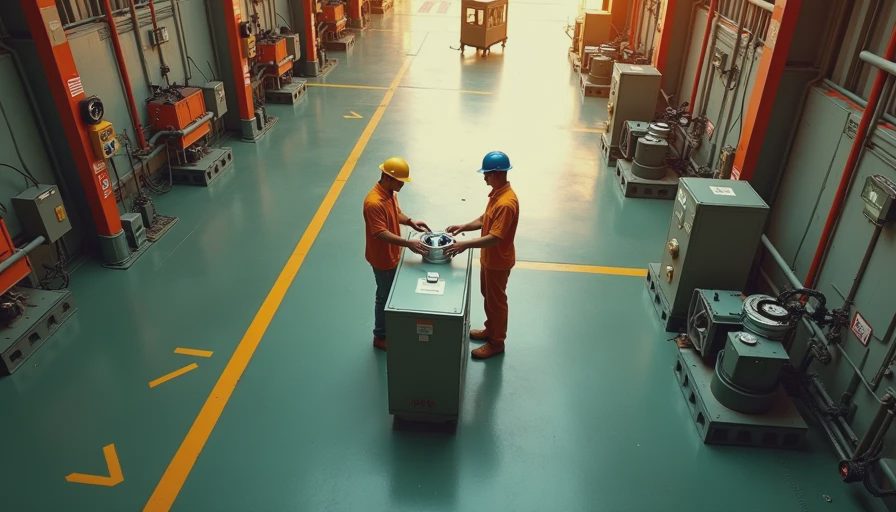
What Is an Automatic Lubrication System?
An automatic lubrication system is a centralized setup that delivers grease or oil to multiple lubrication points from a single pump unit. The pump is typically timed or driven by machine operation, sending lubricant through a network of feed lines to metering devices at each bearing. These systems are common in heavy industries — mining conveyors, paper mill rollers, wind turbine gearboxes, marine deck machinery — anywhere that manual greasing is impractical or unreliable. The key benefit is consistency. Manual greasing depends on operator skill and schedule compliance; an automatic lubrication system removes that variability. By the relevant standard (ISO 21469 for food-grade systems, ISO 10438 for oil systems), the system must deliver the lubricant at the proper pressure, volume, and interval to maintain a full film in the bearing contact zone.
Types of Automatic Lubrication Systems
Engineers choose from several architectures, each with its own strengths. The single-line progressive system uses a master divider valve that sends lubricant sequentially to each point. If one line blocks, the entire system stops — that is a diagnostic feature, not a flaw. Dual-line systems use two main lines: one pressurized while the other depressurizes, allowing continuous operation even during a line failure. Multi-line systems have individual pumps for each point, giving the highest control but at higher cost. For grease applications, single-line progressive is the most common automatic lubrication system in heavy industry. For oil, single-line injector systems (also called parallel systems) are popular because each injector operates independently. The correct choice depends on bearing type, number of points, and the required lubricant volume.

Standards That Govern Automatic Lubrication Systems
No engineer should specify an automatic lubrication system without consulting the relevant standards. ISO 10438 applies to oil lubrication systems for industrial machinery; it covers pump sizing, filtration, and safety requirements. ISO 21469 is the standard for lubricants that may contact food — your grease must be NSF H1 registered if used in food processing. For marine applications, the classification societies (ABS, DNV, Lloyd's) have their own rules for automatic lubrication systems on deck equipment and in engine rooms. A common mistake is to use a system designed for oil with grease — grease has higher viscosity and different rheology. The metering valves and lines must be rated for the lubricant. Always cross-reference the manufacturer's specifications with the applicable standard before installation.
Application Note: Retrofitting an Automatic Lubrication System
Retrofitting an existing machine with an automatic lubrication system is a straightforward upgrade if you plan it properly. Start by inventorying all lubrication points: bearing type, diameter, speed, load, and current lubricant. Use the bearing manufacturer's calculation (based on the d_n factor and NLGI grade) to determine the required grease volume per cycle. Typical industrial bearings need between 0.1 and 5 cc per cycle depending on size. Next, decide between a single-line progressive and a multi-line system. For machines with 20 or fewer grease points, a progressive system is usually more economical. Run the main line from the pump to a central block, then branch to each point. Use a controller with adjustable cycle time — most machines start at one cycle every 30 minutes and adjust based on inspection feedback. After installation, run a test cycle and verify that each point discharges. Document the settings so you can reproduce them on identical machines.
Common Pitfalls and Maintenance Considerations
Even the best automatic lubrication systems can fail if you ignore three things. First, lubricant cleanliness. Grease can pick up debris from the pump or lines, and contamination is the number one cause of bearing failure. Install a filter at the pump outlet and check it quarterly. Second, over-lubrication. An automatic lubrication system that cycles too frequently will overheat bearings and waste grease. Use the minimum volume that keeps the bearing cool — you can always add more. Third, line blockages. Progressive systems stop when one line blocks, but the fault may not be obvious. Train your operators to recognize the pressure drop or motor load change that signals a blockage. By the standard (ISO 17359 for condition monitoring), you should monitor pump pressure and accumulated cycles to spot trends. A well-maintained automatic lubrication system will pay for itself in less than a year through reduced bearing replacements and labor savings.
Real-World Payback: A Case Study from a Cement Plant
In 2023, a cement plant in Missouri retrofitted five ball mills with a single-line progressive system from a major manufacturer. Before the upgrade, the plant relied on manual greasing every 8 hours. Bearing failures averaged 12 per year, each costing $18,000 in parts and lost production. After installation, the first year recorded zero bearing failures directly linked to lubrication. The system hardware cost $6,500 per mill, with installation totaling $8,500 per mill. Annual grease consumption dropped from 400 lb per month per mill to 180 lb, saving $3,600 in lubricant costs across the five mills. The maintenance crew gained 8 hours per week previously spent on manual greasing, which they redirected to vibration analysis and predictive maintenance. The total payback period was under five months. This case demonstrates that investing in a centralized lubrication solution — when properly engineered — can deliver rapid, measurable returns. Key factors included correct line sizing, use of NLGI #2 grease, and a cycle time of 30 minutes. The plant now monitors pump pressure and cycle count via a PLC, and replaces grease filters every quarter. They have since expanded the system to two additional mills and are planning a similar retrofit on three vertical roller mills. The success hinged on training the maintenance team to identify early signs of blockages and adjust cycle times based on temperature feedback.

No feedback yet — submit the first.