When a crankcase starts to shear down, soot-load, or varnish up, engine lubricants and additives are usually where the story begins, not where it ends. In the lab we call this boundary-film collapse and oxidative thickening — on your shop floor, it means hotter bearings, sticky rings, and a shorter drain interval. The fix is rarely a magic bottle. It is a matched lubricant package, chosen for the duty cycle, temperature, contamination level, and the standard printed on the label.
What the chemistry is actually doing
A base oil carries heat and separates moving metal surfaces. The additive package does the hard part around the edges. Detergents help neutralize acids and keep hot surfaces cleaner. Dispersants hold soot and oxidation products in suspension so they can drain out with the oil instead of plating onto pistons and cam lobes. Anti-wear chemistry, usually built around zinc dialkyldithiophosphate, forms a sacrificial film where oil film thickness gets thin. Antioxidants slow the chemical aging that turns fresh oil into sticky residue. Friction modifiers can reduce boundary friction, and pour-point depressants help the oil move in cold weather.
That is why engine lubricants and additives should be treated as a system, not as a shopping shortcut. By the relevant standard, viscosity is measured by ASTM D445, acidity by ASTM D664, and reserve alkalinity for many diesel oils by ASTM D2896. In plain language, those tests tell you whether the oil still flows, whether it is getting acidic, and whether it still has enough chemical reserve to keep doing its job.
Application Note: a small turbocharged gasoline engine that sees short trips and lots of cold starts usually needs a clean-spooling oil with strong oxidation control, not a thick old formula that only sounds robust. A marine diesel idling for long periods needs a different balance because soot and fuel dilution show up in a different pattern.
Three failure modes that show up first
The first failure mode is contamination. Dirt, coolant, fuel, and water do more harm than dramatic wear stories on the internet. A few tenths of a percent of fuel dilution can thin the oil enough to change film thickness, while water can accelerate rust and sludge. Coolant is worse because glycol contamination often turns oil into a gel-like mess.
The second failure mode is the wrong viscosity. Too thin, and the oil film may not survive high load or high temperature. Too thick, and cold-start flow suffers, which is exactly when most wear happens. In the lab we call this hydrodynamic film starvation — on your shop floor, it means a pump or cam lobe that spends the first minute underprotected.
The third failure mode is additive depletion. Additives do not last forever. They are consumed by heat, oxidation, soot loading, and combustion byproducts. When that package is exhausted, the oil can still look brown and serviceable while protection is already slipping.
Application Note: if a fleet sees rising iron, fuel dilution, and a drop in viscosity over consecutive oil samples, the answer is usually not a stronger additive bottle. The answer is to identify the root cause: injector issues, extended idling, overheating, or an oil spec that is too light for the duty cycle.

How to choose the right oil for the engine family
For mixed fleets, engine lubricants and additives must match the engine family and the climate. A modern gasoline engine that calls for API SP and ILSAC GF-6 needs low-speed pre-ignition control, good deposit resistance, and proper timing-chain protection. A heavy-duty diesel usually lives in the API CK-4 or FA-4 world, where soot handling and shear stability matter more than a slick marketing label. A wet-clutch motorcycle needs JASO MA2, because a friction-modified passenger-car oil can make the clutch behave badly. For European-style gasoline or diesel engines with particulate filters, ACEA C3 or the OEM approval often matters more than the brand name on the front.
That is also where synthetic versus conventional becomes practical rather than ideological. A full synthetic 5W-30 from Mobil 1, Pennzoil, Castrol Edge, or Valvoline often sits in the $28 to $45 range for a five-quart jug at retail. Heavy-duty diesel synthetics such as Shell Rotella T6, Chevron Delo, or Mobil Delvac commonly cost a bit more, but they also buy cold-flow margin, oxidation resistance, and longer stable drain intervals when the engine and filter system are healthy.
If the equipment lives on a towing route, in a paper mill, or in a marine installation with long idle periods, do not chase the cheapest bottle. Choose the spec first, then the viscosity grade, then the oil with the approval that actually matches the engine maker’s requirement. That sequence saves more money than any shelf coupon.
What used oil analysis can tell you, and what it cannot
Used oil analysis is the cleanest way to stop guessing. ASTM D5185 can show wear metals and contaminants by elemental analysis. ISO 4406 particle counts are useful when dirt ingress or filter bypass is suspected. Viscosity trend, oxidation, soot, fuel dilution, and water content paint a better picture than mileage alone.
What it cannot do is turn a poor maintenance program into a good one. A laboratory report will not fix chronic overheating, a clogged breather, or a failed injector. It will, however, show the direction of travel before the engine makes noise. That is the business value: you can see a problem while it is still a trend rather than a repair order.
Application Note: if your last three samples show rising viscosity, elevated insolubles, and declining base reserve, the oil is telling you that the service interval is too long or the engine is running dirtier than intended. If the sample is clean but the engine is noisy, look at mechanical clearances, valve train wear, or oil pressure rather than blaming the lubricant package.
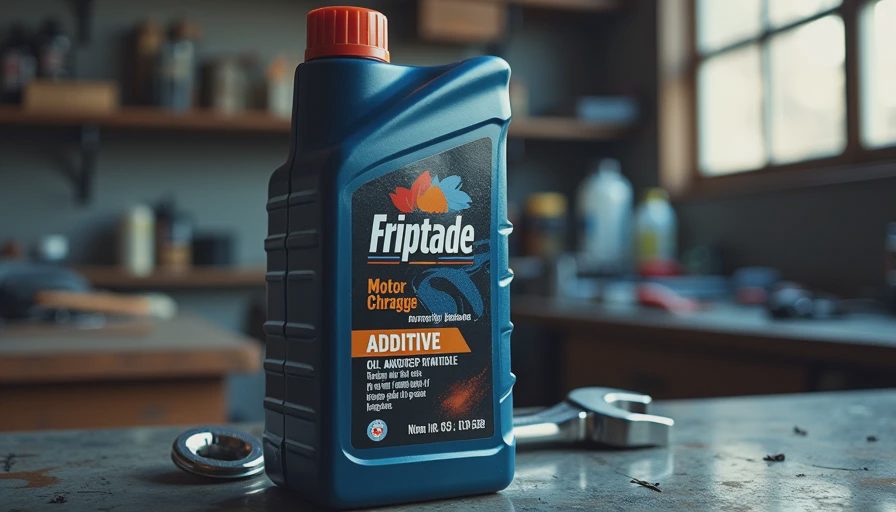
A practical field checklist before you buy again
Start with the OEM specification, not the marketing claim. Match the SAE viscosity grade to the temperature range and load. Confirm the performance category, such as API SP, CK-4, FA-4, or JASO MA2, before you look at price. Check whether the engine uses a turbocharger, diesel aftertreatment, a wet clutch, or a stop-start duty cycle, because each of those pushes the chemistry in a different direction.
Then look at the maintenance reality. Short-trip gasoline engines often need better oxidation resistance and sludge control. Long-haul diesels need soot-handling capacity and enough reserve alkalinity to stay stable between drains. Track what the oil sample says, not what the bottle promises. If a lubricant is doing its job, the data will stay boring.
If you want the shortest possible rule, here it is: buy the oil that meets the correct standard, run a filter that actually fits the service, and use an additive only when the equipment builder or a test result gives you a real reason. That approach is not flashy, but it is how you keep bearings alive, rings cleaner, and downtime lower. And yes, engine lubricants and additives can still be a profitable topic when they are treated as reliability tools instead of aisle clutter.




No feedback yet — submit the first.