A gearbox can fail on a perfectly reputable oil if its viscosity or load-carrying chemistry is wrong for the job. Castrol sells lubricants for industrial equipment, engines, marine applications, and metalworking, but the brand name alone does not establish suitability. Start with the equipment manufacturer's required viscosity and lubricant specification, then match those requirements against the exact product's technical data and approvals.
For an industrial gearbox, Castrol industrial gear oils are a category to investigate; for a passenger-car engine, Castrol EDGE is an engine-oil line; for machining, Castrol's metalworking fluid range is the relevant starting point. Those categories are not interchangeable. Within each one, the grade and formulation must match the machine, operating conditions, and manufacturer requirements.
What the Castrol name tells you
Castrol is a lubricant brand, not a single oil formulation. Its products include mineral-based and synthetic lubricants, greases, and water-miscible metalworking fluids. The label on a drum may identify a family, while a suffix identifies a particular grade or formulation. Record the complete product name, not just the brand, on purchase orders and lubrication charts.
The technical data sheet describes typical properties and intended applications. The safety data sheet addresses hazards, handling, and disposal information; it is not a substitute for an equipment approval. Check the product data sheet and the equipment manufacturer's instructions for the exact grade you intend to buy. A statement that a fluid is suitable for an application is not necessarily the same as a formal manufacturer approval.
Match viscosity before comparing brands
Viscosity is a fluid's resistance to flow. Too little at the operating temperature can leave a thin separating film between moving surfaces; too much can increase drag or impede flow at startup. In the lab we call this lubricant-film formation; on your shop floor, it means whether loaded surfaces have enough separation to limit damaging contact.
For many industrial oils, ISO 3448 defines viscosity grades using kinematic viscosity measured at 40 degrees Celsius. An ISO VG 68 oil has a midpoint of 68 square millimeters per second at that temperature, with a permitted grade range around that value. It does not mean the oil has the same viscosity at operating temperature, nor does it tell you whether the additives suit a gearbox or hydraulic pump.

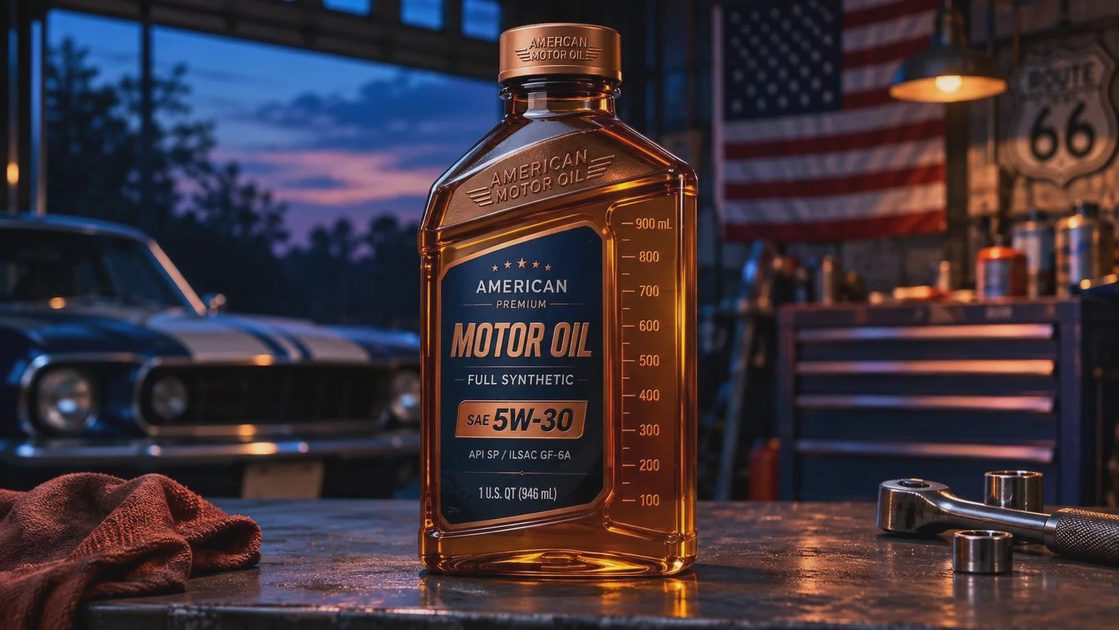
Engine oil uses a different grading system: SAE J300. An SAE 5W-30 engine oil and an ISO VG 32 hydraulic oil cannot be selected by comparing their numbers. For either system, consult the equipment manual first, then consider ambient startup temperature and actual operating temperature within the manufacturer's permitted choices.
Application Note: A reducer calls for ISO VG 220 gear oil. Select a Castrol gear oil only after confirming both that viscosity grade and the reducer manufacturer's required gear-oil specification or approval. An ISO VG 220 circulating oil may share the viscosity grade without having the same load-carrying additive package. For heavily loaded gears, the required standard may include ISO 12925-1; use the classification specified by the equipment maker rather than assuming every oil in the standard is equivalent.
Read performance claims and approvals carefully
An oil has more jobs than controlling friction. Depending on the equipment, it may need to resist oxidation, protect against corrosion, release entrained air, or separate from water. Additives help deliver these properties, but the balance differs by application. Extreme-pressure additives, for example, are intended to protect loaded contacts under severe conditions; their presence alone does not establish suitability for every gear material or application.
For hydraulic systems, ISO 11158 classifies hydraulic fluid categories. A manual may specify an HM or HV fluid as well as a viscosity grade. HM generally denotes a mineral-based hydraulic oil with antiwear properties; HV adds improved viscosity-temperature behavior. Verify the complete specification and any pump-maker approval on the exact Castrol product rather than selecting on ISO VG alone.
For engines, look for the required API service category, ACEA sequence, or equipment-maker approval in addition to SAE viscosity. Those designations address performance requirements that a viscosity number cannot. An oil with the right SAE grade but the wrong approval may be unsuitable, especially where exhaust aftertreatment or long drain intervals impose specific requirements.
For a wet-clutch motorcycle, the specified JASO T 903 category matters too. JASO MA and MA2 are motorcycle-oil classifications associated with wet-clutch friction performance; use the category called for by the motorcycle manufacturer. Do not assume a Castrol automotive oil meets it simply because the viscosity matches.
Plan the changeover and monitor the result
Before replacing an existing lubricant, identify the fluid already in the machine and ask the lubricant supplier about compatibility. Base oils and additive systems can interact, and a small amount of residual fluid may matter in a large circulating system. Compatibility depends on the specific products and proportions, not just whether both labels say synthetic. A planned drain, flush, and inspection may be necessary; follow equipment-maker and supplier instructions.
Application Note: When converting a circulating system, take a representative baseline sample before the drain and another after the new oil has circulated and stabilized. ASTM D445 describes a method for measuring kinematic viscosity. Compare the results with the new oil's reference data and the machine's limits, while accounting for sampling location and operating conditions. Viscosity alone cannot certify that a changeover was clean or successful.
For ongoing monitoring, ISO 4406 provides a code for reporting particle contamination in hydraulic and other fluids. The equipment manufacturer or reliability program should set the target cleanliness code for the system; a lower particle count is generally desirable, but the appropriate target depends on component sensitivity and the practical limits of filtration. Trend results from a consistent sampling point rather than treating one bottle as the whole story.
Water deserves a separate check. ASTM D6304 describes a Karl Fischer method for determining water in petroleum products and lubricating oils. The acceptable level depends on the machine and lubricant, so use the equipment maker's limits and investigate a rising trend. Milky oil can indicate a water problem, but clear oil is not proof that it is dry.
Don't forget grease and metalworking fluids
Grease selection adds another variable: consistency. The NLGI consistency grade describes how firm a grease is, not the viscosity of the oil inside it. A bearing specified for NLGI 2 grease also needs the correct base-oil viscosity, thickener compatibility, and performance properties. Before mixing a Castrol grease with an existing product, check compatibility and follow the machine's regreasing procedure.
Water-miscible metalworking fluid requires a different maintenance routine. Follow the product's mixing directions, measure concentration with the specified method, and account for any refractometer correction factor supplied for that fluid. Monitor concentration and condition against the supplier's limits; do not treat an engine-oil or gearbox-oil maintenance interval as a coolant-management plan.
The practical next step is a lubricant register: machine, fill point, complete product name, required viscosity, applicable specification or approval, and sampling or service interval. That record makes a Castrol purchase repeatable and gives the next maintenance lead enough information to spot a mismatch before it reaches the sump.



No feedback yet — submit the first.