The search phrase engine coolant engine points to a practical maintenance question: what coolant belongs in an engine, and how do you know it is still protecting the metal? Whether you service a pickup, marine diesel, standby generator, or production engine, coolant is a working fluid—not colored water. Its job is to transport heat, prevent corrosion, protect seals, and control deposits across a wide temperature range.
In the lab we call this a heat-transfer and corrosion-control system — on your shop floor, it means an engine that reaches operating temperature without turning its radiator, cylinder liners, or water pump into a chemistry experiment. The wrong mixture can produce pitting, scale, cavitation, or freezing damage long before an operator sees a temperature alarm.
What the engine coolant engine system must control
A typical heavy-duty coolant contains water, glycol, and an inhibitor package. Ethylene glycol is common because it provides freeze protection and raises the boiling point. Propylene glycol is used where reduced toxicity is important, although its heat-transfer performance and concentration requirements differ. Water carries heat efficiently, but untreated water encourages corrosion and mineral scale.
The inhibitor package is the more easily overlooked component. Depending on the formulation, it can contain organic acids, silicates, phosphates, borates, nitrites, or molybdates. These chemicals form protective films or control electrochemical reactions at aluminum, cast iron, steel, copper, solder, and brass surfaces. Mixing incompatible technologies can deplete inhibitors or create haze and deposits.
For most automotive and industrial systems, a 50/50 glycol-to-water mixture is a useful starting point, but it is not a universal prescription. Concentrations outside the equipment maker’s range can reduce heat transfer. Too much glycol is especially problematic because glycol transfers heat less effectively than water and becomes more viscous at low temperature. Use distilled or deionized water when the service manual permits it, particularly in systems sensitive to hardness and chloride.
Application Note: In a marine diesel, the engine coolant engine circuit may operate beside raw seawater cooling. A leaking heat exchanger can introduce chloride-rich seawater into the closed coolant loop, accelerating corrosion even when the glycol concentration looks correct.
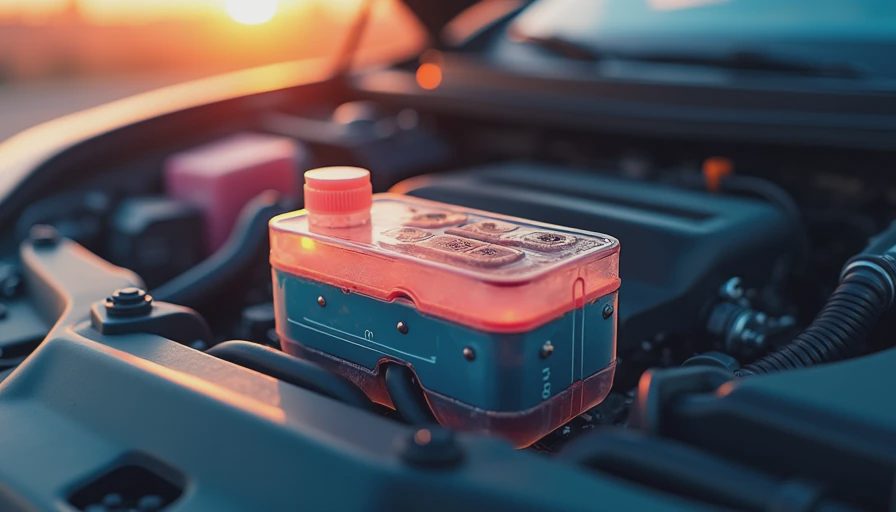
Three failure modes, one root cause — here they are
The first failure mode is corrosion. Internal corrosion can attack radiator tubes, thermostat housings, water pump components, and cylinder liners. A coolant that looks clean can still have depleted inhibitors. Rust-colored fluid is a warning, not a diagnostic conclusion; it tells you to test and inspect the system.
The second is cavitation erosion. In a diesel engine, pressure pulses around wet cylinder liners can create vapor bubbles. When those bubbles collapse against the liner surface, they remove tiny areas of metal. This damage can eventually perforate a liner and allow coolant into the crankcase. Nitrite-containing coolant systems and supplemental coolant additives are often specified for this risk, but the correct program depends on the engine manufacturer.
The third is deposit formation. Hard-water minerals, exhausted silicate, stop-leak products, and incompatible coolants can produce a coating that reduces heat transfer. A thin insulating deposit on a cylinder head or heat exchanger may force the engine to run hotter under load. The cooling system then appears adequate at idle but fails during a long pull, generator peak load, or summer marine operation.
How to test coolant instead of guessing
Start with a clean sample taken from the designated sampling point, not from a dirty recovery bottle. Do not open a pressurized cap on a hot engine. Record engine hours, coolant age, makeup water, and any recent repairs before testing. That history often explains a trend better than one isolated result.
A refractometer estimates glycol concentration and is more useful than a casual glance at color. Test strips can screen freeze point, pH, and selected inhibitor levels, but strips have shelf-life and technique limitations. For critical assets, laboratory analysis can measure glycol degradation products, reserve alkalinity, metals, contamination, and inhibitor chemistry.
By the relevant standard, ASTM D1177 addresses the freezing point of aqueous engine coolants, while ASTM D1120 addresses the boiling point of engine coolants. These tests explain the physical limits of the fluid; they do not replace the equipment maker’s coolant specification. A pH result alone cannot prove that a coolant is healthy.
A sensible engine coolant engine program uses trend data. Sample at a consistent interval, compare results with prior samples, and investigate rapid changes. Falling inhibitor concentration, rising iron or copper, or increasing glycol degradation can justify a controlled drain and flush before a component fails.
Choosing coolant for cars, trucks, and industrial equipment
Begin with the engine manufacturer’s specification, not the coolant color. Color is a dye and is not a reliable chemistry standard. A modern passenger vehicle may require a particular long-life organic-acid formulation, while an older heavy-duty diesel may require a different inhibitor balance and protection against liner cavitation.
Commercial products often advertise compatibility with standards such as ASTM D3306 for automotive coolants or ASTM D6210 for heavy-duty engine coolants. Those standards provide useful performance categories, but the equipment maker’s approval remains the controlling choice. Fleet managers should also consider whether the product is premixed or a concentrate, because an accidental double dose of concentrate changes freeze protection and heat-transfer behavior.
Do not add universal stop-leak as routine maintenance. It can temporarily reduce a small leak, but particles may restrict heater cores, thermostats, narrow radiator passages, and heat-exchanger tubes. A repairable leak deserves pressure testing and mechanical correction.
A practical service procedure for maintenance teams
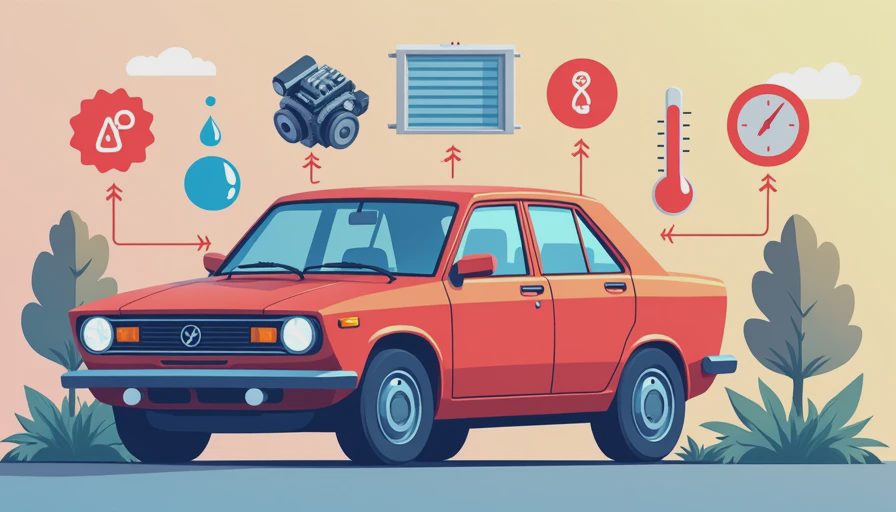
First, identify the coolant already in the system and read the service documentation. Second, inspect hoses, clamps, the radiator cap, expansion tank, water pump area, and drain points. A pressure test can reveal external leaks that are invisible during normal operation. Third, take a sample and document concentration, appearance, and test results.
If draining is required, collect the fluid for proper recycling; glycol is harmful if released into soil or waterways. Flush only with a method approved for the equipment. Aggressive chemical cleaners can damage seals, aluminum, solder, or plated surfaces. After refilling, bleed trapped air according to the manufacturer’s procedure. Air pockets can create local hot spots even when the temperature gauge appears normal.
Run the engine to operating temperature, allow it to cool, and recheck the level. Verify freeze protection and inspect for leaks again. In a fleet, label the coolant type and service date at the reservoir or maintenance record. That small administrative step prevents an incompatible top-off six months later.
Maintenance intervals and a useful decision rule
Time-based replacement intervals vary widely. Some extended-life coolants are designed for several years in light-duty service, while severe-duty engines may require testing, additive adjustment, and earlier replacement. Hours, load, contamination, makeup water, and operating temperature matter as much as calendar age.
Replace or correct the system when testing shows depleted inhibitors, contamination, unexplained glycol degradation, or a concentration outside specification. Do not drain a healthy coolant solely because its color has changed slightly. Conversely, do not extend service indefinitely because the fluid still looks bright.
For an engine coolant engine maintenance plan, set three thresholds: a routine sampling interval, an action limit for inhibitor or glycol concentration, and a critical limit that triggers drain, flush, or component inspection. This converts coolant service from a calendar ritual into condition-based maintenance. It also makes costs visible: a scheduled coolant service may cost a few hundred dollars, while a failed water pump, radiator, or diesel liner can turn into a repair measured in thousands.
The practical lesson is straightforward. Correct chemistry, clean water, controlled concentration, and trend-based testing protect the engine far better than color matching or guesswork. Treat the engine coolant engine system as a monitored heat-transfer machine, follow the applicable ASTM category and equipment specification, and investigate small changes before they become expensive failures.




No feedback yet — submit the first.