Pump bearing lubrication is the most deceptively simple task in a reliability program. In the lab we call this base oil viscosity selection and film thickness maintenance — on your shop floor, it means bearings failing months early because someone filled the grease gun with the wrong NLGI grade. Let's start with the engineering problem: a pump bearing runs hot, carries a moderate radial load, and gets its lubricant from a small reservoir or a grease nipple. When that film thins, you get metal-to-metal contact, then spalling, then a seized rotor. The stakes are downtime, pump rebuilds, and production losses measured in thousands of dollars per hour.
Most failures trace to three mistakes: wrong lubricant, wrong quantity, and wrong interval. The first mistake is choosing a multi-purpose grease for every bearing on site. A pump bearing running at 3,600 rpm and 180 degrees Fahrenheit housing temperature needs a different base oil viscosity than a slow conveyor roller. By the relevant standard, ASTM D4950 defines chassis and wheel bearing greases, but for industrial pump bearings, follow the machinery manufacturer's recommendation and an NLGI consistency grade that matches the pump's operating temperature.
Pump bearing lubrication is not a once-and-done task. It is an ongoing film management problem. The base oil must maintain a sufficient film thickness to separate the rolling elements from the raceway. If the oil is too thin, the film collapses. If it is too thick, the bearing skids and generates heat. The right viscosity grade is determined by the bearing's speed and load, not by what is left over in the shop cabinet.
If you want to know why a pump bearing fails, look first at the film thickness. In the lab we call this the specific film parameter — on your shop floor, it is the difference between smooth rolling and a fatigue spall. Without enough separation, the rolling elements hammer the raceway, and the damage is already underway before your vibration analysis catches it.

Grease vs. Oil: Pump Bearing Lubrication Choices
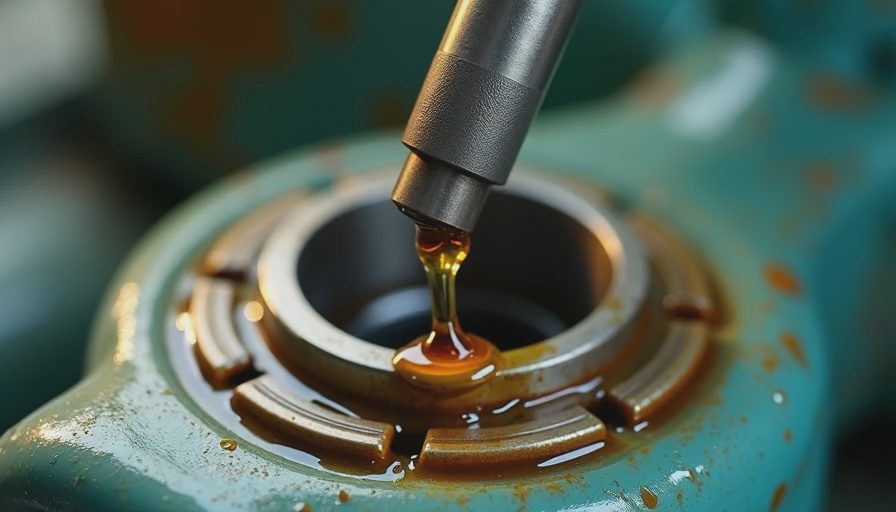
Some pumps use grease, some use oil. The pump bearing lubrication decision comes down to speed, housing design, and contamination exposure. A grease-packed bearing has a limited reservoir; once the grease is pushed out of the rolling path by centrifugal force, it must channel back. If the grease is too stiff, it will not channel, and the bearing runs dry. If it is too soft, it leaks past the seals. For vertical pumps, oil mist or oil bath lubrication often works better because it provides a steady supply to the upper bearing.
By the relevant standard, ISO 6743-9 classifies industrial greases according to their thickener and base oil. Most pump bearings use a lithium complex or polyurea grease with an NLGI 2 consistency. For electric motor bearings in pumps, a premium polyurea grease with a temperature range from -20 to 350 degrees Fahrenheit is a common recommendation. The point is not to guess. The point is to match the lubricant's properties to the load and speed.
The Right Amount: Pump Bearing Lubrication Quantities and Intervals
Too much grease is as bad as too little. A common rule for a standard grease-lubricated bearing is to fill the housing one-third to one-half full, not fully packed. If you overpack, the rotating element churns the grease, temperature rises, and the oil bleeds out of the thickener. You end up with a dry bearing at a higher temperature. Under normal conditions, the relubrication interval for a 20 mm bore bearing at 3,600 rpm is roughly 2,000 hours; for a 60 mm bore bearing at that speed, it drops to around 500 hours. These numbers come from established engineering tables, not from folklore.
The exact amount of grease added during relubrication matters, too. A common formula is: for a bearing with outside diameter D in millimeters, the grease quantity in grams equals D times B (bearing width) times 0.005. For a typical 6205 bearing, that works out to about 3 grams. Pump bearing lubrication programs that ignore this math are the reason so many pumps fail at 6,000 hours instead of 20,000. Add the grease slowly while the pump is running if possible, and monitor the bearing temperature for about an hour after relubrication.
Contamination: The Real Enemy of Pump Bearing Lubrication
Contamination is the real enemy. Water ingress in a pump housing is common, especially in marine or washdown environments. Water washes out the base oil, causes hydrogen embrittlement in bearing steel, and creates an emulsion that has no load-carrying capacity. By the relevant standard, ASTM D6304 measures water content in petroleum products. Anything above 500 ppm in a circulating oil system should trigger an oil change or water removal. For grease-lubricated bearings, look for grease that has turned milky or white; that is a water-contaminated grease.
Dirt and debris are just as dangerous. A single 30-micron particle is thick enough to pierce the oil film in a lightly loaded pump bearing. That is why the grease inlet should be wiped clean before every syringe or grease gun connection. In a paper mill or aggregate plant, a pump's bearing housing can ingest dust through a damaged seal faster than you can schedule a reseal. The pump bearing lubrication plan has to include seal inspection and maybe positive pressure in the housing to keep contaminants out.
Application Note: Comparative Practices for Pump Bearing Lubrication
Application Note: In marine and industrial settings, the same pump model can need very different lubrication. A marine cooling pump with a water-cooled housing will keep an NLGI 2 grease within its temperature window, but the same pump on a boiler feed service may require a synthetic grease with a higher dropping point. One client in the Pacific Northwest runs a fleet of fire pumps. They use a synthetic polyalphaolefin grease with an ISO VG 100 base oil because the pumps sit idle for weeks then run for two hours at full load. An oil-bath version would work, but the grease gives better standstill protection against moisture. The choice depends on your operating profile, not on the manufacturer's stock catalog.
A Practical Pump Bearing Lubrication Checklist
A field-ready checklist covers the essentials. Verify the correct lubricant and NLGI grade against the pump manual before you apply anything. Wipe the grease fitting and the area around the bearing housing before connecting the gun. Use the calculated grease quantity, not a generous pump-and-pray approach. Relubricate on a fixed schedule based on speed and bearing size, with temperature monitoring after each service. Take a small grease sample and inspect it for discoloration, water, or separation. Check the seal condition and replace any seal that shows signs of leakage or dirt ingestion. Record every relubrication in a log so you can correlate bearing failures with lubrication history.

No feedback yet — submit the first.